
 E-Paper



How India’s agricultural waste can power a cleaner future
This article is authored by Mateen Abdul, co-founder, Grassroots Energy.

 Prefer HTon Google


India’s clean energy transition is entering a decisive decade. Under SEBI’s Business Responsibility and Sustainability Reporting (BRSR) norms, the country’s top 1,000 companies must disclose their Scope 1, 2 and 3 emissions. This transparency is important, but the real challenge lies beyond reporting; industries must replace the fossil-heavy fuels that run India’s factories, logistics networks, and processing units with low-carbon alternatives that are cleaner, cost-competitive, and operationally compatible.
While solar and wind have already reshaped the electricity landscape, many industries still depend on fuels such as high-speed diesel, furnace oil, coal, LPG and PNG. To decarbonise manufacturing processes and hard-to-abate sectors, India needs scalable green alternatives and this is where compressed biogas (CBG) and Green Hydrogen play a key role in the journey of carbon neutral goals. CBG is a drop-in replacement for CNG/PNG, allowing industries to transition with minimal adjustments to existing equipment. Green hydrogen derived from biomass is emerging as a critical clean molecule and is an advantageous alternative to electrolysers as it consumes 80% water (less) and 85% less electricity. The drop-in hydrogen molecule can decarbonise segments like chemicals, steel, mobility and distributed industrial applications. Together, these biofuels form a crucial pillar of India’s pathway to low-carbon industrial energy and the core of our focus at Grassroots Energy.
And we are already seeing companies take decisive steps. For example, we’re working with a leading private utility wherein CBG is replacing diesel for distributed energy generation; a large aluminium manufacturer is evaluating CBG as an alternative to PNG. These examples demonstrate intent, but deployment remains slow. Key constraints include limited awareness among decision-makers, inadequate supply of CBG, the geographical mismatch between agri-residue availability and industrial clusters, corporate reluctance to own and operate complex green-fuel assets and underdeveloped markets for fertiliser by-products that underpin CBG economics. Similar systemic challenges exist in scaling biomass-to-hydrogen solutions, which require reliable feedstock, storage infrastructure and offtake visibility.
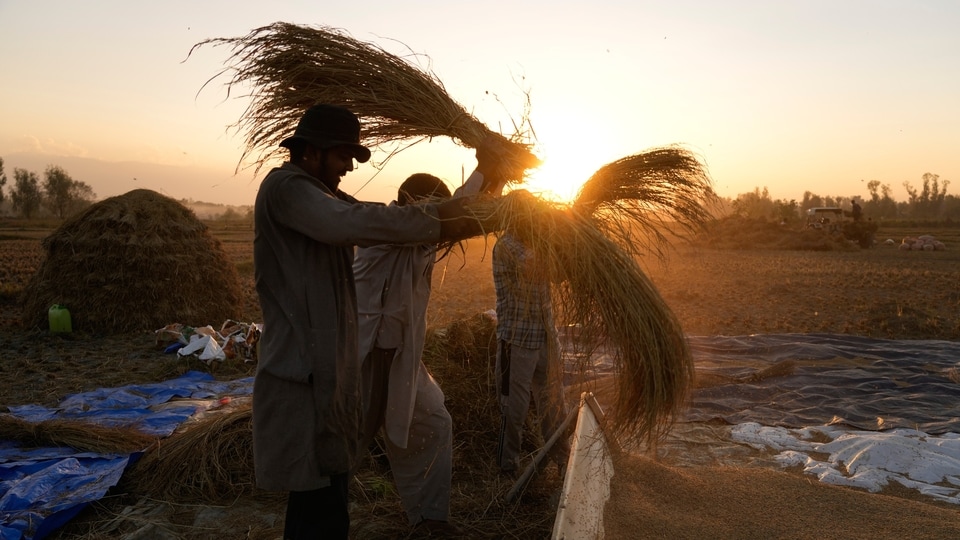
Yet these challenges are not structural inevitabilities; they are solvable design problems. India generates 62 million tonnes of municipal solid waste and 500-600 million tonnes of agricultural residue every year. Harnessing this biomass could generate 40 million tonnes of CBG annually, sharply reducing natural gas imports while tackling stubble burning and landfill overflow. It could power India’s green hydrogen ambitions. Organic-waste-based hydrogen production is a promising pathway with a significantly smaller land, water and energy footprint. Crucially, it leverages locally available feedstock and enhances rural economies rather than depending solely on renewable-electrolyser capacity additions.
Such biofuels uniquely offer a twofold climate benefit: Replacing fossil fuels while preventing harmful emissions from unmanaged waste. But for India’s biofuels sector to evolve beyond ethanol’s success, developers need policy stability, pricing clarity and long-term offtake commitments. To unlock the full power of agri-residues as feedstock, we must invest in formalised residue value chains for collection, storage and processing, long-term agreements with FPOs, which aggregate thousands of smallholders, localised multi-crop residue machinery (currently dominated by imports) and district-level warehouses and storage facilities that ensure year-round feedstock availability.
These interventions offer reliability and predictability - the two most important prerequisites for attracting commercial capital into CBG and biomass-to-hydrogen projects. Accelerating this transition requires decisive state and central action. State-level support is essential because larger plants - whether for CBG or biomass-based hydrogen - benefit from superior operational and financial efficiency. States can drive adoption by offering per-tonne incentives for production capacity, easing local taxes, enabling land access, mapping feedstock clusters, subsidising residue-processing machinery, building local storage infra, and supporting FPOs. These measures significantly de-risk investments for developers and financiers.
At the same time, the climate finance requirement is substantial. CBG plants cost roughly ₹6 crore per tonne of capacity. Scaling even a modest share of industrial fuel demand will need large volumes of concessional debt, blended finance structures and strong support for agricultural value-chain participants. Biomass-to-hydrogen facilities require similar risk-tolerant capital, especially in early commercialisation phases. Finally, fertiliser offtake remains a critical missing link. By-products such as compost, PROM and LFOM underpin CBG plant viability. Despite progress in the last two years, stable markets and predictable offtake channels are still evolving. Strengthening this ecosystem is integral to the financial health of both CBG and integrated biomass-to-hydrogen projects.
India stands at the threshold of a remarkable opportunity. Few countries have biomass resources of this scale and yet, we continue to under-value agricultural residue, often treating it as waste rather than a strategic renewable resource. We must decarbonise industrial heat and process fuels and CBG/green hydrogen produced from organic waste are central to this shift. They are technologically mature, compatible with existing infrastructure, and deeply rooted in rural value chains, offering economic gains alongside environmental impact.
If India aligns policy, enables agri-residue supply-chains and climate capital, biomass to fuels could power a new era of indigenous green energy: clean, circular, and integral to our net-zero future.
This article is authored by Mateen Abdul, co-founder, Grassroots Energy.


