
 E-Paper



How India can lead in the Next Gen materials economy
This article is authored by Shruti Singh, India hub director, Canopy Planet.

 Prefer HTon Google


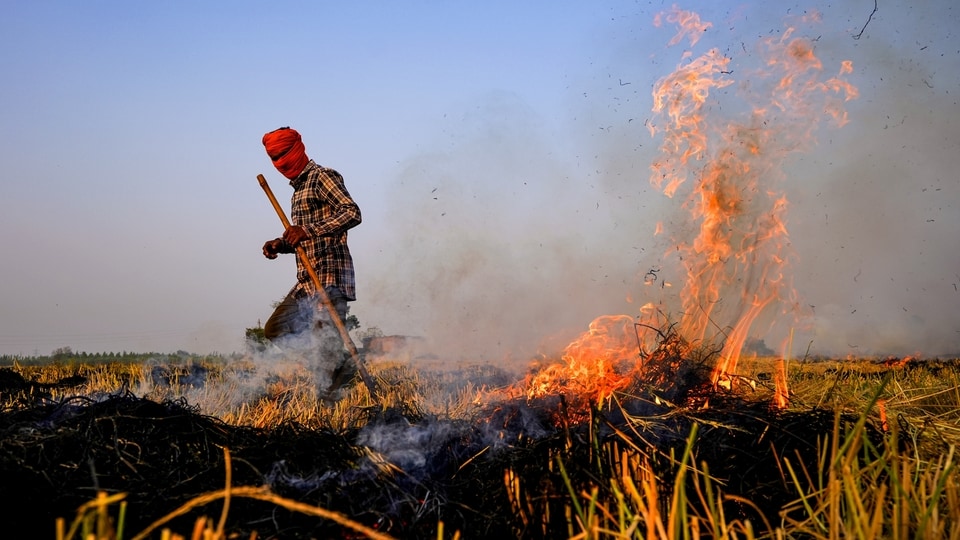
India produces over 500 million tonnes of agricultural residue every year. At least 100 million tonnes of it is burnt, some is discarded and very little is valorised. In a world racing to secure sustainable raw materials, this vast volume of residues shouldn't be viewed as waste. It is a strategic inventory, available at national scale.
The global material market is being redesigned as supply chains shift away from deforestation-linked inputs and carbon-intensive manufacturing. Companies are no longer just buying materials; they are buying resilience, traceability, performance and sustainability embedded in the material itself, and agricultural residue-based fibres deliver all four outcomes. For businesses that move early, they also deliver something rarer that is competitive advantage.
Crop residues such as rice straw, wheat stalk, sugarcane bagasse and banana fibre can now be converted into valuable pulp, paper, packaging, textiles, construction boards and advanced bio-materials. One tonne of residue can yield 0.4 to 0.5 tonnes of high-quality pulp with a carbon footprint up to 70% lower than conventional wood-based fibre, even as the world continues to cut down 5.1 billion trees annually for paper, packaging and viscose. Reducing that dependence is no longer an environmental talking point; it is a supply chain resiliency mandate.
Global demand signals are already flashing green as leading brands such as Flipkart, H&M, Stella McCartney and The North Face embed Next Gen, forest-safe fibres into their textile and packaging sourcing strategies. These are not pilot projects or innovation experiments but commercial decisions backed by procurement commitments. The market has moved and supply now needs to catch up.
India's advantage is structural. It has one of the world's largest agricultural bases, a robust manufacturing ecosystem, experience working with alternative fibres and a clear national ambition to reach $ 2 trillion in exports by 2030. The missing link is not raw material; it is market design that converts available biomass into viable industrial feedstock at scale.
Today, much crop residue is burned because the cost and urgency of clearing fields outweigh the limited returns farmers can earn from selling it, while industry hesitates because aggregation is fragmented, transportation is expensive and processing capacity is limited. These are not resource problems but fundamentally market coordination problems. The moment agricultural residue gets priced and purchased as raw material rather than managed as waste, the economics flip and what was a disposal cost becomes a revenue stream, turning what was a pollution liability into an industrial input.
The way forward requires structural alignment, not incremental trials. Long-term offtake agreements between farmers, cooperatives and manufacturers can convert seasonal waste into predictable supply, while pre-processing hubs near crop clusters can solve logistics and storage inefficiencies. Green capital instruments, blended finance and carbon-linked incentives can crowd in investment for fibre extraction and processing infrastructure, and procurement signals from large industry players can then move from interest to commitment.
For pulp and paper mills, this is a material resilience play, and for brands, in the face of volatility of price and availability of imports, it is a future-proof supply play. However, for the policymakers, it is an economic multiplier play because few opportunities deliver rural job creation, industrial supply security, export competitiveness and climate impact in a single value chain, and crop residue-based packaging delivers exactly that.
The widespread perception of stubble burning, air pollution and farm waste as a crisis masks the underlying reality of a national-scale valorisation failure. The product exists, the demand exists and is growing, and the technology and knowledge exist. The business ecosystem needs alignment but India does not need to invent a new resource base; it already harvests one every season. The countries that dominate the future of fibre will not be those with the most forests or fossil reserves but those that industrialise circular renewables fastest.
The next transformation in global materials will not be mined from the earth; it will be recovered and circular. India holds the feedstock and the world is looking for the supply. This is the moment to build the industry that connects the two and allows India to lead the Next Gen materials economy.
This article is authored by Shruti Singh, India hub director, Canopy Planet.


