
 E-Paper



UPI’s next chapter is about making scale sustainable
This article is authored by Raman Khanduja, co-founder and CEO, Mintoak.

 Prefer HTon Google


For years, the conversation around UPI has rightly focused on adoption. India built one of the world's largest real-time digital payment systems by making payments simple, ubiquitous and accessible. The introduction of a Merchant Discount Rate (MDR) on a limited set of higher-value merchant transactions marks a new phase in that journey. The more important question now is not simply who pays the MDR, but what sustainable economics mean for the ecosystem that has made UPI possible.
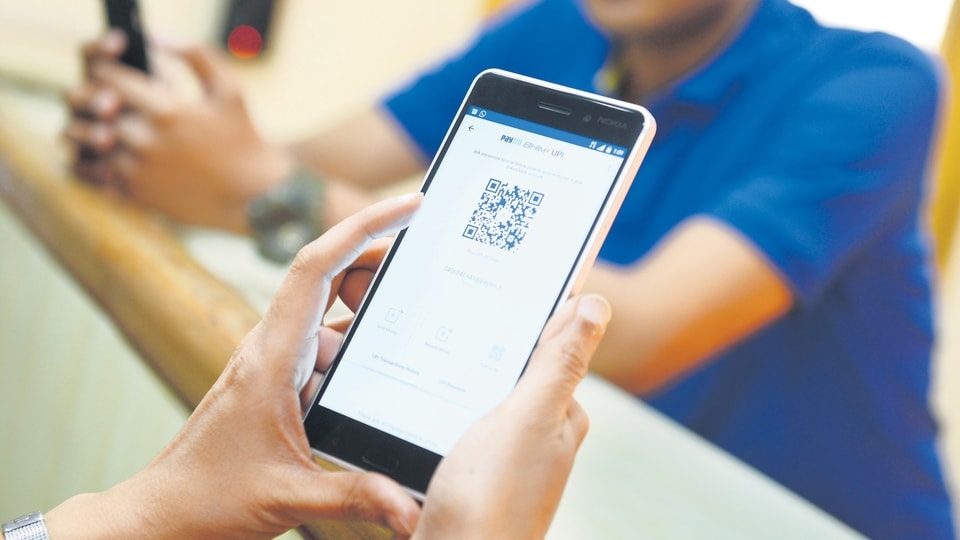
From October 15, the framework introduces an MDR of 0.4% on specified person-to-merchant transactions above ₹2,000, capped at ₹300 per transaction. Transactions up to ₹2,000 remain free, as do person-to-person payments, while small merchants meeting the prescribed criteria continue to receive protection.
Much of the initial discussion has understandably centred on merchants and fintechs. But UPI is a two-sided ecosystem, and banks sit at the centre of both sides.
On one side is the consumer, who needs a bank account, authentication, transaction processing and the trust that allows money to move securely. On the other is the merchant, who needs acceptance, settlement and a banking relationship. Every UPI transaction therefore ultimately connects back to the banking system from both the consumer and merchant ends.
This role is easy to overlook because much of the experience is now invisible to the user. But behind a two-second payment are investments in infrastructure, cybersecurity, fraud prevention, compliance, processing capacity and resilience. At India's scale, these are continuous investments rather than one-time costs.
Fintechs, of course, have played an equally important role in making UPI a mass-market phenomenon. Their contribution to distribution, user experience, innovation and merchant adoption has been significant. The story of UPI is, therefore, not one of banks versus fintechs. It is a story of different capabilities coming together: banks providing accounts, trust and underlying infrastructure, and fintechs bringing distribution, agility and consumer experience.
The MDR framework creates an economic pool across this ecosystem. Under the current devolution structure, issuing banks, merchant acquirers, UPI applications and their banking partners all participate in the economics. That is important because sustainability cannot be achieved by making one participant responsible for the cost of the entire network.
There is also a broader opportunity here for banks. Payments is the only Financial Service that touches a consumer or a merchant daily. For merchants in particular, payments provide a daily window into how a business operates. That engagement can support a broader relationship around working capital, credit, collections, reconciliation, and other business services.
The same principle applies on the consumer side. A payment is not just a transaction; it is an everyday banking interaction. The opportunity for the industry is to use the scale and frequency of these interactions to build better financial experiences without compromising affordability or trust.
The introduction of MDR should not be viewed simply as putting a price on UPI. It represents a shift from an adoption-first model towards one that also recognises the economics required to maintain and evolve critical digital infrastructure.
UPI has already solved the hardest part: Getting India to adopt digital payments at extraordinary scale. The next phase is about ensuring that this scale remains secure, resilient and capable of supporting continued innovation.
The measure of success will ultimately be broader than the MDR collected. It will be whether the ecosystem can use sustainable economics to keep investing in the infrastructure, technology and services that make digital payments valuable to both the consumer and the business.
India's first UPI chapter was about adoption. The next one will be about building sustainably on that scale.
(The views expressed are personal)
This article is authored by Raman Khanduja, co-founder and CEO, Mintoak.


