
 E-Paper



A national sovereign software backbone
This article is authored by Sarjan P Shah, managing director, (India), Shield AI.

 Prefer HTon Google


We live in interesting, if discombobulating, times. For India’s national security establishment, the simultaneous arrival of a revolution in military affairs and an increasingly fractured and fractious world has generated a new urgency around old questions. Among the many difficult choices we now confront are the familiar ones — what we build versus what we buy, where we must partner and cooperate, and upon whom we can place even partial reliance. We require combat aircraft, a plethora of unmanned systems, electronic warfare equipment, long-range and inexpensive missiles, and a whole range of other legacy and next-generation hardware. That conversation is well-rehearsed. A quieter and more consequential conversation is not.
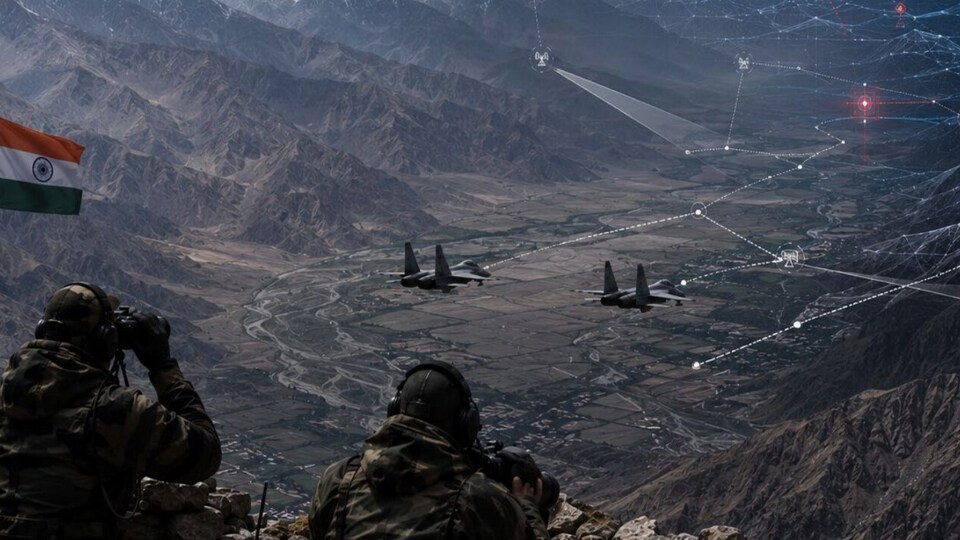
Beneath the hardware sits an entire software ecosystem for defence — the connective tissue that fuses sensors, runs simulations, generates optimised recommendations, and communicates action. This is a modular, interoperable data, AI and software architecture designed to ensure the real-time, continuous digital replication of the battlefield for command and control, coordination, simulation, training and rehearsal. If anything must be built in India, by Indians, it is this system of systems. The risks to sovereign, secure operations in high-intensity conflict scenarios are simply too great to permit any dependence on foreign vendors for the underlying technology stack.
The evidence for this proposition is by now unambiguous. Ukraine and West Asia have made clear that while some features of warfare are changing fundamentally, others have merely been reinforced. On the one hand, the widespread availability of inexpensive unmanned systems has flipped the cost curve, and is compelling a restructuring of global armed forces away from a small number of exquisite manned platforms towards a large number of inexpensive, attritable unmanned ones. On the other, these same battlefields have re-established what the world’s most technologically advanced militaries have always known: information asymmetry is the key to battlefield effectiveness. Today’s battlefields are sensor-dense, information-rich and radically transparent environments in which the arms race for information dominance over one’s adversary has itself become the primary competitive dynamic. Countries that fail to field large, integrated, AI-enabled, networked kill-webs — capable of fusing data, processing it, simulating actions and executing them at speed — will face disaster on the postmodern battlefield.
There is, therefore, an urgent need for the Indian warfighter to be equipped with a common operating picture that permits the closure of integrated kill-webs: decision loops that move rapidly from observation and orientation to decision and action, drawing on distributed networks of sensors, strike platforms and battle-damage assessment. This is not a matter of buying better radios. The future of warfare has become, in significant measure, a software and data problem — an arena in which the country that best harnesses modern data and AI to fuse joint operations across land, air, maritime, space, cyber and electromagnetic domains will win. Such an architecture will allow India to shift from linear kill chains to distributed kill webs, in which sensors, decision nodes and effectors dynamically connect and reconnect under disruption. We must expect sustained offensive cyber and electromagnetic action against us, and adopt doctrinally the posture that our systems must be connected when possible, and effective when disconnected.
India possesses many of the ingredients required to build this indigenously. The scale and depth of the Indian private sector in AI and software engineering, married to selective and strategic global partnerships, can allow us to compete with the best in the world in battlefield management. But this push must be married to significant internal reform within the armed forces and government. To begin with, common standards must be mandated across the services: Data schemas, geospatial references, timing discipline, secure interfaces, identity management, spectrum coordination, and a central synthetic training environment. It is worth remembering, too, what these systems are for. They are designed to reduce the cognitive load on commanders under fire, never to replace their judgement.
India has now firmly established theatre commands, and this welcome push towards jointness must be supplanted by the operationalisation of actual joint warfighting. Organisational integration is a critical first step. But if the services retain incompatible data structures, sensor feeds that cannot be fused, and communications architectures that cannot talk to each other, that integration will remain on paper. The theatre command without a common software substrate is a headquarters, not a warfighting formation. This is where the sovereign backbone earns its name.
The world is not waiting. It is incumbent on India to move with the agility that this new age of warfare demands, and to build, at home and to our own specifications, the digital nervous system on which every future Indian military capability will depend. The question is not whether we can afford to do so. It is whether we can afford not to.
(The views expressed are personal)
This article is authored by Sarjan P Shah, managing director, (India), Shield AI.


