
 E-Paper



Women in STEM and India’s innovation future
This article is authored by Sabarish Chandrasekaran, CEO, MediSim VR and Pilot Neeraj Sehrawat, chief strategy officer, Kailash Kher Foundation.

 Prefer HTon Google


Every year, International Women’s Day offers an opportunity not only to celebrate achievements but also to reflect on the structural transformations required to ensure equitable participation across sectors. Nowhere is this conversation more critical than in Science, Technology, Engineering and Mathematics (STEM), where the future of innovation, industry and national development is increasingly being shaped.
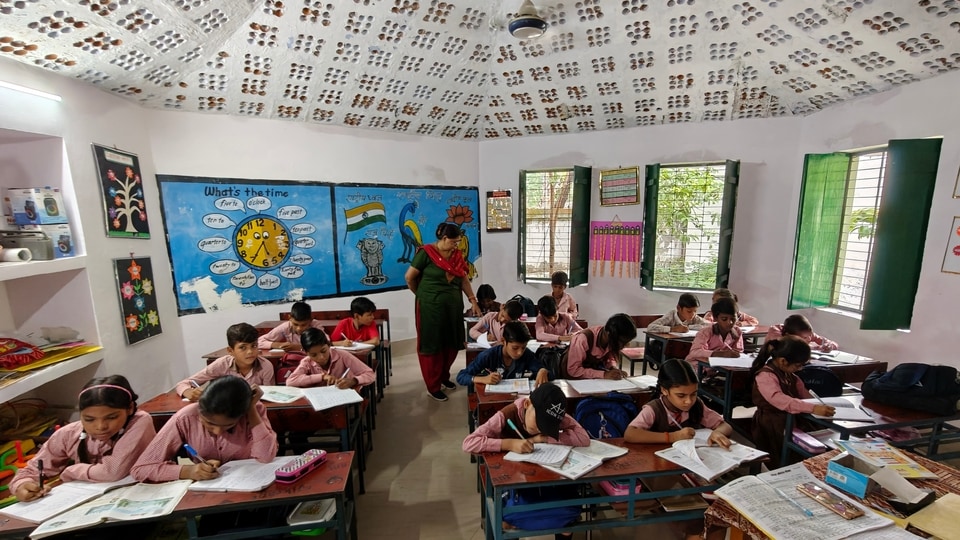
India has made notable strides in expanding women’s participation in STEM education. According to the All-India Survey on Higher Education (AISHE) 2021–22, women constitute 43% of total enrolment in STEM disciplines at the higher education level in the country. This represents a significant shift from earlier decades and reflects growing social acceptance of women pursuing scientific and technical careers.
However, the journey from classrooms to research labs and industry leadership remains uneven. The Research and Development Statistics Report-2023, published by the Department of Science and Technology (DST), shows that women account for only 18.6% of the total workforce engaged as STEM professionals in research and development (R&D) in India. The distribution across sectors also reveals interesting patterns: 45.87% of women in R&D are employed in government institutions, 27.62% in higher education, and 26.51% in industry.
These figures highlight a familiar global challenge. While women are entering STEM education in growing numbers, many encounter barriers during the transition to research careers, leadership positions, and long-term professional engagement. Addressing this gap requires sustained policy support, institutional reforms and a cultural shift that recognises the value of diverse perspectives in science and technology.
Recognising this challenge, the Government of India has undertaken a range of targeted measures aimed at addressing the dropout rate of girls and women in STEM education and careers that often arises from personal or social responsibilities at different stages of life.
Key initiatives include scholarships, fellowships and internships spanning the entire academic spectrum, from school education to post-doctoral research. Programmes such as Vigyan Jyoti, WISE-Doctoral of Philosophy (PhD), WISE-Post Doctoral Fellowship (PDF), WISE-Intellectual Property Rights (IPR), and Women’s Instinct for Developing and Ushering in Scientific Heights & Innovation (WIDUSHI) have been designed to reduce financial barriers and encourage sustained participation in STEM disciplines.
Beyond financial support, several enabling provisions have been introduced to make STEM careers more accessible and sustainable for women. These include hostel accommodation, structured mentoring programmes, career counselling, maternity benefits, exposure visits, and opportunities to interact with accomplished women scientists and innovators. Such support systems are crucial for ensuring continuity in education and research, minimising attrition and strengthening long-term engagement in scientific careers.
A particularly significant initiative is the Women in Science and Engineering–Knowledge Involvement in Research Advancement through Nurturing (WISE-KIRAN) programme implemented by the Department of Science and Technology. The scheme seeks to enhance the participation and retention of women in research and development across science and technology domains.
One of the most impactful components of WISE-KIRAN is its focus on enabling re-entry opportunities for women scientists who may have taken career breaks due to family or personal commitments. By providing structured research support and fellowships, the programme helps talented professionals return to scientific research and contribute to both basic and applied sciences.
Another innovative component is WISE-IPR, which offers one-year training programmes in intellectual property rights and its management for women scientists and technologists in the 25–45 age group. The objective is to develop a skilled cadre of women professionals who are well-versed in intellectual property laws, technology protection and innovation management.
Leadership development is also receiving increasing attention. Dedicated programmes are being implemented to strengthen leadership competencies among early- and mid-career women scientists. These initiatives aim to equip professionals with managerial, administrative and research leadership skills that enable them to take on greater responsibilities within academic, industrial and research institutions.
Complementing these efforts, the Department of Biotechnology supports women’s career progression through the Biotechnology Career Advancement and Re-orientation (BioCARe) Fellowship, which facilitates re-entry and sustained participation of women in the biotechnology sector. Similarly, the Council of Scientific and Industrial Research (CSIR) launched ASPIRE in 2023 to promote women-led research and strengthen their professional advancement across the country.
The significance of expanding women’s participation in STEM becomes even more pronounced in the context of emerging technologies. Fields such as Artificial Intelligence (AI), data science, robotics, biotechnology and immersive technologies are redefining industries and shaping the future of work.
AI, in particular, is poised to influence nearly every aspect of modern life, from health care and education to governance and manufacturing. As AI systems increasingly guide decision-making processes, it becomes essential that the teams designing and training these technologies represent diverse perspectives. Greater participation of women in AI and related domains will help ensure that innovation remains inclusive, ethical and socially responsive.
The convergence of digital technologies, health care innovation and advanced simulation tools offers a powerful illustration of this potential. When diverse teams of scientists, engineers and medical professionals collaborate, the resulting solutions are often more holistic and impactful. Encouraging women to lead and participate in such technological frontiers will be crucial for India’s long-term innovation ecosystem.
International Women’s Day, therefore, serves as a reminder that empowering women in STEM is not merely a question of equity. It is fundamentally about strengthening a nation’s scientific capacity, expanding its innovation potential and building a knowledge economy that benefits from the full spectrum of talent available in society.
India has already laid an important policy foundation through targeted schemes, institutional support mechanisms and expanding educational access. The next phase of progress will depend on sustained mentorship, industry engagement, supportive workplace environments and continued encouragement for young girls to pursue scientific curiosity without hesitation.
As India advances toward becoming a global innovation hub, the role of women scientists, engineers, technologists and researchers will only grow in importance. Investing in their education, careers and leadership will ultimately help shape a more inclusive, resilient and forward-looking scientific ecosystem for the country.
On this International Women’s Day, the message is clear: When women thrive in STEM, innovation thrives with them.
This article is authored by Sabarish Chandrasekaran, CEO, MediSim VR and Pilot Neeraj Sehrawat, chief strategy officer, Kailash Kher Foundation.


