
 E-Paper



Beyond the first spark - Why the battle for clean cooking in India has only begun
This article is authored by Parul Batra, consultant, Public Policy and former journalist.

 Prefer HTon Google


Outside village panchayats and municipal offices in Goa, people lined up to submit forms. The state had just rolled out the Goa Ujjwala Yojana, an annual direct benefit transfer of ₹3,000 meant to cover roughly three domestic gas refills. There was no income cap, the government wanted this to reach everyone. But the rush to register raises an odd question: A decade after India launched the world's largest clean cooking programme, why are people still scrambling for state-level fuel subsidies?
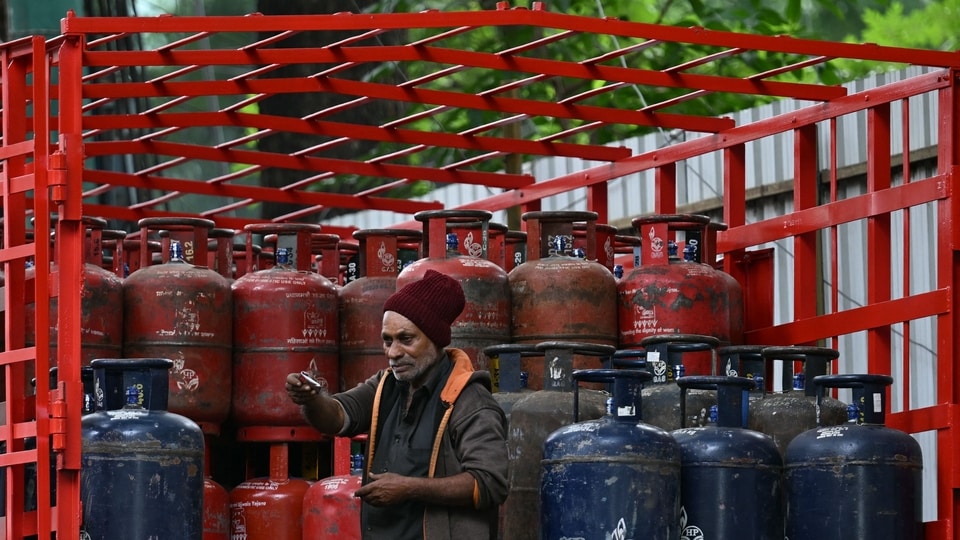
Goa isn't an outlier. Rajasthan has stepped in so households under the central welfare umbrella can buy cylinders at a capped ₹450. Madhya Pradesh runs something similar through its Ladli Behna scheme, topping up subsidies so beneficiary women never pay more than ₹450 a refill. Uttar Pradesh has gone further still, handing out free refills around Holi and Diwali to keep gas flowing into poorer kitchens during the festive season.
From Goa's coastline to the plains of north India, the pattern is hard to miss. Getting a cylinder into someone's home turned out to be the easy part. Keeping it full is where the real struggle lives.
To understand what an LPG cylinder actually means to an Indian household, it helps to remember how most of the country was cooking barely a decade ago. Somewhere between 2011 and 2014, government estimates put the number of households without modern cooking fuel at well over 10 crores. Behind that number was a daily grind carried almost entirely by women in their backs, and in their lungs.
The day didn't start with an ignition click. It started with a walk to forest edges, canal banks, fallow fields, hunting for dry twigs and fallen branches. Where wood ran out, women mixed cow dung with straw and pressed it into cakes to dry against the wall.
Cooking over a mud chulha was, in effect, a slow form of self-poisoning. Smoke-filled kitchens with poor ventilation meant breathing in carbon monoxide and fine particulate matter day after day. Doctors have long noted that three hours near that smoke does roughly the damage of smoking several dozen cigarettes and it shows up later as chronic bronchitis, cataracts, complicated pregnancies and respiratory infections in infants.
Every hour spent foraging for fuel, blowing into damp firewood through an iron pipe, or scrubbing soot off aluminium pots was an hour taken away from rest, from school, from earning a wage.
When the Union government launched the Pradhan Mantri Ujjwala Yojana (PMUY) in May 2016, the goal was simple on paper: Remove the upfront cost that kept poor families locked out of clean fuel. Until then, getting a gas connection meant paying a security deposit for the cylinder and regulator, money most poor households simply didn't have lying around. Ujjwala waived that deposit and put the connection in the name of an adult woman in the house, which changed the equation entirely.
The scheme moved fast. What began as a target of five crore connections kept expanding, and by late 2026, official records showed more than 10.5 crore Ujjwala connections nationwide.
For millions of women, this wasn't just a policy line item, it was felt. Tea was ready in minutes. Kids made it to school on time. Kitchens stopped filling with smoke. It gave women more control over their own space and it spared their bodies from years of accumulated damage.
The real challenge in clean energy adoption isn't access, it's sustained use. Upfront subsidies clear the entry barrier, but it's ongoing affordability that decides whether a habit actually sticks.
Having a shiny red cylinder in the house is not the same as retiring the mud stove for good and that's the gap planners underestimated. Field surveys, including successive rounds of the National Family Health Survey (NFHS), point to something economists call "fuel stacking." Instead of abandoning the chulha, households keep both going. LPG gets used for the quick jobs, morning tea, boiling milk, an unexpected guest at the door. The heavier cooking, rice, lentils, the daily batch of rotis, often goes right back to firewood.
Affordability is the root of it. A daily wage earner, or a family working someone else's land, rarely has ₹800 or ₹900 sitting around in cash the moment a cylinder runs dry. Firewood, crop stalks, dung, all of it is exhausting to collect, but it costs nothing. When it comes down to buying rations or refilling a cylinder, the cylinder loses. It just sits in the corner.
Logistics don't help either. In a scattered Himalayan village, a desert hamlet, or a home deep inside forest cover, hauling an empty cylinder to a distribution point or waiting days for a delivery van is enough to make people give up and go back to the matchstick and firewood.
This is exactly why clean cooking can't be handled as one uniform, central policy. India's economic map is too varied for that. A tribal household in Odisha or Jharkhand near a forest makes very different fuel choices than someone in an urban settlement in Tamil Nadu, or a farming family in Punjab.
State governments are simply better placed to see where the national safety net is thinning. When states step in Goa's annual credit for three refills, the price caps in Rajasthan and Madhya Pradesh, the festive relief in Uttar Pradesh, they aren't competing with Ujjwala. They're protecting what's already been built.
State support is what turns a cylinder from an emergency backup into something a family actually cooks with every day. Without that layer, all the money already spent on distribution networks and starter kits risks producing far less in actual health gains than it should.
India has cleared its first big hurdle: Nearly every home now has an LPG connection. But the question that matters for the next decade isn't whether a family owns a cylinder. It's whether they can afford to light it, every time they cook.
This article is authored by Parul Batra, consultant, Public Policy and former journalist.


