
 E-Paper



Deaths in open drains are not natural disasters
This article is authored by Krishna Malakar, assistant professor, climate policy, Indian Institute of Technology, Madras.

 Prefer HTon Google


Every monsoon, tragic stories emerge from India's cities. A child falls into an uncovered drain hidden beneath floodwaters. A commuter navigating a waterlogged street is swept into an open manhole. A pedestrian steps into what appears to be a shallow puddle and disappears into a stormwater channel.
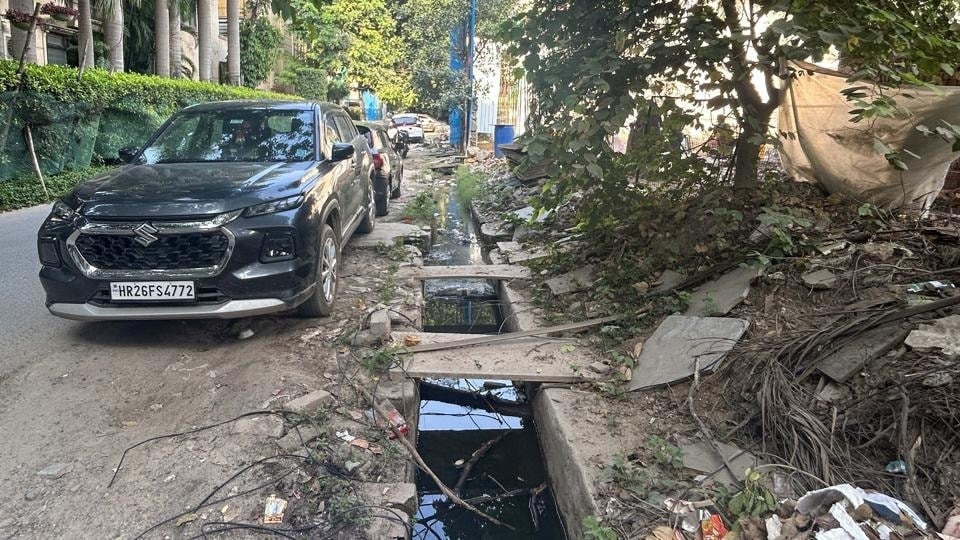
The immediate trigger may be heavy rainfall. But the deaths themselves are not natural disasters.
They are preventable failures of urban governance.
As the climate crisis increases the frequency and intensity of extreme rainfall, urban flooding has become a recurring feature of city life. Roads are submerged, transport systems disrupted, and neighbourhoods inundated. Yet while public attention often focuses on rainfall, far less attention is paid to the risks that cities create long before the first storm arrives.
Open drains are one such risk.
Across many Indian cities, drains remain uncovered, poorly marked, inadequately maintained, or concealed beneath floodwaters during heavy rains. Residents are often aware of these hazards. Municipal authorities are aware of them too. In many cases, the same locations pose dangers year after year.
Open drains are one visible manifestation of a broader problem: the persistence of known urban flood risks.
The tragedy is not that these risks are unknown. The tragedy is that they are known and continue to be tolerated.
When a person dies after falling into an open drain during heavy rainfall, the event is often absorbed into broader discussions of floods and extreme weather. The tragedy becomes another consequence of an unusually severe monsoon.
But framing matters.
If such deaths are viewed primarily as outcomes of extreme weather, the response is likely to focus on emergency measures, rescue operations, compensation, and recovery. These actions are necessary. Yet they do little to address the conditions that made the deaths possible in the first place.
The reality is that many of these risks are visible long before disaster strikes. Cities know which neighbourhoods experience chronic flooding. They know where drainage systems are damaged or incomplete. They know which hazards reappear every monsoon.
In other words, many flood-related deaths are not the result of uncertainty. They occur despite the risks being known.
This is what makes them particularly troubling. They are not simply disasters we fail to predict. They are hazards we fail to prevent.
The persistence of such deaths reflects a broader challenge in urban governance.
Most policy attention is activated after flooding occurs. Emergency teams are deployed, compensation is announced, damaged infrastructure is repaired, and committees are formed to investigate what went wrong. These measures are important, but they are largely reactive.
As a result, many cities have become trapped in a recovery cycle—responding to disasters repeatedly without reducing the risks that produce them.
Each flood generates public concern, media attention, and promises of corrective action. Yet once floodwaters recede, attention shifts elsewhere. Meanwhile, many of the underlying risks remain.
This pattern is reinforced by fragmented governance. Flood risk is not created by rainfall alone. It emerges through the interaction of drainage infrastructure, land-use planning, waste management, environmental regulation, construction practices, and institutional accountability. Yet these functions are often managed by different agencies with limited coordination.
The result is a familiar cycle: Repeated flooding, repeated losses, and repeated recovery.
We have become increasingly capable of responding to disasters, but far less successful at preventing them.
Breaking this cycle requires a shift in how urban flood risk is governed. The objective should not simply be to recover more quickly after floods, but to prevent foreseeable tragedies from occurring in the first place.
The solutions are hardly a mystery. Cities already know their flood-prone neighbourhoods, drainage bottlenecks, vulnerable infrastructure, and recurring hazards. The knowledge exists; what is missing is a governance system that prioritises prevention over response.
As the climate crisis increases the pressure on urban systems, the costs of inaction will only grow. But climate change is only part of the story. It may intensify the hazard, but governance failures determine whether heavy rainfall becomes a tragedy.
Cities cannot prevent every extreme rainfall event, but they can prevent many of the avoidable harms that follow.
Every death in an open drain should prompt a simple question: was this truly a natural disaster, or a known risk that nobody acted upon?
Until urban governance shifts from managing the consequences of disasters to reducing the risks that create them, such deaths will continue to occur.
They are not accidents.
They are the predictable consequences of risks we have chosen to ignore.
(The views expressed are personal)
This article is authored by Krishna Malakar, assistant professor, climate policy, Indian Institute of Technology, Madras.


