
 E-Paper



India’s maritime Amrit Kaal and the pursuit of energy autonomy
This article is authored by Monica B. Sood, chairperson, National Unity & Security Council.

 Prefer HTon Google


In an era when the tides of geopolitics shift with the winds of energy demand, India is charting a course that is both audacious and anchored in its civilisational wisdom. The sea, long a witness to India’s trade, invasions, and pilgrimages, is now being reimagined—not as a passive frontier, but as a fulcrum of strategic power.
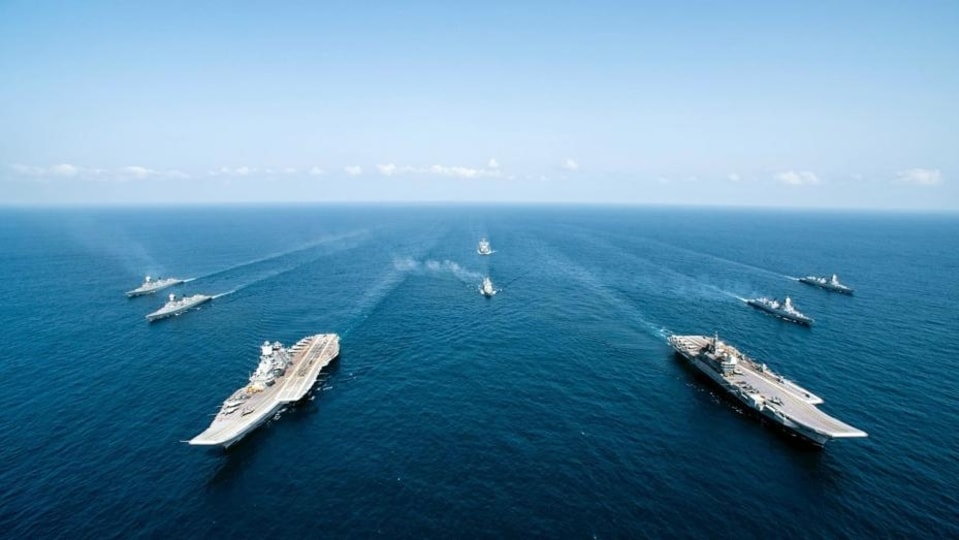
In 2023, Prime Minister Narendra Modi unveiled India’s Maritime Amrit Kaal Vision 2047, a landmark declaration that seeks to transform India into a global maritime power by the time it completes a century of independence. The vision is not a policy—it’s a paradigm shift. It speaks of modernising ports, building shipyards, fostering maritime clusters, enhancing coastal infrastructure, and most crucially, expanding India’s blue economy as a key pillar of national growth. What was once a forgotten shoreline is now a stage for national ambition.
The phrase “blue economy” is no longer a catchword—it has become India’s compass for prosperity. With over 7,500 kilometres of coastline, more than 200 ports, and a young shipping sector waiting to be unshackled, the Maritime Amrit Kaal signals that India’s true potential may lie not in its landlocked silos, but in its open seas. And nowhere is this more pressing than in the domain of energy security.
India’s continued import of Russian crude oil—approximately 1.9 million barrels per day in 2025—is not a political alignment but an economic imperative. With 85% of its oil demand met by imports, India has consistently chosen pragmatism over posturing. Russian oil, post-Ukraine war, has been available at heavily discounted prices. For a developing nation balancing inflation, welfare, and defence, the math is clear—even if the optics displease the West.
Today, India imports oil from over 30 countries including Iraq, the UAE, Saudi Arabia, Nigeria, the United States, and Brazil. Its procurement framework includes both long-term sovereign agreements and nimble spot-market purchases. The flexibility is intentional—sovereignty must come not just from having oil, but from choosing where, how, and in what currency to buy it.
With Donald Trump’s return to the White House, the global sanctions regime has been reinvigorated. His administration has hinted at punitive measures for nations transacting with sanctioned entities, including Russia. While India has so far managed to navigate the diplomatic labyrinth skillfully, secondary sanctions on banking systems and shipping logistics remain an ever-present threat.
Yet, India’s posture is unapologetically sovereign. As Petroleum Minister Hardeep Puri recently stated, India will always prioritise the needs of its citizens over external pressures. The principle is simple: energy security is national security.
India’s fortunes may be turning below its own waves. The Andaman Sea—a region more known for coral reefs than crude—has emerged as a potential game-changer. Early surveys suggest multiple “Guyana-scale” discoveries, with over 10 billion barrels of crude possibly recoverable. If validated, this would not only slash India’s import dependency, but also catapult it into the league of net exporters, thereby reshaping the regional energy architecture.
Imagine India, by 2047, exporting refined crude through its own shipping lines, processed in floating refineries stationed off Port Blair, and traded in a multi-currency format bypassing the petrodollar cartel. That is not a dream. That is a plan.
PM Modi’s Maritime Amrit Kaal is not just a slogan—it’s a strategy. It recognises that a maritime superpower is not defined by naval strength alone, but by shipping lanes, port security, export logistics, fisheries, offshore energy, underwater cables, and eco-marine resilience. The blueprint aims to double the contribution of the blue economy to India’s GDP by 2047. That includes unlocking wealth beneath the sea, on the surface, and through global trade.
The Chennai–Vladivostok Maritime Corridor is already operational, cutting delivery timelines by 40%. But more corridors are required—not just shipping lanes, but energy arteries.
Here are some solutions for India’s energy future:-
- Blue rupee - A non-dollar oil basket: Create a sovereign energy settlement platform using a mix of rupee, ruble, yuan, and dirham. India must institutionalise this to neutralise dollar volatility and sanction vulnerability.
- Sovereign oil tanker fleet: India must commission its own deep-sea oil tanker fleet under the tricolour, operated and insured by Indian entities. This shields oil logistics from foreign pressure.
- Floating oil refineries and storage units (forus): Deploy deep-sea refineries and oil depots off the Andaman coast to reduce dependency on inland pipelines, refine closer to source, and create floating strategic reserves.
- Tech-for-oil barter diplomacy: India can offer pharma, IT, satellite tech, and agri-solutions to oil-rich nations in exchange for long-term energy deals—building a modern barter system.
- Distributed SPR clusters: Move beyond underground reserves. Build regional, even mobile petroleum reserves along India’s coastline and offshore points. This enhances resilience during crises.
- Indo-pacific energy diplomacy forum: Host an annual summit in Port Blair inviting Indo-Pacific nations to discuss oil corridors, maritime safety, and regional energy cooperation. Let India lead the discourse.
- A future anchored in the sea: India’s path to energy sovereignty must now run through the sea. Whether it is tapping black gold under the Andaman seabed, building a fleet of sovereign tankers, or settling oil payments in the ‘Blue Rupee’, the ocean is India’s new battlefield—not for war, but for wealth, security, and strategy.
The Maritime Amrit Kaal Vision 2047 has laid the keel. Now it is for our institutions, innovators, and industrialists to hoist the sail.
Because in a century marked by climate volatility, shifting alliances, and digital trade, India’s future will not only be built on land—but forged upon water.
“He who commands the sea,” wrote Alfred Thayer Mahan, “has command of the world.”
In 2047, it may well be India holding the helm.
This article is authored by Monica B. Sood, chairperson, National Unity & Security Council.


