
 E-Paper



Making budget schools part of the solution
This article is authored by Afiya Biju, research assistant and Nissy Solomon, senior research associate, Centre for Public Policy Research, Kochi.

 Prefer HTon Google


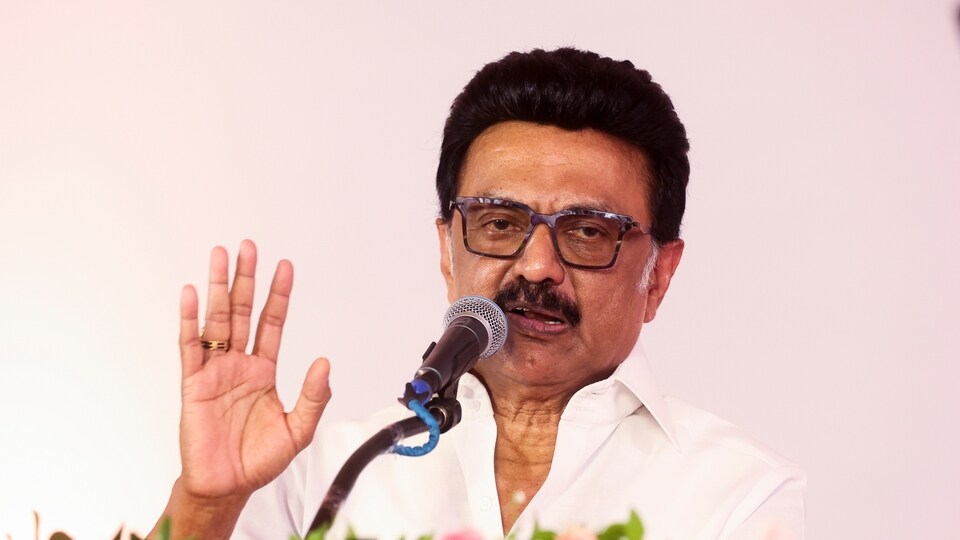
Tamil Nadu’s chief minister, MK Stalin, described the recently introduced Tamil Nadu State School Education Policy (TNSEP) as a roadmap for Samathua Kalvi (equitable education) and Pagutharivu Kalvi (rationalist education). The policy introduces many welcome initiatives in pedagogy, technology integration, foundational learning, and decentralised governance, all aimed at strengthening government schools. However, improving overall learning outcomes requires extending this vision to private schools as well, which enrol nearly half of the state’s students, but the broader regulatory landscape continues to treat private schools primarily through the lens of compliance and control, rather than as partners in achieving educational quality.
Under the RTE Act and the 2023 Private School Regulation Rules, private schools in Tamil Nadu must meet extensive compliance requirements for legal recognition, mainly focused on infrastructure, teacher qualifications, RTE admissions and fee regulations. The Directorate of Private Schools oversees recognition, infrastructure norms, teacher recruitment, RTE compliance, and fee fixation. At the district level, District Education Officers inspect higher secondary schools, including both public and private, but their focus remains on administrative compliance rather than pedagogical quality. Learning outcomes are monitored separately through the State Council of Educational Research and Training (SCERT-TN), which provides curriculum guidance, textbooks, assessment frameworks, and indirect oversight of learning quality. The overall regulatory framework reveals a structural gap. Inspections emphasise verifiable inputs and processes, which are easier to monitor, while student learning, including mastery of reading, math, and critical thinking, requires deeper engagement, systematic assessment, and follow-up. The absence of a system linking inspection findings to learning assessments and remedial action means that regulations enforce compliance but do not systematically improve student outcomes.
While basic safety and hygiene are non-negotiable, the overemphasis on physical infrastructure has often overshadowed the core purpose of schooling, which is learning. The current regulatory framework does not define minimum learning outcomes, mandate standardised assessments, or link recognition to corrective action when learning outcomes are poor. As a result, recognition is decoupled from educational quality. According to ministry of education data from 2024, 255 private unaided schools, mostly low-fee institutions serving children from low- and middle-income families, remain unrecognised because they failed to meet infrastructure norms. Schools delivering quality teaching can therefore be penalised for reasons such as not owning contiguous land or building elaborate facilities.
Meanwhile, government schools often operate under much laxer scrutiny. A 2022 CAG audit found many secondary and higher secondary schools functioning in unsafe or makeshift settings, under trees, in labs, or in dilapidated buildings, without building licenses or safety clearances. While TNSEP’s decentralised governance model for public schools, including active School Management Committees and periodic third-party monitoring, may address some of these existing challenges in public schools, state-wide improvement in learning outcomes will only come if private schools are also supported to prioritise student learning over mere compliance with infrastructure requirements.
Almost half of Tamil Nadu’s students, nearly 48%, study in private schools. As per official data, 77% of private schools in Tamil Nadu are low-fee private schools that charge less than ₹20,000 annually and serve low- and lower-middle-income families. This data indicating the dominance of low-fee schools in Tamil Nadu in the private schooling landscape is important from a policy standpoint because well-intentioned regulations, such as fee controls or infrastructure mandates, risk adversely affecting low-fee schools, which may be successfully delivering learning outcomes but lack the resources to meet additional requirements.
For these schools, infrastructure-heavy mandates are costly, diverting scarce resources from operations to meet expensive compliance demands. The biggest casualty is the teacher who often remains underpaid, faces delayed salaries, thereby undermining the continuity and quality of classroom instruction.
Similarly, rigid fee regulation for low-fee schools carries many unintended consequences. The fee-regulation committee imposes significant administrative burdens on schools, requiring detailed documentation, justification, and reporting of expenditures. Fee caps further constrain low-fee schools’ ability to invest in pedagogical innovation or technology integration. Consequently, funds that could otherwise enhance learning outcomes, such as hiring qualified teachers or procuring learning materials, go to satisfy regulatory documentation requirements or infrastructure mandates that do not necessarily improve educational quality.
In this context, a categorical regulatory framework is warranted where low-fee schools should be subject to context-sensitive regulations that maintain safety, hygiene, and child protection, while offering flexibility on additional infrastructure requirements, library size, sports facilities, and fee structures. This approach would preserve operational viability and allow schools to focus on learning outcomes.
If Samathuva Kalvi is the goal, then regulation itself must become equitable. Recognition should focus on whether children are learning, not just whether schools meet land or building codes. An independent and unbiased body with clear separation of powers, covering both public and private schools, would make the system fairer. True equity in education will not be achieved by regulating one set of schools while overlooking the other. True equity in education will emerge when every child, irrespective of their school, receives a guarantee of both safe infrastructure and meaningful learning.
This article is authored by Afiya Biju, research assistant and Nissy Solomon, senior research associate, Centre for Public Policy Research, Kochi.


