
 E-Paper



Consequences of ending the new START Treaty
This article is authored by Pravesh Kumar Gupta, associate fellow (Eurasia), Vivekananda International Foundation, New Delhi.

 Prefer HTon Google


The expiration of the New START treaty on February 5, 2026, marks one of the most consequential shifts in global nuclear security since the end of the Cold War. For over five decades, starting with the original SALT agreements in the 1970s, the US and Russia (and before it, the erstwhile Soviet Union) maintained some form of bilateral restraint on their strategic nuclear arsenals. As of today, that era has ended. The world's two largest nuclear powers, accounting for roughly 85-90% of the global stockpile, now face no legally binding limits on their deployed strategic warheads or delivery systems.
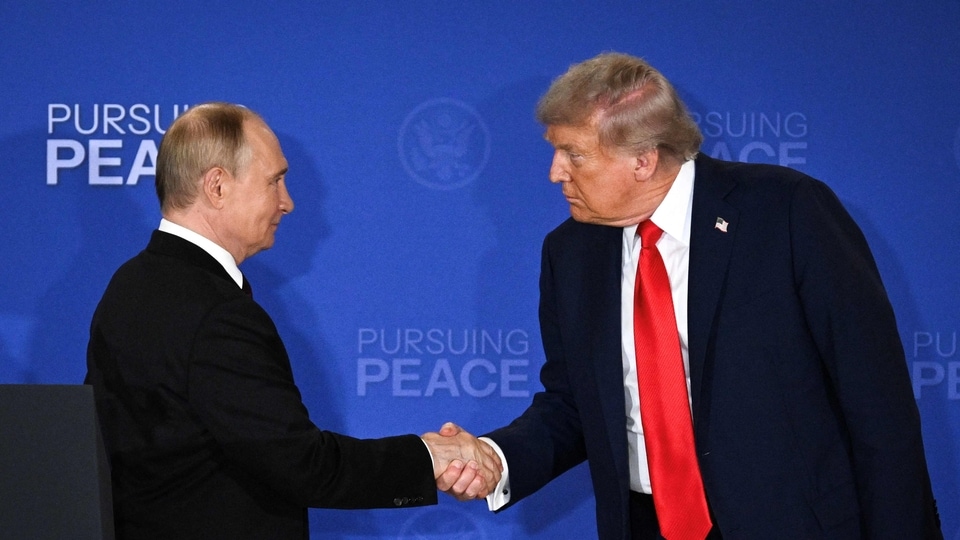
New START, signed in 2010 by Presidents Barack Obama and Dmitry Medvedev and extended once in 2021 under Joe Biden and Vladimir Putin, capped each side at 1,550 deployed strategic nuclear warheads on no more than 700 deployed intercontinental ballistic missiles (ICBMs), submarine-launched ballistic missiles (SLBMs), and heavy bombers. It included robust verification, particularly of biannual data exchanges, notifications of movements or tests, and on-site inspections, to build confidence and reduce the risk of surprises or miscalculation. These mechanisms weren't perfect. They couldn't fully cover tactical nuclear weapons or emerging systems like hypersonics, but they provided a critical floor of predictability in an otherwise volatile relationship.
The treaty's unravelling began years ago. Russia suspended participation in inspections and most verification activities in 2023, citing US support for Ukraine and alleged American violations. These claims are often rejected by the US. Compliance had already frayed, with mutual accusations flying in the Bilateral Consultative Commission. By late 2025, hopes for a formal successor dimmed amid geopolitical tensions. Russia proposed in September 2025 a one-year voluntary adherence to the numerical limits post-expiration, without full verification. It was intended to buy time for talks. President Trump initially seemed open to the idea but ultimately publicly rejected it. He posted on Truth Social that New START was a ‘badly negotiated deal’ that Russia had grossly violated. He insisted that experts should craft a new, improved, and modernised treaty instead, which could potentially be trilateral to include China's expanding arsenal.
Despite that rhetoric, eleventh-hour diplomacy produced a partial lifeline. Reports from February 5 indicate the US and Russia reached an informal understanding to continue observing the core deployment limits (1,550 warheads on 700 systems) in good faith for at least six months while negotiating a replacement. This handshake arrangement, confirmed by US officials but not legally binding or verified through inspections, avoids an immediate free-for-all. It buys breathing room but rests on mutual restraint amid deep mistrust. There is no data sharing, no on-site checks, just verbal commitments that could evaporate if tensions flare.
In the short term, dramatic changes are unlikely. Both nations are constrained by budgets, production timelines, and ongoing modernisation programs. Neither side has massive upload capacity ready to surge overnight without visible, costly effort. The informal understanding reinforces deterrence stability for now. neither US nor Russia wants to be seen as the first to break the numerical ceiling and trigger escalation.
But the medium- to long-term risks are profound and mounting. Without caps, upload potential becomes a wildcard. Both countries could add hundreds of warheads to existing missiles and bombers relatively quickly if political winds shift. Uncertainty can lead to negative assumptions. For example, Pentagon planners may feel pressured to respond quickly to Russia's nuclear weapons or China's expected growth in their arsenal, which could exceed 1,000 warheads by 2030. Meanwhile, Russia sees US missile defence systems, such as the proposed Golden Dome, as a threat to stability. In crises, whether over Ukraine, the Baltics, Taiwan, or elsewhere, the absence of transparency mechanisms raises the odds of miscalculation. An accidental escalation could spiral faster without the guardrails that New START once provided.
Globally, the fallout undermines broader non-proliferation efforts. UN Secretary-General António Guterres called the expiration a grave moment, warning that ‘we are entering "uncharted territory" with nuclear use risk at its highest in decades’. The Non-Proliferation Treaty (NPT) relies on nuclear-weapon states pursuing disarmament in good faith. Its erosion weakens incentives for non-nuclear states to forgo weapons. European allies, already anxious about the credibility of US extended deterrence amid Trump's transactional approach, face heightened uncertainty. Some voices in Europe urge stepping up their own risk-reduction initiatives or pressing for renewed talks, given NATO's frontline exposure to Russian tactical nukes.
The multipolar reality complicates everything. China's rapid buildup, silos, mobile missiles, and submarine expansions shift the landscape from bilateral to trilateral. Trump has repeatedly tied any new deal to including Beijing, but China insists the superpowers reduce first before it joins, viewing its smaller force as defensive. Russia has suggested that multilateralism should include France and the UK as well. These incompatible positions make a comprehensive successor elusive, potentially locking in a prolonged era of arms competition.
Critics argue the lapse was avoidable. Russia's one-year proposal offered a pragmatic bridge, but proponents of a tougher stance see opportunity. Discard an outdated pact violated by Moscow and negotiate from strength in a world of multiple peers. Yet history shows arms control succeeds when mutual vulnerability is acknowledged, not denied. Voluntary restraint can work temporarily, but without verification, it invites suspicion and breakout incentives.
The informal limits hold for now, but they're paper-thin. If talks falter or if a crisis erupts, the path to unconstrained competition opens wide. Nuclear stability has always depended on communication, transparency, and restraint more than raw numbers. Losing the last formal tool for those ends isn't just a diplomatic footnote; it's a step toward a more dangerous world unless leaders prioritize diplomacy over posturing soon. The clock is ticking. In an age of hypersonics, cyber threats, and great-power rivalry, letting the guardrails vanish risks turning deterrence into disaster. The question isn't whether a new framework is possible. It's whether political will exists before the window closes for good.
As nations navigate this precarious environment, the absence of arms control agreements like New START creates uncertainty and the risk of escalation. It is crucial for global leaders to recognise the stakes involved and work towards establishing mechanisms that foster transparency, build trust, and ideally lead to disarmament. Without proactive engagement and renewed diplomatic efforts, the risk of miscalculation and nuclear confrontation could reach unprecedented levels, threatening not only regional stability but global security.
This article is authored by Pravesh Kumar Gupta, associate fellow (Eurasia), Vivekananda International Foundation, New Delhi.


