
 E-Paper



Gen Z versus old guard: Nepal elections will be democracy’s litmus test
This article is authored by Rishi Gupta, assistant director, Asia Society Policy Institute, Delhi.

 Prefer HTon Google


Following last year’s Gen Z protests that toppled Prime Minister (PM) KP Sharma Oli’s government and set the parliament ablaze, Nepal is gearing up to hold a general election on March 5—the fifth since the advent of democracy in the country in 2008.
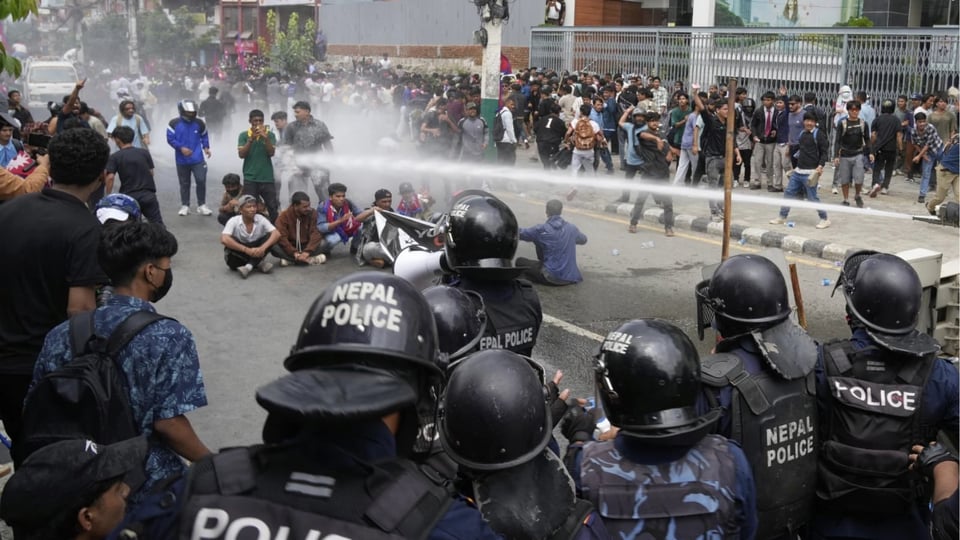
In September of 2025, what began as a peaceful protest by Gen Z youth against the government's ban on 26 social media applications became a broader movement against corruption, nepotism, misgovernance, and political instability. Now, an estimated 18.9 million voters, 9,15,119 of whom are voting for the first time, will go to the polls in a test of whether reform can bring about major change.
Voters will dictate the future of 3,406 candidates who are contesting for a total of 165 seats in the lower house of the parliament through a first-past-the-post system. Yet, as traditional political parties have prevailed in other elections across Asia, there are growing questions about whether the upcoming election will bring about a major change in Nepal or whether traditional parties, and their ageing leadership, will once again dominate the political landscape.
In the 17 years since its transition to democracy, Nepal has had more than ten different prime ministers—a testament to the country’s deep-rooted political instability. During the 2025 Gen Z Movement, young Nepalese demanded political stability, calling, in many ways, for a change of the old guard who have long been commanding decision making in Kathmandu. While inspired by the Gen Z Movement in Indonesia, the Nepalese youth’s calls also echoed those in Bangladesh, where widespread student-led protests erupted in July 2024 against PM Sheikh Hasina’s regime.
What began as anger over entrenched patronage networks in Nepal quickly broadened into a mass movement, with demonstrators calling for constitutional reforms. But do the populist movements convert into electoral gains? The results of the Bangladesh and Thailand general elections seem to warn that they do not. Nepal, too, may prove to be a similar case where, despite calls for reform, traditional parties—Nepali Congress, Communist Party of Nepal-UML (CPN-UML), Nepali Communist Party (NCP), etc.—might still hold the electoral ground.
In the forthcoming elections, there are 68 political parties vying for office, but the main contest is between the Nepali Congress, CPN-UML, NCP and the Rastriya Swatantra Party (RSP). Despite Gen Z’s role in the protests, across all the main parties, candidates under 40 remain underrepresented: CPN-UML fielded 12, Nepali Congress fielded 7, NCP fielded 13, and RSP topped with 65 candidates in that category.
The Maoist Centre and nine other Left parties have joined hands to form a united front, the NCP has promised reforms, including instituting merit-based appointments within the civil service—a move that potentially aims to depoliticise the bureaucracy and facilitate the induction of meritorious service persons. Still, the party stopped short of changing its core platform and leadership, instituting former Maoist Centre leader and former PM Pushpa Kamal Dahal (Prachanda) at the helm. Similarly, despite calls within the party, CPN-UML likewise resisted a change in masthead: In December 2025, former PM KP Sharma Oli secured his re-election as the party’s chairman for the third term. Both the NCP and CPN-UML emphasise delivery and stability over systemic reform.
Meanwhile, the Nepali Congress party, the country’s oldest party, has undergone an internal generational shift. In mid-January, this year, a cohort of younger leaders led by 49-year-old general secretary, Gagan Thapa, mounted an open challenge to the party’s old guard and secured Thapa’s position as party president. Thapa is seen to strike an appeal with young voters, given his record of continued advocacy for youth leadership and promises of governance reform. With a traditional base, new appeal to Gen Z voters, and a seven-decade-long history, the new face of this party could guide it comfortably into an alliance to form a government, even if it does not win a clear majority.
The three-year-old anti-establishment RSP might also be a gamechanger in the elections, given that it has named 35-year-old Balendra Shah, popularly known as Balen, as its prime ministerial candidate. Balen was the popular candidate favoured by Gen Z representatives to lead the interim government, which he declined, possibly in favour of a long-term role to serve as prime minister through the March election. By bringing Balen into RSP, the party seeks to ride the Gen Z vote focusing on governance reform rather than traditional ideological politics.
The elections are a litmus test for the country’s democracy, in which a change of political order and institutional reforms are expected through an open and transparent electoral process. In terms of voter appeal, the RSP and the Nepali Congress could have a likely initial edge because of their relatively youthful leadership. However, elections are not decided by youth symbolism alone.
The electorate is not composed merely of “young leaders’ fans,” but of voters aged 18 and older with diverse economic, social, and political priorities. What ultimately matters is not simply the age of the leader, but how effectively they address issues related to employment, democratic governance, economic and social stability, and national development, benefiting all generations.
At the same time, traditional parties like the CPN-UML and the Prachanda-led NCP could benefit from their traditional voter base and secure a victory, mirroring what happened in Thailand and Bangladesh.
Regardless of the outcome, the Gen Z movement did lead to the successful introduction of youth leaders into Nepalese politics and calls for reform across the political spectrum. In doing so, Nepalese youth have set the global example as a driving force in demanding accountability and transparency from the government.
This article is authored by Rishi Gupta, assistant director, Asia Society Policy Institute, Delhi.


