
 E-Paper



India's policy alternatives and the 'reverse outcome' of US tariffs
This article is authored by Ananya Raj Kakoti, scholar, international relations, Jawaharlal Nehru University, New Delhi.

 Prefer HTon Google


Indian agriculture has long stood at the crossroads of global trade shocks and domestic reform. The Trump-era tariffs that shook the sector in 2025, marked by a dramatic 50% hike on major exports, forced a reckoning not only with India’s trade and technology policy, but also with the underlying resilience of its rural economy and legal framework. Yet, paradoxically, these shocks have spawned a ‘reverse good outcome’, a push towards innovation, strategic redirection and domestic capacity-building that promises to reshape India’s agricultural future.
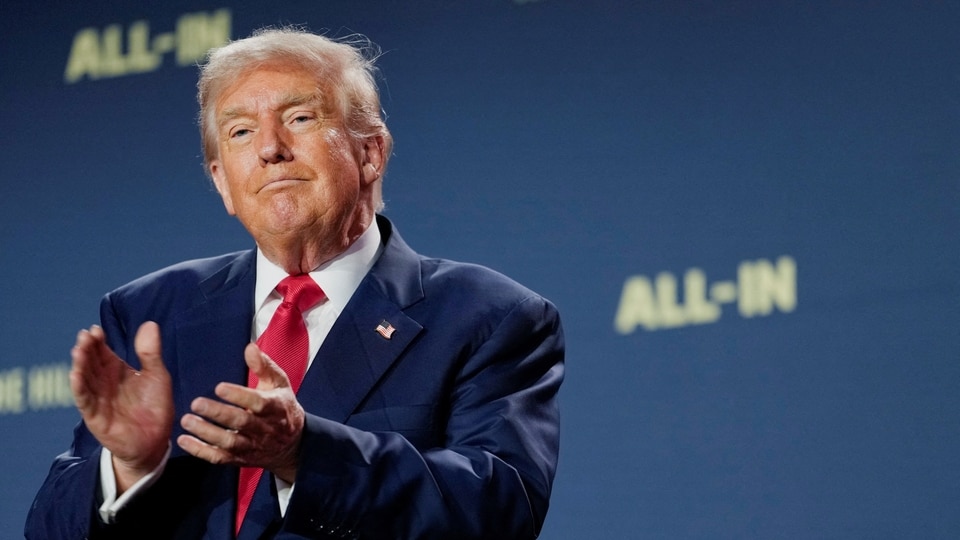
The imposition of steep US tariffs instantly rendered many Indian agricultural exports uncompetitive in the world’s largest market, squeezing margins and causing a decline in orders for key sectors such as shrimp, rice, spices, tea, and processed foods. Thousands of farmers and export-oriented cooperatives faced an urgent need to rethink their crop choices and market strategies, with supply chain disruptions cascading across allied sectors from logistics to agrotech.
New Delhi’s immediate response was defensive: Vowing to protect its labour-intensive farm sector, reaffirming its commitment to safeguarding smallholder interests, and rallying Parliament against moves that would threaten food and livelihood security. Trade minister Piyush Goyal outlined the government’s dual priorities of welfare, price stability, and technological upgrade for farmers.
What has emerged from the debris, however, is an outcome few predicted. Stung by barriers to the US market, Indian agribusinesses and policymakers are accelerating efforts in several directions that could yield long-term dividends:
- Agri-tech adoption: With profitability in traditional exports slipping, producers have turned to technology and innovation to reduce costs and boost yields. This includes rapid deployment of crop protection solutions and advanced hybrids for rice and corn, and pan-India trials of digital extension services, smart irrigation and integrated value chain platforms.
- Market diversification: Suppliers once dependent on the US have actively sought alternative markets in East Asia, Russia, Africa, and the EU, not just for commodity sales but for premium, processed and organic foods. While these routes demand adaptation to higher quality standards and supply chain robustness, they also open new opportunities for export growth.
- Legal and policy modernisation: Pressure from the tariff war has catalysed renewed focus on reforms to India’s agricultural legal framework, including liberalisation of contract farming, reduction of entry barriers for logistics and cold-chain operators, and revised procurement norms for export-oriented goods. The government’s expanded National Agricultural Export Policy and the call for a dedicated agricultural resilience fund exemplify this shift.
Rather than simply retaliating with counter-tariffs, India has begun a multi-pronged approach, balancing trade and domestic priorities.
* Phased tariff reform and WTO engagement: While India maintains that tariff barriers are vital for food security, there is now momentum for phased reductions on select export categories where India is cost-competitive globally. Indian negotiators are also pressing for reform of WTO subsidy rules to better protect developing economies, advocating for a recalibration of subsidy caps and market access formulas.
* Resilience through innovation: Central and state governments are ramping up support for agricultural R&D, from climate-resilient seed development to digital infrastructure upgrades. The proliferation of agri-startups, accelerated by the tariff-driven crisis, is reshaping farmer access to price and weather information, insurance, and risk assessment tools.
* Social and legal safety nets: Recognising the vulnerabilities exposed by trade shocks, policymakers have called for a new Rashtriya Kisan Kalyan Kosh (National Farmer Welfare Fund) backed by expanded insurance, price guarantee schemes under the Minimum Support Price (MSP), and rural infrastructure investments. Legal reforms to ease farmer cooperatives’ access to direct export channels are also under consideration.
Despite immediate losses, the forced redirection has not just reduced dependency on one market but has reignited the impetus for long-term competitiveness.
- Export basket expansion: India is now carving niches in spices, organic produce, and value-added foods, sectors previously overshadowed by bulk commodity trade with the US. Rollbacks on US tariffs for tea, spices, coffee, and select processed foods have further incentivised Indian producers to pursue higher-margin goods.
- Global supply chain integration: Indian agribusinesses have accelerated the implementation of best practices to meet international standards, driven by a sharper focus on certifications, residue management, traceability, and sustainable production critical for market access in Europe, East Asia, and North America.
- Domestic market orientation: With risks of external dependence laid bare, there is significant impetus to boost domestic value chains for food processing, cold storage, and logistics, thus reducing wastage, enhancing incomes, and elevating rural employment.
The legal response to the tariff shock has been measured but evolving. New export regulation frameworks allow for rapid crisis response; trade facilitation reforms target time-bound approvals for export documentation and compliance; and digital platforms underpin transparency and monitoring. Policy analysts urge further movement on:
- Clearer guidelines for contract farming and exports
- Judicial reforms to fast-track agricultural dispute resolution
- Enabling greater inter-state harmonisation in commodity movement
Such measures aim to insulate Indian agriculture from future shocks while sustaining equitable growth.
The US tariff saga represents both a disruption and a catalyst, a moment that has forced India to confront structural vulnerabilities, yet also spurred redirection towards technology, quality, and self-reliance. The 'reverse good outcome' lies not in recovering old trade volumes, but in building new competitive advantage through resilient policy, innovation, and market strategy.
Moving forward, the government must continue to balance protective and liberalising measures. Phased tariff rationalisation, legal modernisation, and robust safety nets for smallholders will be essential alongside global engagement and export promotion. Only then can Indian agriculture emerge not just shock-proof, but future-ready, capable of withstanding external turbulence and seizing new opportunities in an ever-evolving global marketplace.
This article is authored by Ananya Raj Kakoti, scholar, international relations, Jawaharlal Nehru University, New Delhi.


