
 E-Paper



Myanmar elections: Process, conflict, and geopolitical realignments
This article is authored by Cchavi Vasisht, associate fellow, Chintan Research Foundation, New Delhi.

 Prefer HTon Google


Myanmar’s multi-phase general elections were held between December 2025 and January 2026, the first since the 2021 military coup. While the military-led government framed the polls as a successful return to a multi-party system, the elections were designed to mitigate the risks of a nationwide security collapse as the majority of the region was still grappling with ongoing civil war and widespread airstrikes. Central to this transition was the instrumentalisation of the 2008 constitution, which guarantees the military 25% of all parliamentary seats and provides the legal foundation for a "limited democracy" that ensures permanent military oversight.
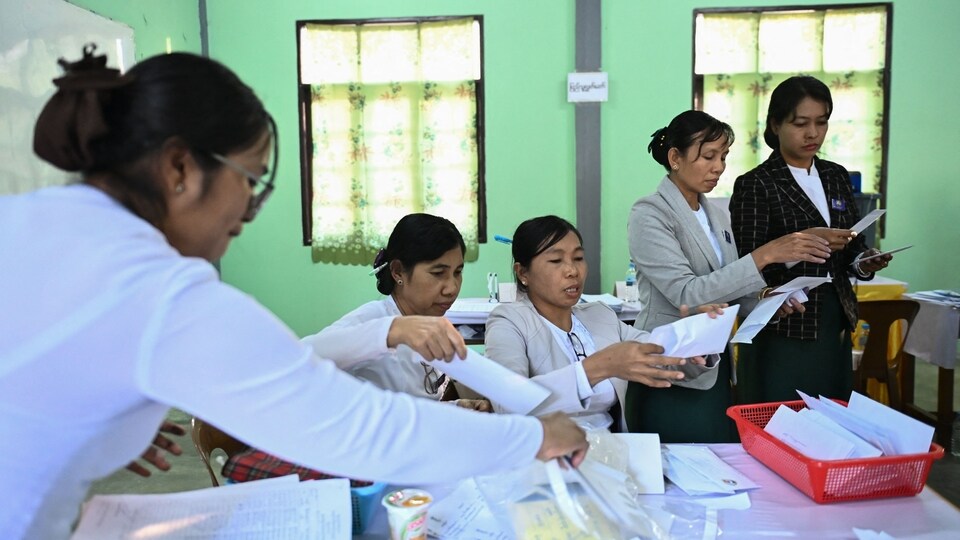
The overall process of elections is described by various analysts as a means to retain the status quo established by the 2021 coup. This phased approach in a way accepted the reality that the military had limited territorial reach with only 21% of the country under stable control. The Phase I (December 28, 2025) covered 102 townships, prioritising the Nay Pyi Taw capital area, Yangon, and Mandalay. The Phase II (January 11, 2026) extended to 100 townships across 12 states and regions. This phase was marked by significant destruction, with resistance forces launching simultaneous attacks in at least 10 townships. Finally, Phase III (January 25, 2026) covered 63 constituencies. The outcome claimed a 55% voter turnout, but that was far less from the 70 % turnout in 2020.
Despite claims of inclusivity, the military was forced to cancel voting in 65 townships, roughly 20% of the country. Additionally, the Union Election Commission (UEC) data indicated that 3,995 specific areas, including 3,772 village tracts and 223 wards, were entirely excluded from the phases due to active combat. The elections saw the deployment of 50,000 Myanmar Electronic Voting Machines (MEVMs), locally developed units that replaced paper ballots. While the MEVMs were claimed to be a modernisation effort, internal risks acknowledged in state media included infrastructure demands (consistent electricity) and the susceptibility of the machines to manipulation.
The elections were engineered through a repressive legal framework. The Political Parties Registration Law, introduced in January 2023 and Law on the Protection of the Multiparty Democratic General Election from Obstruction, Disruption, and Destruction, adopted in July 2025 were sweeping legislations excluding 40 political parties from participating in elections as well as criminalising and controlling the flow of information. And the enforcement of this law was with absolute intolerance for dissent. By the end of the polls, over 229 individuals had been formally prosecuted and more than 400 detained.
The dissolution of 41 parties cleared the field for the military-backed Union Solidarity and Development Party (USDP). Only six parties qualified to run nationwide, leaving voters with limited choices. As a result, the USDP, led by U Khin Yi, claimed an overwhelming victory, securing 232 of the 263 seats in Pyithu Hluttaw (Lower House) and 109 of the 157 seats in the Amyotha Hluttaw (Upper House).
This was also ensured through the introduction of a Mixed Member Proportional (MMP) system for the Amyotha Hluttaw (Upper House), which utilised a combination of First-Past-the-Post (FPTP) and Proportional Representation (PR) to favour smaller ethnic military-aligned proxies such as the Mon Unity Party (MUP), the Arakan Front Party (AFP), and the Zomi National Party (ZNP). Other smaller parties, such as Kayah State People’s Party, Kayin National Democratic Party, Danu Nationalities Democracy Party, Rakhine Nationalities Party, and Naga National Party secured one seat each in the Upper House. Therefore, by moving away from FPTP in the Upper House, the military ensured that ethnic votes would be split among local parties rather than come together into a landslide for a national opposition and also project an image of multi-party democracy and inclusivity, even though the USDP retains a decisive majority.
However, despite this managed process, local ethnic voting patterns in few areas challenged the military staged figures. For instance, in Taunggyi, Nan Kyin of the Pa-O National Organisation (PNO) defeated Lt-Gen Aung Aung, a prominent USDP figure. The Shan Nationalities Democratic Party (SNDP) secured multiple seats in the Lower House across both phases. The formation of the Spring Revolution Alliance (SRA) signaled a strategic shift toward operational unity just before the elections started. This alliance includes 19 significant groups, such as the 96 Soldier PDF, Magway PDF, and Bamar People’s Liberation Army (BPLA), which serves as a "mobile bridge" between eastern ethnic allies and the central Bamar heartland. Additionally, the resistance continued to be concentrated in the Bamar-majority "Dry Zone" (Sagaing and Magway). These groups have denied military control over agricultural hubs and disrupted the critical north-south supply routes along the Irrawaddy and Chindwin rivers. Even at the western frontier, the Arakan Army (AA) maintains absolute dominance in Rakhine, controlling 14 of 17 townships. Simultaneously, the Chin Brotherhood and Kalay Revolution Force have secured routes along the Chin-Sagaing border, maintaining vital supply lines from the Indian border. The Karenni Nationalities Defence Force (KNDF) and the Kachin Independence Army (KIA) control strategic plateaus, effectively encircling Nay Pyi Taw from the east and disrupting access to mineral-rich northern territories.
The international community is sharply divided between non-recognition and pragmatic engagement. This realignment is reflective of the shifting patterns in a multi-polar world, where interests in stability or resources outweigh democratic norms. To legitimise the results of elections, the military curated a specific group of international observers to build a positive narrative that the voting was "orderly," "free and fair," and conducted freely. These were primarily from nations that have maintained diplomatic ties with the regime, i.e. Russia, China, Belarus and Nicaragua. There were representations from the Indian side. Even though the ASEAN bloc refused to send observers, individual countries such as Cambodia, Vietnam and Indonesia attended the process.
It is important to note that China employs a dual-track diplomacy, providing the military with economic grants under BRI while maintaining ties with the KIA and United Wa State Army (UWSA) to protect its rare earth supply and the Kyaukphyu deep-sea port. Myanmar is strategically positioned as the third largest producer of rare earth minerals, which are primarily found in conflict-prone Kachin State. This has led to increased geopolitical competition and increasing the meddling by external forces. Russia, since the military takeover in 2021, has emerged as a strategic supplier of jet fuel and arms and drones to the military. Regionally ASEAN as a bloc could not bring back Myanmar under its fold and Malaysia and the Philippines explicitly refused to recognise the election results, noting the failure of the Five-Point Consensus.
Sharing a 1643 long land border and maritime border, India has tried to balance its Act East policy with border security. By adopting a two-track policy India has tried to balance its strategic interests, border security, and infrastructure projects. This approach involves maintaining State-level engagement with the military and now its elected party USDP to protect connectivity projects while simultaneously engaging with Ethnic Armed Organisations (EAOs) and opposition groups particularly the Arakan Army and Chin groups, to secure border stability and counter China’s influence. Continued engagement is necessary to prevent Myanmar from total isolation, which would push it further into China's sphere of influence.
The military’s attempt to orchestrate a political transition through the 2025-26 elections with a predetermined outcome of USDP winning over 80% of contested seats and excluding opposition and manipulating the legal framework has won the show at the face of it. Even though the country is now preparing to convene the new Hluttaw in March 2026, the country remains a theatre of "managed chaos." Since the elections were announced and held across the country, many regions faced high-intensity war. More than 3.3 million people are internally displaced, and 18.6 million require urgent aid. During the elections itself, at least 170 civilians were killed from airstrikes and about 400 arrests made.
The 2025-2026 elections have achieved tactical consolidation in the central and urban center but at the cost of permanent fragmentation on the periphery. And while it is now accepted that the military is continuing to stay, international and regional players must act as facilitators to ensure that violence is halted, ceasefires are signed and implemented and a national dialogue must be initiated. The fight led by opposition forces must demand for equal representation in the political process along with norms of federal democracy in Myanmar.
This article is authored by Cchavi Vasisht, associate fellow, Chintan Research Foundation, New Delhi.


