
 E-Paper



Should India play cricket with Pakistan?
This article is authored by Prabhu Dayal, former ambassador, New Delhi.

 Prefer HTon Google


India's decisive victory over Pakistan by seven wickets in the Asia Cup 2025 match in Dubai was perhaps overshadowed by the political controversy which preceded the match itself. This controversy centred around the basic issue of playing a cricket match against Pakistan.
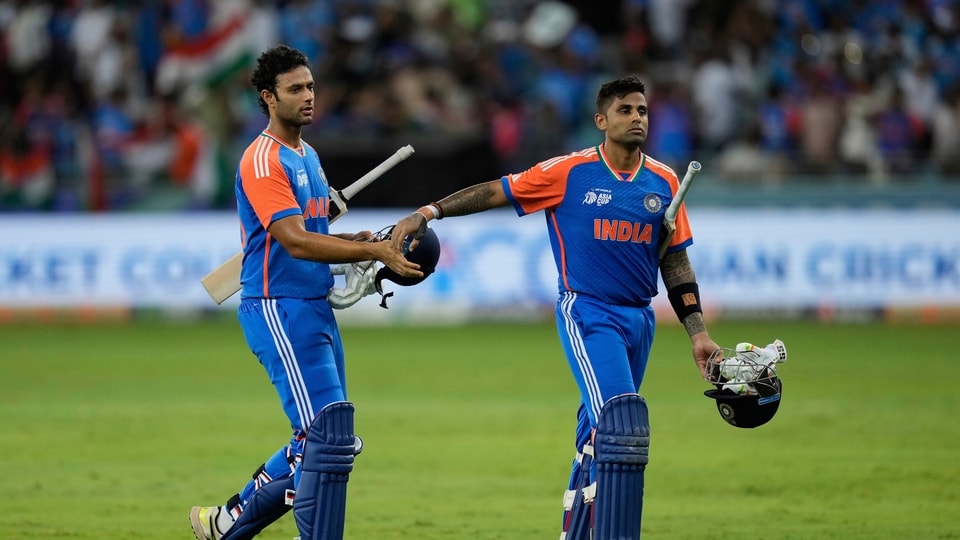
This controversy stemmed from recent political tensions, particularly the Pahalgam terror attack, with some politicians and analysts arguing that playing the cricket match against Pakistan in Dubai would be a sign of disrespect to victims of the terror attack and would even be tantamount to normalising relations with a country known for supporting terrorism.
Opposition parties staged protests across the country to oppose the India-Pakistan Asia Cup cricket match, raising slogans and urging people to boycott the game. Protesters from the Aam Aadmi Party and Congress staged demonstrations in Delhi just before the match started. Protests led by the Shiv Sena (UBT) were held in Maharashtra and Jammu.
Aaditya Thackeray, the Shiv Sena leader demanded that the Board of Control for Cricket in India (BCCI) should boycott the match, accusing it of prioritising money over national sentiment. Asaduddin Owaisi, AIMIM chief, questioned the government's foreign policy and the decision to play a match against a country accused of supporting terrorists.
Their primary argument centred on the match being played just a few months after 26 people were killed by terrorists in Pahalgam. Many felt that holding a cricket match so soon was insensitive to the victims' families. The widow of a victim, publicly appealed to people to boycott the match.
However, such criticism of the stand taken by the Government is ill-founded and misses the point that bilateral and international engagements are fundamentally different. Bilateral events focus on deepening a specific diplomatic relationship, whereas international events aim for broader goals like international cooperation, cultural exchange, and global influence. India differentiates between boycotting a bilateral series with Pakistan (which it has done since 2009 when it cancelled the cricket tour of Pakistan following the Mumbai terror attacks) and participating in international events where the entire tournament structure is at stake.
If India were to decide that it will not play against Pakistan in international cricket tournaments, then consistency would demand that it should do so in all sports. Would India be able to play against Pakistan in international hockey matches such as the World Cup or the Olympics? Would Neeraj Chopra be able to compete in the international javelin throw competitions if Arshad Nadeem, the reigning Olympic champion and record holder, is also taking part? It would be truly unfortunate if this sort of a scenario were to unfold.
Would such a policy make sense? No, if we adopt such a policy, it would only serve the interests of Pakistan whose sports teams and athletes would be delighted to get a walkover against their Indian rivals.
The Government of India has made a clear distinction between bilateral cricket (which India does not play with Pakistan) and international events. When it comes to multinational competitions, which are governed by the rules of international sports bodies, participation becomes a necessity for all member nations, regardless of political tensions.
This policy applies across all sports, allowing Indian athletes and teams to compete in multinational events while maintaining a ban on bilateral series and visits between the two nations. The ministry of youth affairs and sports issued this guideline, emphasising India's commitment to international sports practices and its goal of hosting major global events.
The Government's stance is sensible and helps India to abide by international sports regulations, which is crucial for its ambition to host major global events in the future. The policy applies to all sports, not just cricket, ensuring a consistent approach to international sporting relations.
Multilateral engagements between India and Pakistan are unavoidable in diplomacy also. This arrangement means their representatives sit together in meetings although diplomatic tensions are evident. Following the Pahalgam terror attack in April 2025 followed by a military conflict next month, diplomatic and political relations have deteriorated to a new low, but some multilateral engagements continues.
Apart from the interaction at the UN forums, India and Pakistan are full members of the Shanghai Cooperation Organisation (SCO) and attend its meetings. PM Modi himself took part in the recent SCO Summit in Tianjin, China. India does not want to increase bilateral diplomatic contacts with Pakistan, but if it absents itself from multilateral meetings simply because Pakistan is also taking part, then it would cede the advantage to Pakistan and harm itself.
India will continue its policy of having minimal bilateral diplomatic contact with Pakistan. India's position is that "terror and talks cannot go together," and the country has maintained a policy of limited engagement due to terrorism originating from Pakistan. Despite the minimal bilateral contact, India will continue to participate in multilateral forums even if Pakistan is also there because it is essential to do so in its national interest.
Therefore, if interaction takes place with Pakistan in the diplomatic sphere, then surely limited interaction should be acceptable in the sporting arena also. Moreover, refusing to participate in a multinational tournament like the Asia Cup, simply to avoid playing Pakistan, would incur penalties and damage India's standing with international sports bodies like the ICC and the Olympic Committee. India has ambitions to host major global events, such as the 2036 Olympics. Abiding by international rules that discourage political boycotts of multinational events is essential for its bid to become a viable host for such events.
India has adopted the policy of avoiding all bilateral sporting contests with Pakistan while still participating in international events with it. This means that Indian athletes in sports like athletics, hockey, or any other field can still compete against Pakistani counterparts in events like the Olympics or World Championships. The Government's reasoning is also based on supporting its athletes' careers and fostering its ambition to host major international sporting events in the future. There can be no doubt that this policy is sound and in our national interests.
This article is authored by Prabhu Dayal, former ambassador, New Delhi.


