
 E-Paper



Significance of China-Iran relations
This article is authored by Prabhu Dayal, former ambassador, New Delhi.

 Prefer HTon Google


The relationship between the People’s Republic of China and the Islamic Republic of Iran has evolved from a pragmatic trade partnership into a profound strategic alignment, significantly altering the geopolitical landscape of the Middle East and Eurasia. Formalised by a 25-year Comprehensive Strategic Partnership agreement signed in 2021, this alliance serves as a critical counterweight to US influence and a linchpin for both nations' long-term interests. Driven by the need for energy security, economic survival, and a desire to foster a multipolar world order, the China-Iran partnership is one of the most consequential bilateral relationships of the 21st century.
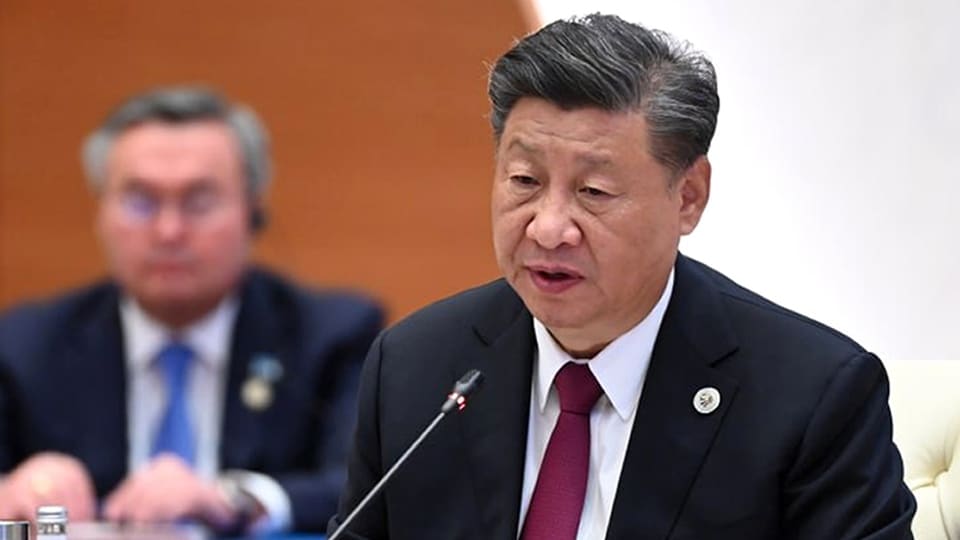
The primary significance of this relationship lies in its function as a survival mechanism for Iran and a reliable energy source for China. Following the re-imposition of US sanctions in 2018, Iran faced severe economic isolation. China emerged as the primary purchaser of Iranian oil—often at steep discounts—handling roughly 80 to 90% of Iran's exported oil by 2025. This trade is not only a commercial arrangement but a deliberate effort to skirt US financial systems, with Iranian oil paid for in renminbi (RMB) via a shadow fleet of tankers.
For China, this allows for the acquisition of low-cost energy, reducing its dependence on shipping routes vulnerable to US naval power, such as the Strait of Malacca. Furthermore, the 2021 pact, which included a promised $400 billion in Chinese investment over 25 years, positions Iran as a key, albeit cautious, partner in China’s Belt and Road Initiative (BRI).
Both Beijing and Tehran view the world through a lens of resistance to western hegemony. They describe their cooperation as a "resistance economy" designed to withstand external pressure. By supporting Iran, China projects power into West Asia—a region historically dominated by the US—without engaging in direct military conflict.
This alignment was solidified through China facilitating Iran's entry into the Shanghai Cooperation Organization (SCO) in 2023 and BRICS in 2024, providing Tehran with diplomatic cover and integrating it into an alternative, non-western international framework. In return, Iran acts as a crucial node in the BRI, connecting China via overland routes through Central Asia to the West Asia and Europe.
While China historically acted with caution regarding military ties, the relationship has deepened into security and technology sharing. Reports indicate that Chinese entities provide dual-use technologies, including components for drones and missile programs, which Iran has used to enhance its defensive capabilities. Additionally, joint naval exercises in the Gulf of Oman, often involving Russia, signal a growing security coordination meant to challenge western maritime dominance in the region.
This security dimension was highlighted by China’s perceived "neutral" but pro-Iran stance during the 2025–2026 Iran-Israel conflict, where Beijing condemned US and Israeli actions and favoured diplomatic mediation that reinforced Iranian sovereignty.
Despite the deepening ties, the relationship is heavily asymmetrical, with Iran needing China far more than vice versa. China acts as a "friend for hard times," but Beijing has been careful not to overtly violate sanctions in a way that would trigger major US retaliation against its own economy.
Furthermore, China balances its relationship with Iran against its massive economic ties with Iran’s rivals, such as Saudi Arabia and the UAE. Although China brokered a normalisation deal between Iran and Saudi Arabia in 2023, its primary interest remains stability, which allows for consistent energy flow.
The strengthening relationship between China and Iran is a crucial component of the modern global power transition, representing a significant challenge to the US-led international order and moving toward a multipolar landscape. As the primary buyer of Iranian oil and a major investor in Iranian infrastructure through the 25-year Comprehensive Strategic Partnership signed in 2021, China provides a vital economic lifeline that helps Iran mitigate western sanctions. In return, Beijing secures essential energy resources to fuel its growth and gains a key strategic partner in West Asia—a region historically dominated by US influence—thereby advancing its BRI and strengthening its geopolitical leverage. By coordinating on regional stability and, in some cases, military technologies, both nations act as an alternative power axis that challenges western hegemony and projects a, "non-western," model of development that prioritises sovereign interests over democratic conditions. This evolving alliance not only strengthens Tehran's leverage in diplomatic negotiations with the West but also demonstrates China’s capacity to bypass US disciplinary mechanisms, marking a profound shift in regional and global power.
(The views expressed are personal)
This article is authored by Prabhu Dayal, former ambassador, New Delhi.


