
 E-Paper



Strait of Hormuz crisis and its effect on women in India
This article is authored by Bhavya Razshree, advocate and co-founder, LawSarathi.in and Aditya Ashok, public policy consultant, Government Advisory.

 Prefer HTon Google


On the afternoon of May 11, 2021, Soumya Santosh was on a video call with her husband from Ashkelon, a coastal city in southern Israel. She was telling him about the tension in the air. Rockets had been falling since the previous evening. Then her husband heard a sound he could not place. The screen went dark. The call stayed connected. There was no answer. A little later, he heard voices on the other end. They were not hers.
Soumya was 31. She was from Keerithode, a village in Idukki, Kerala. She had worked as a caregiver in Israel for eight years, looking after an 80-year-old woman in a wheelchair. She earned ₹1.5 lakh a month. In Kerala, she had earned ₹16,000. Her income had paid for her sister’s wedding, her family’s house, and her son Adorn’s schooling. Adorn was nine. He was waiting for her call.
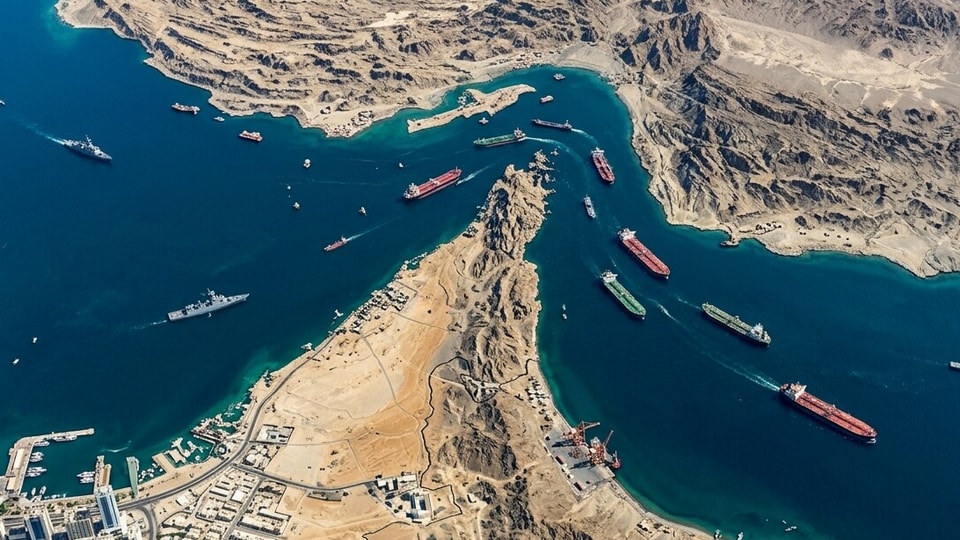
Five years later, the war that killed Soumya has not ended. On February 28, 2026, the US and Israel launched joint air strikes on Iran. Iran retaliated across the Gulf. By March 4, the Strait of Hormuz was functionally closed. The International Energy Agency called it the “largest supply disruption in the history of the global oil market.” Twenty per cent of the world’s oil and natural gas normally transits through that strait. Within days, it dropped to near zero; 20,000 marines and 2,000 ships were stranded in the Persian Gulf.
The war is being discussed in terms of barrels and geopolitics. This piece is about the women it has hit hardest, and they are not in Tehran or Washington. They are in Idukki, Malappuram, Azamgarh, and Darbhanga.
On March 8, 2026, Brent crude crossed $100 per barrel for the first time in four years. By March 19, Dubai crude hit $166 per barrel, the highest on record. March 2026 saw the largest monthly increase in oil prices in recorded history. Brent gained 51% in a single month.
For an Indian household run by a woman whose husband works in the Gulf, these are not market statistics. They translate directly into the cost of cooking a meal.
India imports 60% of its LPG, the primary cooking fuel for hundreds of millions of households, through the Strait of Hormuz. When the strait closed, LPG was the first fuel to be affected. Long queues formed at distribution centres. Deliveries were delayed. On March 27, the government reduced excise duties by ₹10 per litre on petrol and diesel to contain the damage. But for a woman in a village in Bihar or Uttar Pradesh, whose entire household budget depends on a monthly remittance from the Gulf and a subsidised LPG cylinder, the arithmetic was already broken.
The cost of cooking went up. The money to pay for it was suddenly uncertain. Both happened in the same month.
India is the world’s largest recipient of remittances. In 2024, Indians abroad sent home approximately $137 billion (World Bank). West Asia provides roughly 38% of this: the UAE alone sends ₹2.4 trillion annually, Saudi Arabia ₹824 billion, Qatar, Kuwait, and Oman together ₹1.37 trillion.
In March 2026, remittance flows from the Gulf surged 20 to 30% above normal. This was not prosperity. It was fear. Workers were sending money home faster because they did not know if they would be able to send it next month.
Migration experts have described the current conflict as the most severe crisis faced by migrant workers in the last 50 years, worse than the Gulf War of 1990, the global financial crisis of 2008, or the pandemic. Previous wars were confined to specific countries. This time, the impact spans the entire GCC. Construction projects are slowing. Supply chains are disrupted. Job security, once taken for granted, is uncertain.
The women who receive these remittances are often managing households alone. The husband is in Abu Dhabi or Riyadh. The wife is in the village, raising children, running the house, paying the EMIs, handling school admissions, visiting hospitals. She does this for years at a stretch, seeing her husband for two weeks every 18 months. When the transfer is late, she is the one who renegotiates with the shopkeeper. Kerala receives approximately ₹2.1 trillion in remittances annually, roughly 20% of its net state domestic product. If Gulf remittances fall by even 15%, Kerala’s consumer economy contracts visibly. Housing demand drops. Retail spending falls. The migrant labourers from northern India who depend on Kerala for work lose their jobs too, because Kerala is their “Gulf.”
Bihar receives ₹275 billion. Uttar Pradesh receives ₹366 billion. Punjab receives ₹458 billion. In each of these states, the money flows to households where women are the primary managers of expenditure. When the flow is disrupted, it is not the man in the Gulf who misses a meal. It is the family at home.
There are approximately 8.5 to 9 million Indians working in the Gulf (ministry of external affairs estimates). Women now account for 49% of all migrants from India, according to UN Women. The largest sector driving female labour migration is domestic work: caregiving, elderly care, housekeeping.
In many Gulf countries, domestic workers are excluded from labour laws entirely. They are not considered part of the formal workforce. They have no legal protection when war comes.
After the October 2023 Hamas attack, 14,000 Indian nurses and caregivers in Israel did not return home. The Kerala government confirmed the figure. The women stayed because they could not afford to leave. If their visas expired while they were in India, re-entry would cost ₹15 to 20 lakh in agency fees. Their families depended on their salaries. The rockets were terrifying. Unemployment was worse.
“A well-paying job is more important for us,” one caregiver in Haifa told reporters. She stayed through the bombing. She is still there.
Soumya Santosh stayed too. She was planning her return to Kerala when the rocket hit. Her family lived in a small asbestos-roofed house in Idukki. Her mother was a daily labourer under MGNREGA. Her brother was a bus conductor. Her income was the only thing that had lifted the family out of poverty.
The Vital Signs Partnership, a coalition of research organisations studying migrant welfare, estimated that approximately 10,000 South and Southeast Asian migrant workers die in the Gulf every year from occupational hazards, heat stress, and unexplained causes. More than half of those deaths are effectively unexplained, classified as “sudden cardiac arrest” without autopsy.
India has evacuated its citizens from conflict zones before. The Kuwait airlift of 1990 moved 176,000 people and remains the largest civilian evacuation in history. Operation Vande Bharat during the pandemic brought millions home. But evacuation is the last resort. The question is what happens before that.
The proposed Overseas Mobility Bill, 2025, currently under consideration, is a step toward better migrant protection. But the women who work as domestic caregivers in Israel, as housekeepers in Kuwait, as nurses in Saudi hospitals, need more than a bill. They need social security portability that allows them to carry insurance and pension benefits across borders. They need enforceable contracts that guarantee repatriation in emergencies. They need insurance that activates when war begins.
The Strait of Hormuz crisis has exposed a dependency. Half of India’s crude oil comes from West Asia. Sixty per cent of its cooking gas passes through a single chokepoint. Thirty-eight percent of its remittances originate in a region that is now at war. And at every point in this chain, the person absorbing the impact at the Indian end is a woman: The caregiver who cannot leave, the wife who manages the household alone, the mother who stretches the budget when cylinder price rises.
India counts its remittances in trillions. It counts its oil imports in millions of barrels. But, we should count the human cost too, especially that of women.
This article is authored by Bhavya Razshree, advocate and co-founder, LawSarathi.in and Aditya Ashok, public policy consultant, Government Advisory.


