Sign in

From biryani to bandages: How Delhi rallied behind student protesters, CJP at Jantar Mantar

After the police crackdown, citizens sent food, medicines and essentials to Jantar Mantar, overwhelming volunteers with donations.

Updated on: Jul 22, 2026, 15:21:08 IST
Share
Share via
  • facebook
  • twitter
  • linkedin
  • whatsapp
Copy link
  • copy link

Two days after they were struck with batons and hit with tear gas by the Delhi Police as they attempted to march to the Parliament, thousands of undeterred protesters continue to throng to the Jantar Mantar protest site and the arterial roads around it.
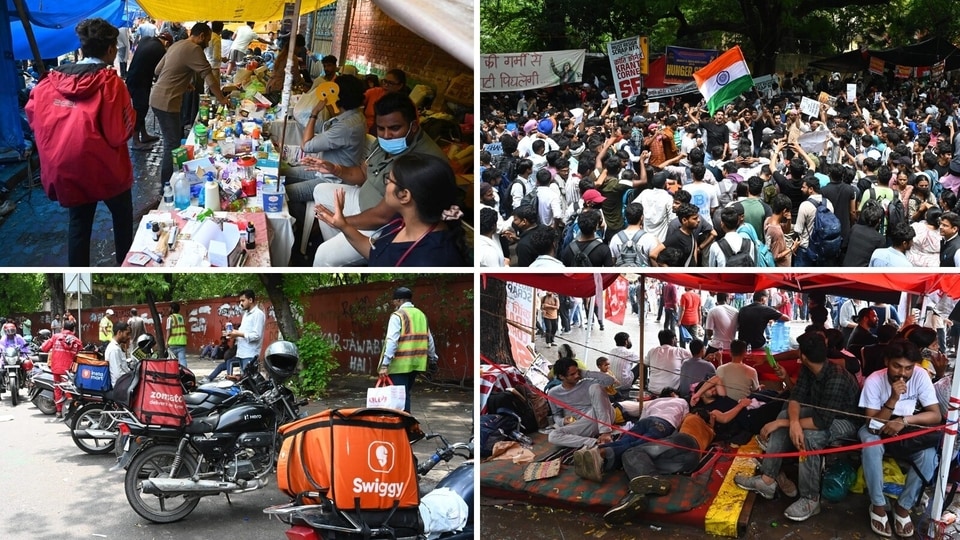
People in large numbers are coming to Jantar Mantar with cartons of water, aerated drinks, home-cooked meals, bananas, medicines, chips, and biscuits. (HT Photos)

On Tuesday, many said they had come to Jantar Mantar after watching videos of violence against the protesters. They didn’t show up empty handed. They came with cartons of water, aerated drinks, home-cooked meals, bananas, medicines, chips, and biscuits.

Two friends who came from south Delhi’s East of Kailash told HT, “Since the stage was dismantled by police personnel on Monday and the arrangements must have been ruined, we decided to do our bit and get what we could. So, we got two cartons of chilled Lahori Jeera. It’s not enough, but it’s something.”

Usman, 23, a resident of Chawdi Bazar, was also one of them. “We saw videos of young people, including girls, being beaten up. People from my neighbourhood asked me to take some food here so neighbours pitched in with home cooked food – roti, sabzi, dal. So I have brought that for whoever would like to eat. People have been here for hours, days. This is our way of expressing solidarity.”
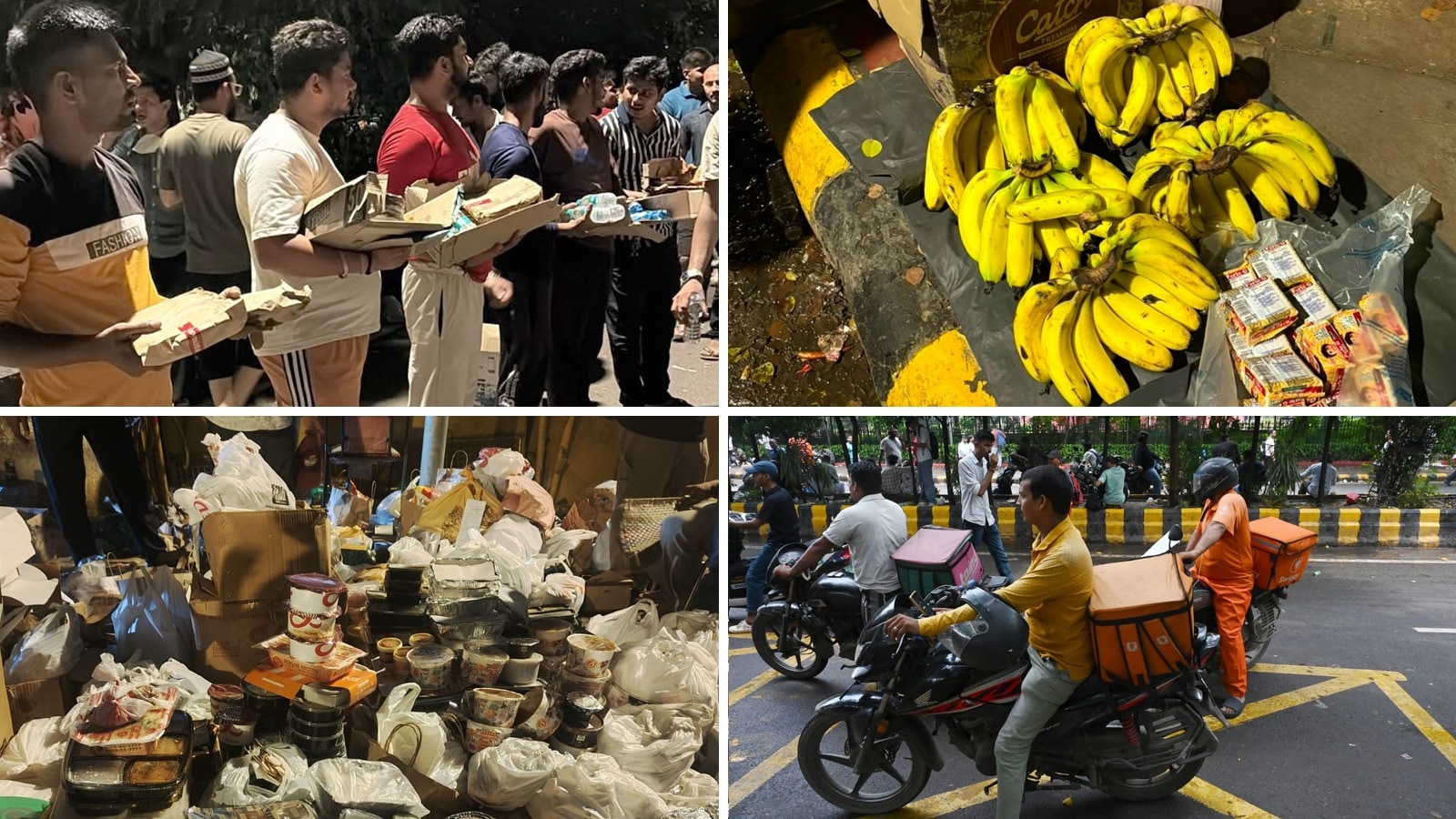
Several people coming to the CJP protest site in Delhi are getting food, ORS and medicines along. (HT Photos)

Shivam, 20, a resident of Faridabad who is pursuing a diploma in computer science, said, “My brother and I have brought samosas with us from Faridabad. We were protesting peacefully yesterday. The way the government has dealt with children will only fuel more resentment.”

Since Tuesday, every few hours, delivery executives have stopped to deliver food ordered by strangers for anyone hungry at the protest site. Around 7.30 pm on Tuesday, HT met a delivery executive who was on a video call with the customer who had ordered kilos of biryani.
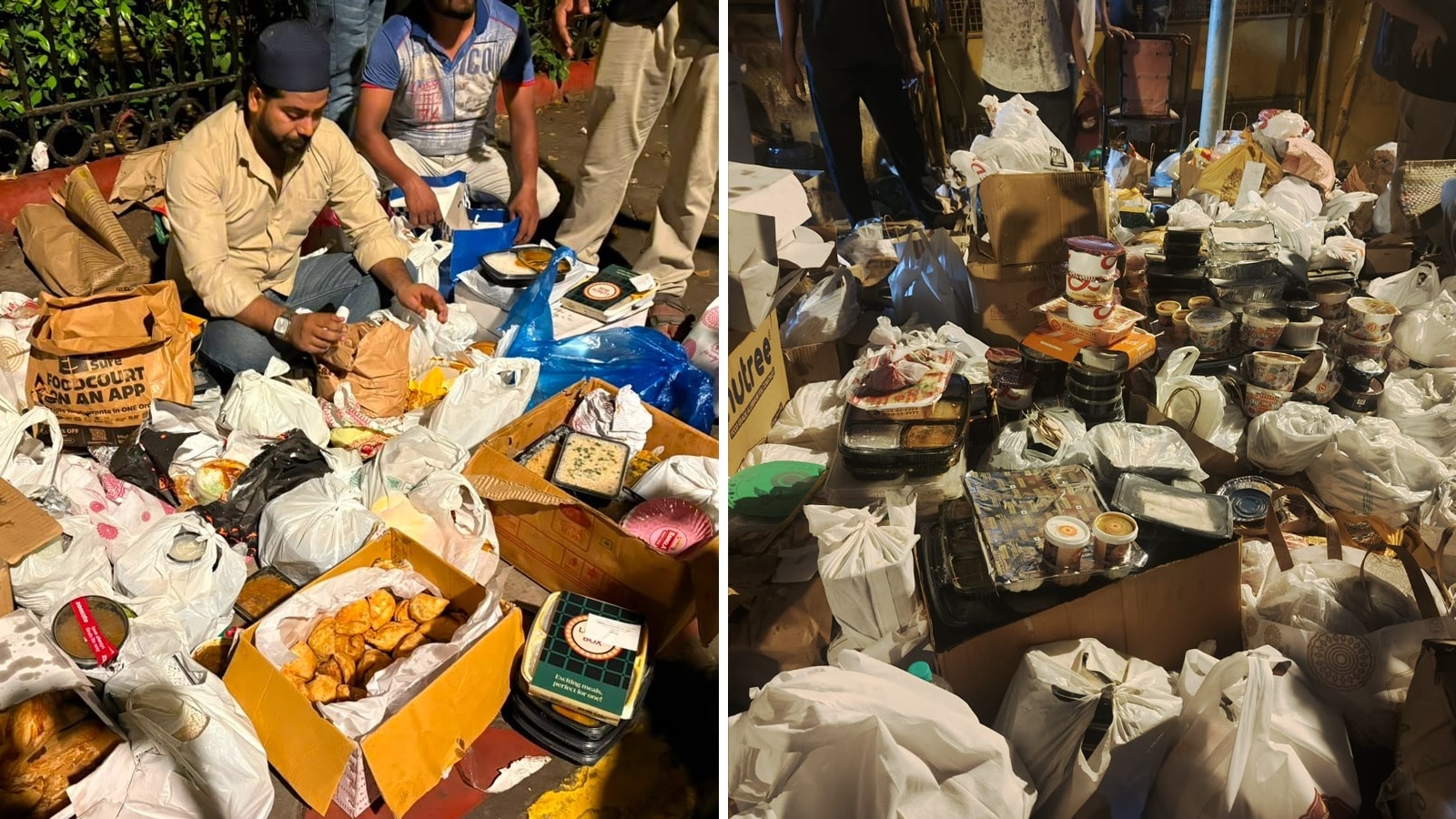
Food and medicine distribution points set up at the CJP protest site in Delhi. (HT Photos)

Delivery executive Ravi Kumar who came from a restaurant in Greater Kailash told HT, “Someone named Anil ordered 25 veg thalis and told me to drop it near the protest venue. They just wanted to help the students. This is my second order delivery here.”

By 10 pm, appeals were being made from the stage requesting people to stop sending food. At 1.30 pm on Wednesday, the Cockroach Janta Party (CJP) posted on X: “Update from Jantar Mantar: We have enough food for today! Please do not send any more food, as we want to ensure nothing goes to waste. A huge thank you to everyone who contributed!”
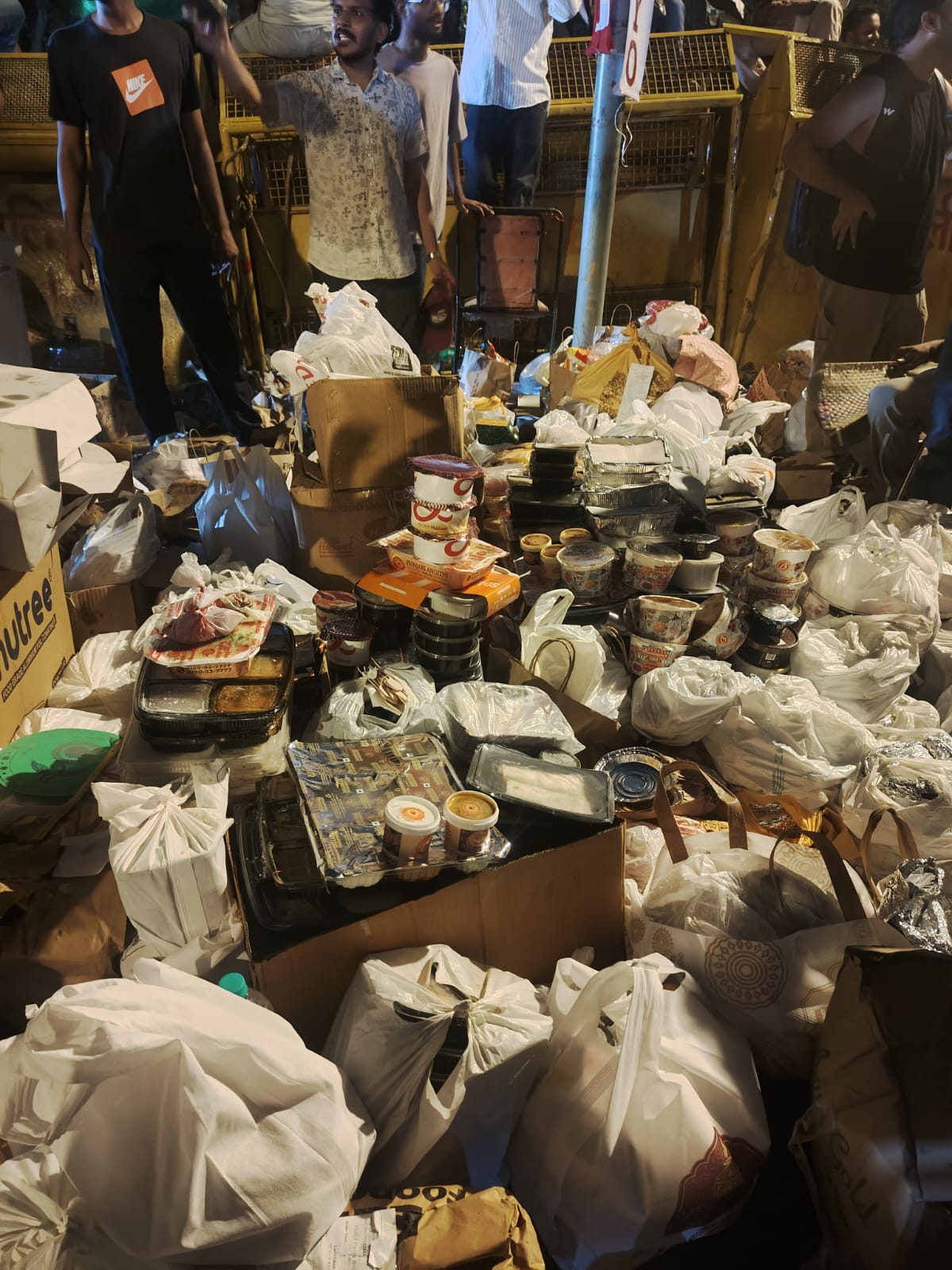
Cockroach Janta Party has urged people to not send any more food as they already have enough. (HT Photo)

Outside the protest site stood several delivery executives unsure of what to do with the orders that the protesters had refused to take because there was already too much food. “I video called the customer and made him speak to a volunteer who told him that they just can’t accept any more food. This is my sixth visit to the protest site today. Every time I come here, volunteers start offering me food to eat,” said delivery executive Mausam.

Inside the protest site, a few volunteers have set up tables where the food is kept, while others stand in a line to offer food to anyone walking in or out. Apart from food, there are also stalls that are offering slippers, facial wipes, dettol, bandages, medicines, ORS, cotton, and sanitary napkins. On Wednesday, students of Aryabhatta College of Delhi University collected 8,000 within four hours to buy sanitary pads, ORS packets, and food items

“People are moved by the protest and everything that happened on Monday. Even if they can’t be here, they are showing their support through such ways,” said a 31-year-old protester who asked not to be named.
  • Somya Lakhani
    ABOUT THE AUTHOR
    Somya Lakhani

    Somya Lakhani is the Metro Editor at Hindustan Times based in New Delhi, with over a decade of experience reporting on crime, gender, labour, politics, and heritage. She heads a team of reporters who cover governance, law and order, the environment, civic agencies, culture, and education, while also leading coverage of some of India's most significant public-interest stories. She started her career at The Indian Express in 2010, where she worked till 2021. She began her career as a features writer before switching to crime reporting. After that, she joined online news portal The Quint as the Current Affairs Editor and headed a team of reporters who worked on long format stories, videos, and immersives. In 2023, she returned to the print newsroom and joined Hindustan Times, where she co-wrote a coffee table book on the history of the newspaper as the voice of the nation for its centennial celebrations. In January 2025, she started her stint as HT’s Metro Editor. She studied history at Delhi University’s Miranda House, and then completed a diploma in journalism from Indian Express’s Express Institute of Media Studies (EXIMS) in 2010.Read More

  • Paras Singh
    ABOUT THE AUTHOR
    Paras Singh

    Paras Singh is a New Delhi-based journalist with Hindustan Times, where he serves as Deputy Metro Editor. He reports on urban governance, the Delhi government, the Delhi BJP, water management, the environment, communities and city life. He joined Hindustan Times in 2021 after beginning his journalism career at The Times of India in 2016, where he covered civic bodies, the water and power sectors, and urban infrastructure. Over the last decade, some of his reporting has led to significant public impact, with investigations into environmental violations, corruption and illegal industrial activity contributing to multiple judicial interventions by the National Green Tribunal and the Delhi High Court. A graduate of St. Stephen's College, University of Delhi, Paras studied journalism from the Indian Institute of Mass Communication (IIMC), New Delhi. Having extensively covered the capital's evolving civic and governance landscape, his recent work increasingly explores Delhi's history, built heritage, urban evolution and the relationship between people and place, alongside continuing to report on governance and public policy.Read More

  • Saloni Bhatia
    ABOUT THE AUTHOR
    Saloni Bhatia

    Saloni Bhatia is a journalist with over 15 years of experience in reporting and storytelling, with a strong focus on the Delhi government and political developments in the Capital. Over the years, she has closely tracked policy decisions, governance issues, and political shifts. She started off as an entertainment journalist but then moved to covering beats like crime and education. Her experience on the crime beat helped her develop an eye for detail and accuracy, while education reporting allowed her to explore policy impact on students, teachers and institutions. Outside the newsroom, she enjoys reading both fiction and non-fiction. She also has a keen interest in watching Bollywood films.Read More

Get the latest India News, breaking headlines and real-time updates from across the country. Stay informed about politics, government policies, crime, weather major national developments and Karnataka Bandh LIVE.