
 E-Paper



The unravelling of the world order
This article is authored by Amal Chandra, author, political analyst and columnist, New Delhi.

 Prefer HTon Google


The carnage unfolding across West Asia has stripped away any lingering illusions about a rules-based international order. It is not a limited escalation or a contained regional flare-up, but a systemic rupture in the norms that have governed interstate conduct since 1945, with profound implications for sovereignty, human life, and the fragile web of global stability.
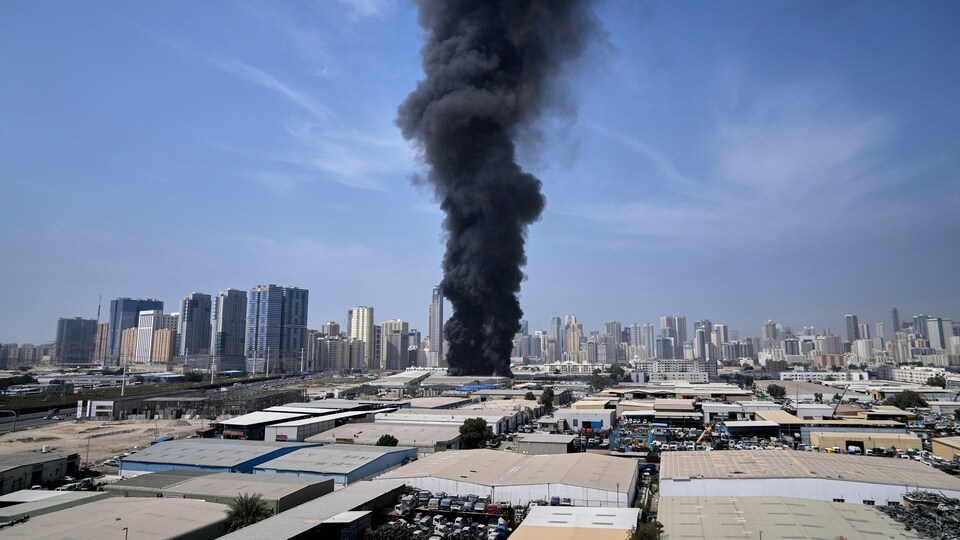
In the early hours of February 28, 2026, a coordinated military operation by the US and Israel struck multiple targets deep within the Islamic Republic of Iran. The campaign, publicly framed in Washington and Jerusalem as necessary to pre-empt an existential threat from Tehran’s nuclear and missile programmes, unleashed a wave of air strikes across cities including Tehran and other provinces. Among the most horrific reported incidents was the attack on a primary school in the city of Minab, in southern Iran’s Hormozgan province. Reports state that the strike on the girls’ school alone has left at least 148 people dead, mostly young students, with scores more wounded and many still unaccounted for amid the rubble.
At least one version of events holds that this school was close to an Iranian Revolutionary Guard Corps base. Still, proximity to a military site does not mitigate the moral and legal gravity of killing children at their place of learning. Precision weaponry and advanced surveillance are hallmarks of the militaries involved. The question of why a school would be affected must be answered with clarity, not obscured by assumptions about error or target positioning. Civilian protection is not a negotiable detail in conflict. It is the core of international humanitarian law.
Perhaps the gravest strategic shock was the reported killing of Ayatollah Ali Khamenei, Iran’s Supreme Leader, in the course of these strikes. If confirmed, the targeted elimination of a sitting head of State without a formal declaration of war would mark a profound rupture in the norms governing sovereignty. Russia condemned it as a cynical murder in violation of international law. China expressed concern over the assault on Iran’s sovereignty and called for an immediate ceasefire. The United Nations Security Council met in emergency session, with the Secretary-General warning of a wider regional conflagration.
New Delhi, however, has remained notably restrained. India’s silence reflects its delicate balancing act between Israel, the US, Iran, and the Gulf. Yet for a country that has long upheld the principles of sovereignty and a rules-based order, strategic caution in such a moment also invites questions about where it stands as those very norms come under strain.
That a strike might kill the head of a State without a formal declaration of war is not something seen since the darkest episodes of the twentieth century. Assassination by military action without declaration undermines the very principle of sovereignty that is supposed to guard smaller powers against the arbitrary use of force by stronger ones. The UN Charter’s prohibition on the threat or use of force except in self-defence or with Security Council authorisation is now being tested not by marginal actors but by the most powerful military alliance in history.
This is not to conflate every nuance of the conflict with simplistic binaries. Iran’s regional policies, support for proxy groups across the region, and its own history of repression and destabilising actions are realities that complicate any moral narrative. But the deliberate targeting of civilians or the tolerance for their deaths in pursuit of geopolitical objectives cannot be justified by citing historic grievances or speculative hypotheticals.
The human toll in Minab echoes beyond Hormozgan. It is a stark reminder of the calculus of modern warfare, where precision weapons are supposed to reduce collateral damage but, in practice, amplify it when used in dense civilian areas. When an elementary school becomes a battlefield, the moral paralysis of the international system becomes painfully visible.
For India, there will be a difficult reckoning over diplomatic positioning. Prime Minister Modi’s recent visit to Jerusalem was hailed domestically as a strengthening of ties with Israel and as strategic diplomacy in a volatile region. But in light of these developments, the optics and substance of that visit could haunt India as it faces complex relationships with all parties to this conflict. It has significant economic ties with the Gulf, strategic cooperation with the US, and historically warm relations with Iran. Navigating this multi-vector diplomacy will become exponentially more difficult as the crisis deepens.
China’s response to the escalation illustrates that Tehran is not simply a pawn to be cast aside. Beijing has described the strikes as a violation of international law and has called for an immediate ceasefire. China’s strategic calculus with Iran, deeply rooted in energy imports, the security of shipping lines through the Strait of Hormuz, and its broader Belt and Road Initiative, underscores that Tehran’s stability matters far beyond its borders. For China, Iran represents a long game in a geopolitically pivotal region. This interdependence makes the current rupture so dangerous: it could entangle distant powers in a conflict that no one truly wants to fight.
And yet the discourse in Washington and Jerusalem has been striking for its simplicity and overconfidence, rather than for strategic depth. There was no coherent plan articulated for how weakening Iran’s current leadership would lead to a more peaceful, stable, or freer society. Former US administrations have wrestled with decades of tensions with Tehran, oscillating between sanctions and engagement, pressure and negotiation. But rather than fostering measures that could have empowered Iranian civil society or contributed to a more legitimate political evolution, the latest actions have demolished diplomatic tools and trust. Reckless rhetoric about liberation rings hollow when blood is shed at schools.
What, then, is the endgame? If the answer is simply to degrade Iran’s military capacity, the violence already unleashed suggests that this will be achieved only with a staggering humanitarian cost. If the answer is regime change, history shows that external imposition of political transformation rarely produces the intended outcome. Iraq and Libya are recent reminders of the chaos that follows the toppling of entrenched power structures without robust social foundations for what comes next.
And if there is no clear strategy at all, the world stands on the precipice of a conflict that spirals without direction. The American people, whose tax dollars and blood underpin US military actions, deserve a lucid explanation of objectives far more concrete and compelling than vague assertions of preventing nuclear proliferation. The families of the children who die deserve something that words alone cannot give, and steps to prevent any such tragedy from recurring.
When historic taboos are broken, as they appear to have been in these past days, the consequences are neither immediate nor confined. The notion that killing a sitting leader of a sovereign state without a war declaration could be a normal military tactic will reverberate for generations. The very architecture of international law, painstakingly built to prevent the horrors of unbridled force, is now being tested by this crisis.
Across West Asia, leaders and ordinary people will remember these days with anguish and clarity. Iran’s President has vowed revenge for the death of the nation’s top leadership. Such vows, once uttered, are hard to retract. Escalation feeds on escalation until a single spark ignites a broader conflagration.
The moral stains on this conflict are already deep. When children become statistics and sovereignty becomes an afterthought, we are forced to confront a painful truth: This is a war that no one can truly win. There are only degrees of loss, and the greatest loss may be the erosion of restraint and the diminution of shared humanity in a world that desperately needs both.
In India and beyond, leaders must reckon not just with the geopolitics but with the human cost and the precedent being set. The resilience of international institutions, the coherence of global leadership, and the capacity of societies to demand more than just the spectacle of power are being tested. A reckoning is overdue, and the blood that has already been spilt should be a stark reminder of how dearly peace must be guarded.
This article is authored by Amal Chandra, author, political analyst and columnist, New Delhi.


