
 E-Paper



Undoing the Washington Consensus
This article is authored by Srinivasa Reddy, assistant professor (marketing) and Meera Aranha, adjunct faculty (finance), TAPMI.

 Prefer HTon Google


The doctor prescribes medicine to the patient for a chronic condition. After a few years, the patient is back with worsened symptoms. The doctor discovers that the patient has been on an alternative medicine course. Similarly, in the 1950s, the lack of economic growth was diagnosed as a symptom of the global economy, and the cure was liberalisation, privatisation, and globalisation (LPG). However, today the world is seeing a seismic shift in trade policy that marks the end of an era. The current US administration has replaced the LPG model with nationalism, protectionism, and bilateralism (NPB). Developing countries, including India, will find that this strategy creates complications, as it puts decades of multilateral trade agreements at risk.
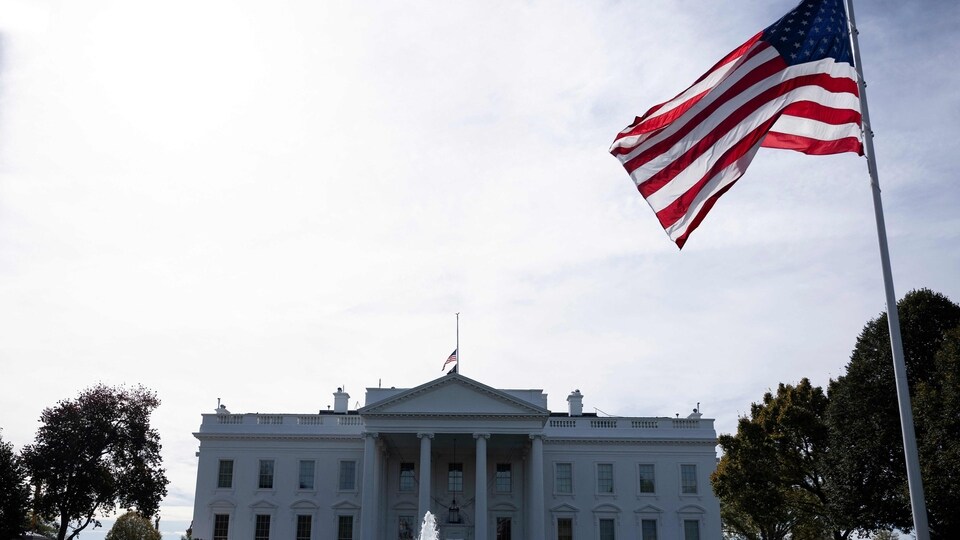
For over three decades, the Washington Consensus encouraged free trade and multilateral institutions as the engines of global prosperity. This perspective helped create the World Trade Organization, contributed to the economic growth of India and China, and facilitated the development of global supply chains for pharma to iPhones. India's IT services exports surged from nothing in 1990 to over $200 billion today. However, US tariffs have risen to their highest level since 1933. This is not just a policy change but a transformation in how America views its role in the global economy. The nationalist dimension of current US trade policy emphasises economic sovereignty over global integration. Now, trade is a zero-sum game, where America must gain at the expense of others, and vice versa. It does not consider trade deficits to result from capital flows and consumer demand for specialised goods. Other policy aspects also reflect this approach. Steel, aluminium, semiconductors, AI chips, and rare minerals are among the industries that the administration has classified as "national security" sectors for protection. Besides buying stock in US Steel and Intel, the US government plans to invest in quantum computing firms.
While these are valid responses to a rapidly innovating world, they should be tempered because most of these companies and products would prefer to trade with other economies. For example, high tariffs have restricted the EV market in the US to local players. Most of these players cannot produce global models that stand out in export markets. Therefore, by restricting competition, existing players in the US are in fact losing in the innovation game. The obsession with trade deficits is an aspect of this nationalist mindset. While economists have long recognised that bilateral trade balances are meaningless in a multilateral trading system, the current administration treats them as a measure of national success. For example, India's $35 billion trade surplus with the US is seen as unfair trade practices rather than as an economic advantage. For example, Indian shrimp exporting companies offer cheaper products because they benefit from the low-cost labour and input costs, which reduce the costs for American consumers and restaurants. With the LPG model, it was lauded as optimal resource allocation. Under the NBP, it has been labelled as a challenge to American sovereignty and has spawned calls for "reshoring" manufacturing back to the US regardless of associated costs.
Second, protectionist aspects of NBP include the utilisation of trade injunctions (e.g., tariffs) to protect domestic industries from foreign competition. The US has collected tariffs of $195 billion as of September 2025, compared to $70 billion for the entire 2024. The protectionist agenda misrepresents the functioning of global trade and economies in this century. One example of this misreading is the case of imported solar panels in the US, which increased costs for American consumers, reducing demand and pushing the US behind in its sustainability goals. Furthermore, the administration has eliminated de minimis exemptions for postage, requiring all shipments to undergo full customs clearance. This shift signals both positive and negative ramifications for small businesses and e-commerce in the developing world. The upsurge in landing costs as much as 15% is anticipated to squeeze margins for Indian MSMEs and D2C brands. For instance, Indian artisans selling handicrafts to consumers through sites like Etsy or Amazon now face customs barriers that render their product less competitive in America.
The tariff structure establishes a troubling precedent that penalises countries for their export capacity instead of remedying unfair trading. The US puts higher tariffs on Germany because BMW and Mercedes cars do well in the US market, while South Korea faces similar measures because Samsung and LG have a high market share. Protectionism also extends to the free movement of labour. The recent H1B saga is an indicator of labour market protectionism harming the Indian talent in the US market. A similar case is the ICE raid on the LG-Hyundai Georgia plant that led to the removal of visa holding South Korean employees.
Most concerning is the third dimension of bilateralism, which abandons multilateral trade principles in favour of individual country-to-country negotiations based on economic leverage and political alignment. This compromises the WTO system, which has aided global trade since 1995. The Most Favoured Nation (MFN) system of the WTO requires countries to pay only the lowest tariff offered by another country to its best trading partner. The transition from a multilateral approach to a bilateral one could create a dangerous precedent for international commerce. Accordingly, commerce will be seen as an instrument of geopolitical control, rather than as a set of norms that are enforced uniformly among all countries. In a bilateral framework, countries must choose sides and political alignment becomes a precondition to reach markets. For example, India has a strong partnership with the US in the Indo-Pacific region, and the two share strong democratic values. However, India’s most recent trading relationship with the US has focused more on trade balances, and immediate political issues, than on their strategic partnership.
NPB is spreading to other nations of the world, with several imposing protectionist measures. The World Economic Forum reports that over 3,000 trade-hurting protectionist interventions were implemented. The European Union (EU) has implemented a "strategic autonomy" agenda to reduce the EU's dependence on other countries and companies. Meanwhile, China is planning to implement a "dual circulation" strategy to reduce its dependence on foreign markets and to produce more intermediaries rather than commodities. As the IMF has identified, the result would be slower global growth because of tariff and non-tariff barriers.
The rise of NPB in trade policy poses significant challenges to the world economy. While the LPG model had flaws like inequality and environmental harm, it lifted billions out of poverty. NPB misrepresents economic security by favouring isolation, risking global poverty, and years of forced deindustrialisation. India must aim to protect its economic interests. While nationalist policies of the 1970s appear tempting to policymakers, It must be remembered that such policies undermine the multinational trade system that has lifted millions out of poverty, and created a large consuming middle class in India. Instead, India should join other developing countries to establish alternative frameworks for economic cooperation.
While the legality of the tariff regime is under serious question by the US Supreme Court, with justices clearly seeing them as hidden taxes for American consumers. Even if the SCOTUS were to rule against the tariffs, the policy ecosystem would remain the same and has to be dealt with adroitly.
This article is authored by Srinivasa Reddy, assistant professor (marketing) and Meera Aranha, adjunct faculty (finance), TAPMI.


