
 E-Paper



What the US Supreme Court's IEEPA tariff ruling means for India
This article is authored by N Srinivasa Reddy and Meera Laetitia B Aranha.

 Prefer HTon Google


The US Supreme Court's 6–3 decision on February 20, 2026, striking down President Trump's sweeping tariff regime under the International Emergency Economic Powers Act, is more than an American constitutional moment. For India, which negotiated a significant trade framework with Washington, it is a signal that the rules of engagement may be changing.
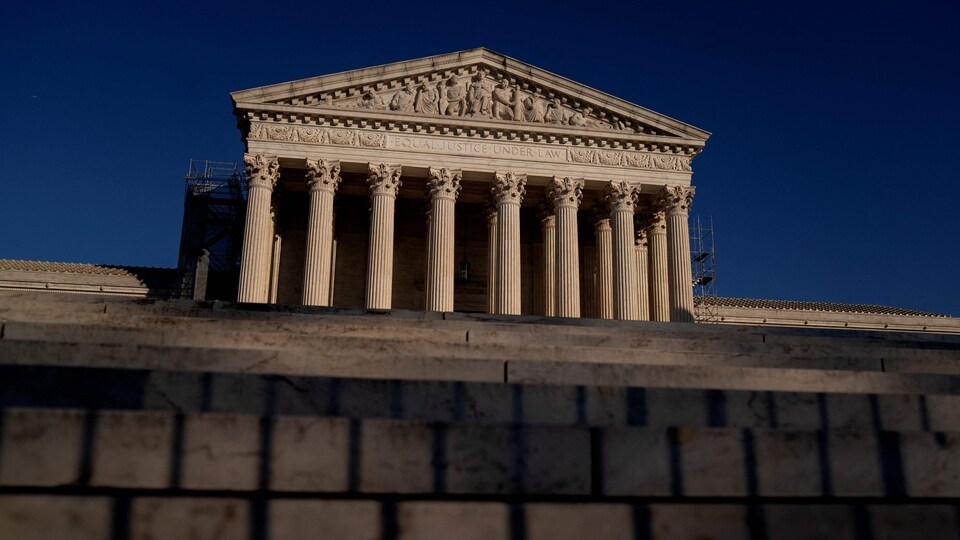
IEEPA, enacted in 1977, was designed as a narrow emergency instrument to restrict financial transactions with hostile nations under emergencies. It was never intended as a tariff mechanism. Yet early in 2025, President Trump invoked it to impose tariffs ranging from 10% to 41% on imports from most of the world, citing drug trafficking and illegal immigration. More than $100 billion was collected from American importers, with the burden falling on American households, who paid up to $1,300 each in additional grocery prices. The notion that foreign countries would absorb these costs was a political fiction. A coalition of small businesses challenged the tariffs. After successive victories in the trade and federal appeals courts, the Supreme Court agreed that IEEPA does not grant the president the authority to impose tariffs. The ruling did not find the tariffs illegal, but enshrined the constitutional principle that only Congress has the power to tax.
The 6–3 split among the justices was revealing. Justice Neil Gorsuch offered an analogy that is worth elaborating on. If a president cannot invoke IEEPA's emergency powers to tax petrol cars in the name of combating the climate crisis, he equally cannot use them to impose tariffs on other goods imported from across the world. The emergency power, in other words, cannot become a general power simply because a president declares an emergency.
Justice Amy Coney Barrett had telegraphed her sympathies during the January hearings, pressing the government pointedly on its position regarding refunds, a line of questioning that hinted at the majority's concern not just with the tariffs themselves, but with their unwinding. The dissenting justices were troubled by a practical question. How would the government handle the chaos of claimants eligible for refunds if the tariffs were struck down? The majority's arguments, if heeded, however, draw a constitutional line that will constrain executive trade action. The US treasury secretary, striking a defiant tone, hinted that the refunds would themselves be wound up in legal action, with delays likely to be measured in years.
With 2026 being a mid-term election year and Republican members of Congress facing re-election, President Trump had the incentive and leverage to draft a new law in Congress. A legislative tariff action would have been far harder to challenge in court. Instead, the administration reached for an obscure statutory workaround. Having lost on IEEPA, it has now turned to the Trade Act of 1974, enacted when America was leaving the gold standard amid fears that the U.S. would be overwhelmed by cheap imports. Tariffs imposed under this law expire after 150 days, and affected businesses are already preparing legal challenges. The administration appears to be in a race against judicial time. If the Trade Act route also fails, the administration may reach further back into the regulation arsenal. Many readers will recall "Super 301," the provision wielded aggressively in the late 1980s to pressure successive Indian prime ministers to open the insurance sector and overhaul intellectual property protections. That kind of targeted bilateral pressure is available to Washington, and India should not assume it is off the table.
There is one new complication. The development of Artificial Intelligence (AI) has created a domestic constituency in the US with a stake in open trade in the free flow of data, talent, and components. Any administration contemplating aggressive bilateral trade coercion in today's environment will face pushback not just from trading partners but from Silicon Valley. This constraint did not exist in the Super 301 era, and it matters.
India was directly subject to IEEPA-based tariffs, and Indian exporters who shipped goods to the United States during that period may now be eligible for refunds. That is worth pursuing with some urgency. But the treasury secretary's hints are not positive, and delays are more likely. More importantly, the trade deal with Washington was made with India agreeing to buy $500 billion worth of U.S. goods over five years in exchange for lower tariffs. This pressure came from the threat of IEEPA tariffs, which have now been ruled unconstitutional. India should take this opportunity to review the terms of its commitments.
The big picture is still unsettling. This ruling won't fix the damage done to the global trading system in the past two years. The WTO remains weak and is being ignored as globalisation and liberalisation face a popular and political backlash. Many countries and their political parties have protectionist feelings across the political spectrum. Nothing about this changes with this decision. India has to draw the right strategic conclusions. The U.S. will try to use its legal powers to influence trading partners. India's best strategy is to build strong trade ties with European and Asian countries and revitalise the powers of the WTO. The IEEPA chapter may have ended but India must seek cooperation to build new rules of global trade.
This article is authored by N Srinivasa Reddy, chairperson, Placement and Corporate Engagement and Meera Laetitia B Aranha, professor of finance, TA Pai Management Institute, Manipal.


