
 E-Paper



Where is Quad heading?
This article is authored by Rajiv Bhatia, Distinguished Fellow, Gateway House and former ambassador.

 Prefer HTon Google


A central plurilateral grouping in the Indo-Pacific region, Quad--comprising the US, India, Japan, and Australia--is making headlines for not playing its due role at this time. The expectation was that the Quad summit would be hosted by India in the second half of 2025, possibly in November. Recently, a spokesperson for the ministry of external affairs stated that “diplomatic consultations” would determine the timing of the summit. This is interpreted as a signal that the summit is unlikely to take place this year. This may not come as a surprise to those familiar with the grouping’s past trajectory and the crisis that has recently afflicted India-US relations.
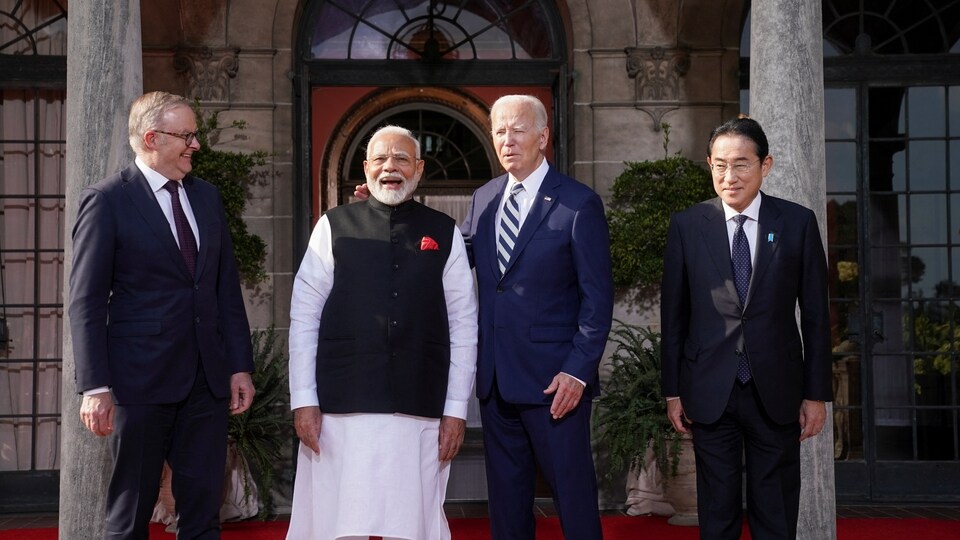
For Quad’s critics, this is a welcome development. But its advocates and champions are disappointed, because much is riding on the success of this grouping, especially when it comes to the geopolitical and geo-economic stakes in the Indo-Pacific. After all, it is a vast region stamped by the ongoing rivalry and strategic competition between the US and China. Beijing considers Quad as ’the Asian NATO’ that aims to contain China and operate on the logic of the Cold War. Quad projected itself, at least until the last year, as the vehicle for ‘the global good’ contributing to order, security, and economic prosperity. Since the commencement of Trump 2.0, however, the grouping has been struggling to redefine its role and mandate.
In this context, a meeting of the top leaders would have been especially useful.
Quad gathered momentum during Trump‘s first presidency. Its first-ever meeting of the foreign ministers took place in September 2019. As Joe Biden handed over the presidential baton to Trump on January 20, 2025, the initial message from Washington was that Quad, anchored in bipartisan support, is here to stay. Notably, the first meeting of foreign ministers in Trump’s second presidency took place on January 20 itself, committing the four nations to a proactive role and giving further impetus to a coalition of democracies committed to the philosophy of a Free and Open Indo-Pacific.
Following the Trump-Modi meeting in Washington in February, the joint statement indicated that the latter looked forward to hosting President Trump in New Delhi for the leaders' summit. Before it, the leaders would “activate new Quad initiatives on shared airlift capacity to support civilian response to natural disasters and maritime patrols to improve interoperability.” Much of this was reiterated and emphasised in the subsequent July meeting of the foreign ministers in Washington. However, they now agreed, at the US's insistence, to restrict Quad’s agenda to a few specific items, such as maritime security, disaster relief, critical technology, and a new initiative focused on critical minerals. This author depicted the new trend elsewhere as ‘the trimming of Quad’.
Much water has flowed down the Yamuna and the Potomac over the past six months, confirming that global geopolitics has undergone radical changes. India, the only non-treaty partner in Quad, received a series of unexpected jolts from Washington: 50% tariffs; no bilateral trade deal finalized; serious acrimony on the US role as a mediator in India-Pakistan hostilities; US-Pakistan bromance; revocation of waiver of sanctions targeting India’s participation in the Chabahar Port project; Washington’s public demand that India, ‘a funder of Russia’s war in Ukraine’, end its purchases of Russian oil; adverse measures against H-1B visa beneficiaries; and the US negativity towards Brics. At the same time, trade negotiations have continued in some form; President Trump and PM Modi spoke to each other on the telephone on the letter’s birthday; and the Indian PM issued two statements backing Trump’s Gaza peace plan. But the bilateral political situation has not improved adequately for the planners to agree on the dates for the next Quad summit.
However, the problem is deeper as it transcends the current flow of India-US relations.
The silence of Washington regarding US participation in the next summit is also due to the Trump administration's delay in finalising its China policy and announcing its new defence strategy for the Indo-Pacific region. Washington remains undecided on whether to view China as a challenge or an opportunity. Ashley Tellis, a noted scholar, observed in a recent interview that President Trump regards China as an economic rival, but not as a geopolitical rival. “In this vision, India loses priority,” Tellis stressed. In other words, a comprehensive US-China deal can still be secured. The much-talked-about Trump visit to China in 2025 has not materialised, and now the US must be content with a meeting between the presidents of the US and China on the sidelines of the Asia-Pacific Economic Cooperation (APEC) in Gyeongju, South Korea. In this backdrop, it is not surprising that the US side has placed an orange light on the Quad summit.
Besides, the relevance of Australia and Japan, the other two partners, too, needs to be factored in. Apparently, Australians feel that they have not received the treatment they deserve from their American allies. Australian PM Anthony Albanese is yet to have his first formal meeting with President Trump in the White House. This has been weighing on Canberra, although they may now be relieved to note that a meeting is likely to take place later this month. On the other hand, Japan has changed its prime minister once again. Sanae Takaichi is the new PM. Observers have described her as “a hardline ultra-conservative and China hawk.” She is also known for her criticism of the recent US-Japan agreement on trade and investment. Whether she meets with Trump soon and succeeds in securing a revised agreement will be closely watched.
Meanwhile, an interesting debate continues in the think tank circuit in Delhi on whether PM Modi should visit Kuala Lumpur to participate in the India-Asean Summit, and other Asean-related meetings, and especially if he should meet President Trump there. Let us see which way this goes.
Speaking at a public event in Delhi on October 5, external affairs minister S Jaishankar observed: “Quad is a sort of a bureaucratic set-up at different levels in different dimensions, people engage with each other, and this continues.” He added, “Quad is alive, and Quad is well.”
The preceding analysis leads us to two obvious conclusions.
One, a plurilateral grouping cannot function and grow effectively if bilateral relationships among its member States are under stress. The members must always endeavour to expand their convergences and reduce their divergences. Two, in this age of hyperactive summit diplomacy, only those groupings can be effective and command media attention that hold annual summits. Hence, it is for the leaders to decide how much time and political capital they are prepared to invest in Quad. Its immediate future hinges on the answer to this question.
This article is authored by Rajiv Bhatia, Distinguished Fellow, Gateway House and former ambassador.


