
 E-Paper



Remembering Sir Mark Tully
This article is authored by Lord Raj Loomba, CBE, founder and chairman, The Loomba Foundation.

 Prefer HTon Google


There are journalists who report on a country. Then there are those rare souls who allow a country to speak through them. Sir Mark Tully, who passed away recently at the age of 90, belonged unquestionably to the latter category.
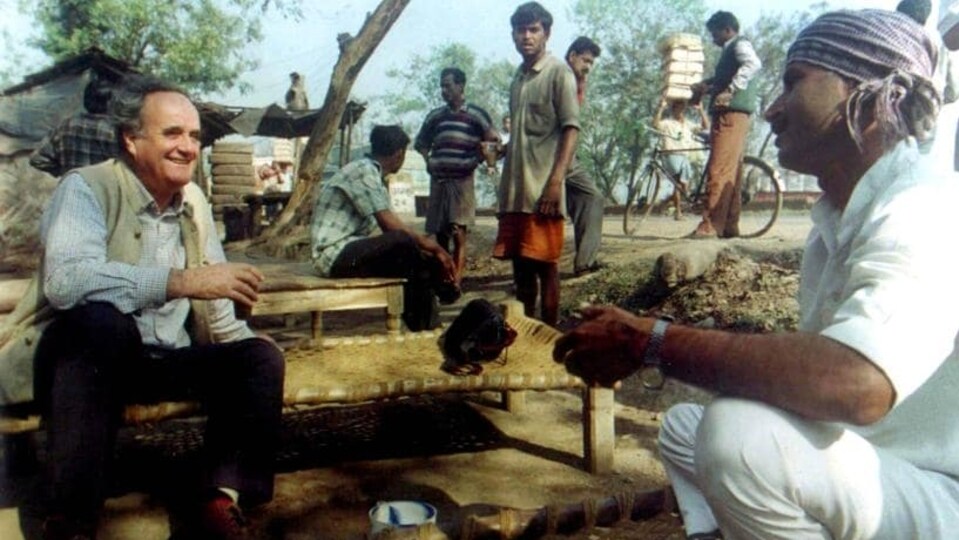
For decades, as the BBC’s bureau chief in Delhi, Sir Mark was among the most trusted voices interpreting India to the world--and often, India to itself. But his death marks more than the loss of a distinguished broadcaster. It marks the passing of someone who understood that journalism, at its best, is an act of service, and who lived that belief through both his professional work and humanitarian commitments.
In an age when news cycles run on outrage and nuance is often the first casualty of deadlines, Sir Mark’s passing invites us to pause and reflect on what kind of voice we have lost--and what his example can still teach us.
I remember vividly when Sir Mark agreed to become The Loomba Foundation’s first Patron in India in 1999. Many high-profile figures offer their names to causes; Sir Mark offered his conviction. He stood alongside us at our launch in India by the then Prime Minister, Atal Bihari Vajpayee--a moment of pride and significance for our organisation and its mission to support widows.
What struck me immediately was that his involvement was never symbolic. He wanted to understand the issue, the people behind it, and the impact we hoped to make. That instinct to listen before acting defined everything he did.
What made Sir Mark unusual among foreign correspondents was his decision to make India his home. Even after retiring from the BBC, he chose to remain in the country he had covered for so many years. This was more than a lifestyle choice; it reflected the depth of his engagement.
He learned Hindi. He wrote books exploring Indian culture, politics, and spirituality. He built relationships that went far beyond the transactional nature of news gathering. Above all, he resisted the temptation to simplify India’s complexity for the convenience of foreign audiences. Instead, he trusted listeners to grapple with contradiction, nuance, and the lived reality of a vast and diverse nation.
What many may not know is that Sir Mark didn’t just lend his name to our cause--he picked up a camera. He made our very first documentary on widowhood, using his storytelling skill to shine a light on lives too often overlooked. When that film was shown on Virgin Atlantic flights worldwide, with the support of Sir Richard Branson, it carried Sir Mark’s unmistakable approach: Dignity without melodrama and truth without exploitation.
He continued to attend our fundraising events in India, offering not just his presence but his warmth and counsel. His credibility helped shape the Foundation’s early growth and international reach.
Through working with him, I saw a man who believed that every life has a story worth telling and that stories, when handled with care, can change lives. Whether broadcasting to millions or filming widows in quiet corners of India, the same principle applied: Listen carefully, report honestly, and remember that behind every statistic is a human being.
In today’s media landscape, where opinion often masquerades as analysis, confirmation bias is rewarded, and speed overwhelms depth, Sir Mark Tully’s approach feels almost countercultural.
He showed that it is possible to report on a country’s challenges without reducing it to those challenges alone. He demonstrated that complexity is not something to avoid but something to respect. And through his work with causes like ours, he proved that using one’s platform for humanitarian purposes is not a distraction from journalism, but an extension of its moral core.
Sir Mark’s legacy extends far beyond his distinguished career. Those of us at The Loomba Foundation will remember him as a man of principle and quiet empathy--someone who used his influence to stand beside the most vulnerable.
His contribution to the cause of widowhood--making our first documentary, helping it reach a global audience, and remaining a steadfast advocate and friend--will always be remembered with gratitude. The lives touched through the attention he helped bring to this issue stand as a testament to what responsible influence can achieve.
Sir Mark’s passing should be a moment not just of remembrance, but of reflection.
For journalists, his life is a reminder that the most important stories are often found not in corridors of power but in ordinary lives facing extraordinary challenges. That patience can reveal more truth than speed. That understanding a place deeply is not a limitation, but a form of wisdom.
For those of us working on social causes, his example shows the value of sustained, credible advocacy. Sir Mark didn’t make a film and move on. He stayed engaged, attended events, offered guidance, and remained a true friend to the cause.
And for India, perhaps his legacy affirms something we sometimes forget: that we are strengthened, not threatened, by those who see us clearly--complexity, contradictions and all.
Sir Mark Tully could have reported on India from a distance. Instead, he chose immersion. He could have retired anywhere in the world. He chose to stay in India. He could have lent his name to causes without involvement. He chose to roll up his sleeves.
These were not incidental decisions. They reflected a character shaped by curiosity, humility, and a habit of taking people seriously. In a world that rewards quick takes and loud opinions, Sir Mark showed what can be achieved through the slower, harder work of truly listening.
We honour his memory by continuing the work he supported and by remembering that meaningful journalism, like meaningful humanitarian work, begins with seeing people as they are and telling their stories with the dignity they deserve.
The microphone may have fallen silent, but the way he used it continues to speak.
This article is authored by Lord Raj Loomba, CBE, founder and chairman, The Loomba Foundation.


