
 E-Paper



Playground is our children’s most important classroom
This article is authored by Deepika Mogilishetty, chief, policy and partnerships, EkStep Foundation.

 Prefer HTon Google


A child misses an easy catch. Her team loses.
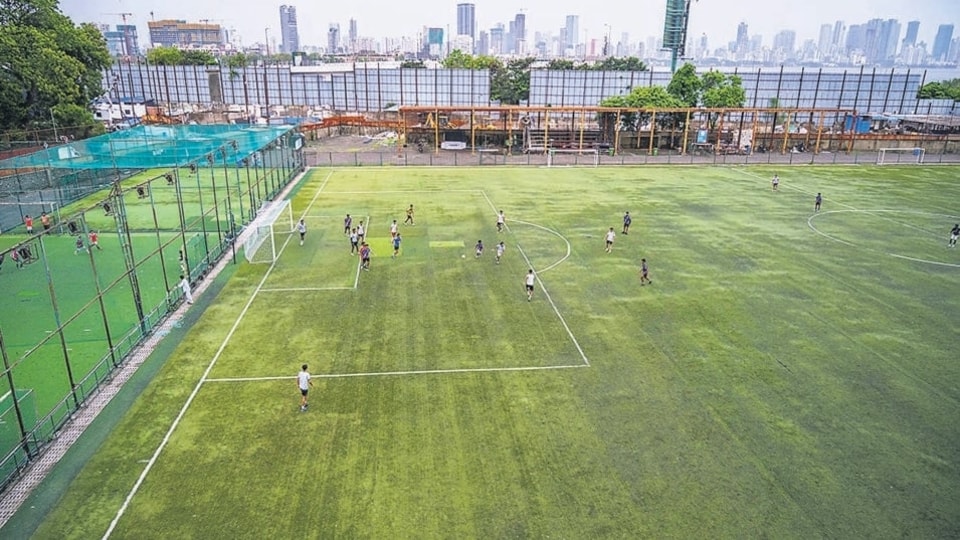
For a few seconds, she is upset. Perhaps embarrassed. Perhaps angry with herself. There is no adult immediately stepping in to make the disappointment disappear. The game continues. A teammate calls out to her. The ball comes her way again. She runs after it.
Something important has just happened.
She has experienced disappointment, stayed with an uncomfortable emotion, recovered and re-entered the game.
We call this resilience. Children might simply call it playing.
This is the flaw in how India is running National Sports Day. We are measuring the wrong thing. The Fit India Movement gave us a fitness habit. Ek Ghanta, Khel ke Maidaan Mein gives children an hour on a field. Both are aimed at the body. Neither is aimed at what actually happens to a child in that hour — and what happens to a child in that hour matters more than either campaign has bothered to say out loud.
It is an hour of emotional education. Not a side effect of sport. The point of it.
Somewhere between a toddler's first game of catch and a ten-year-old's cricket academy admission, we quietly swap play for performance. A coach arrives. A timer starts. A parent begins keeping score not of the match but of the child. None of this is malicious. Every parent enrolling a six-year-old in a "sports programme" believes they are helping. But the swap has a cost, and almost nobody names it: The more we schedule, referee, and professionalise a child's hour on the field, the less that hour is doing the one thing it was built for.
Children have said exactly this, unprompted, in their own words. Last year, through Voices of Play, a national initiative that asked children across ten states what play actually means to them, 4,000+ children answered. None of them talked about fitness.
The playground teaches what a textbook cannot
Consider everything that can happen during an ordinary game.
You wait for your turn. Someone refuses to pass the ball. Your team changes the rules midway. You lose. You win. You argue. You make up. Someone younger wants to join. Someone isn't as good as everyone else. Your best friend chooses another team.
Within an hour, a child may experience excitement, frustration, disappointment, jealousy, empathy, courage, cooperation and joy.
And unlike a lesson about emotions, play asks children to actually navigate them.
This is why the connection between play and mental and emotional well-being deserves far more attention. UNICEF describes play as important to children's motor, cognitive, social and emotional development, while also highlighting its role in reducing stress, processing difficult emotions and building confidence. Its 2026 global data report describes play as an emotional training ground where children encounter emotions including joy, sadness, frustration and anger and learn to manage them.
"Even if I am sad when I come, I leave happy." — a child expressed at Voices of Play initiative. Six-year-old Basha said, "This is the only place where I feel like I can be me and not worry about stuff." In other words, the playground is also where emotional intelligence gets practised. Children have already told us this. We just haven't been listening the way we should.
As adults, we naturally want children to succeed. But childhood also needs small, safe experiences of not succeeding.
You cannot win every race. You will sometimes be bowled out on the first ball. Someone else will score the goal. A friend may run faster than you.
Games give children repeated opportunities to discover an enormously important truth: Disappointment is uncomfortable, but survivable.
This is frustration tolerance.
This isn't just intuition, it's measurable. A large longitudinal study following 2,213 Australian children found that time spent in unstructured, child-directed play at ages 4–5 predicted stronger self-regulation two years later, even after accounting for children's earlier self-regulation levels. The play wasn't incidental to the outcome. It was the mechanism.
"Getting hurt is a part of play, adults forget that," one child told us during Voices of Play. Children already understand what the research is only now confirming: that the scrapes, losses and small failures are not the cost of play, they are how play works.
When children return to the game after losing, try again after failing, or congratulate someone who has beaten them, they are building emotional muscles that will matter long after the scoreboard has been forgotten.
Sport also teaches self-regulation. A child may be furious about a decision but still has to continue playing. They learn that feeling anger and acting on anger are two different things. They begin to pause, recover and respond.
Then there is empathy.
Team games constantly require children to notice other people. Who has not had a turn? Who needs encouragement? Who is struggling? When should I lead, and when should I pass?
These seemingly ordinary playground negotiations are early lessons in relationships, leadership and citizenship. UNICEF similarly identifies teamwork, empathy, cooperation and social connection among the capacities children can develop through sport and play.
But we must resist turning every playground into a stadium
There is an important distinction here.
If we recognise the developmental power of sport, our response cannot be to professionalise every child's play.
Sometimes children should be allowed to invent the rules, argue about them, change teams, abandon cricket halfway through and start playing something entirely different.
When adults control every aspect of children's play, we risk removing precisely the experiences through which children learn agency, negotiation and emotional regulation.
Ek Ghanta, Khel ke Maidaan Mein should stand for more than fitness. That hour is an investment in happier, more resilient and emotionally secure children - not only fitter ones.
And every child actually needs somewhere to spend that hour.
That requires playgrounds, parks, school grounds, community spaces and neighbourhoods where children are welcome. It requires adults willing to protect children's time to play, rather than filling every available hour with another structured activity.
Most importantly, it requires us to remember what childhood is for.
Childhood cannot become only preparation for adulthood. Children deserve moments whose value is simply that they bring laughter, friendship, movement, discovery and joy.
That is what it means to celebrate childhood.
On National Sports Day, therefore, our ambition should extend beyond discovering India's next sporting champion. Let us build a country where millions of children experience the ordinary magic of running onto a field, making up a game, falling out with friends, making up again, losing, trying once more and returning home happier than when they arrived.
Because before sport creates champions, play creates children who know themselves, understand others and discover that they can fall, recover and keep going.
That is the most important victory of all.
India does not only need more children watching sport. It needs more children playing.
And giving every child a playground — and the freedom to play in it — is one of the most powerful investments we can make in childhood.
(The views expressed are personal)
This article is authored by Deepika Mogilishetty, chief, policy and partnerships, EkStep Foundation.


