
 E-Paper



The short and long-run economics of Trump's unraveling | Number Theory
Since winning the Republican ticket for the 2016 contest, Trump faces perhaps his weakest political moment right now. What next?
Updated on: Nov 6, 2026, 06:52:17 IST

 Prefer HTon Google

Share via


Copy link

The 2026 midterm results have delivered a historic drubbing to the Republican Party and President Donald Trump. Since winning the Republican ticket for the 2016 contest, Trump faces perhaps his weakest political moment right now. What next? There is good reason to argue that this question will matter beyond the 2028 presidential elections in the US. Here is why.

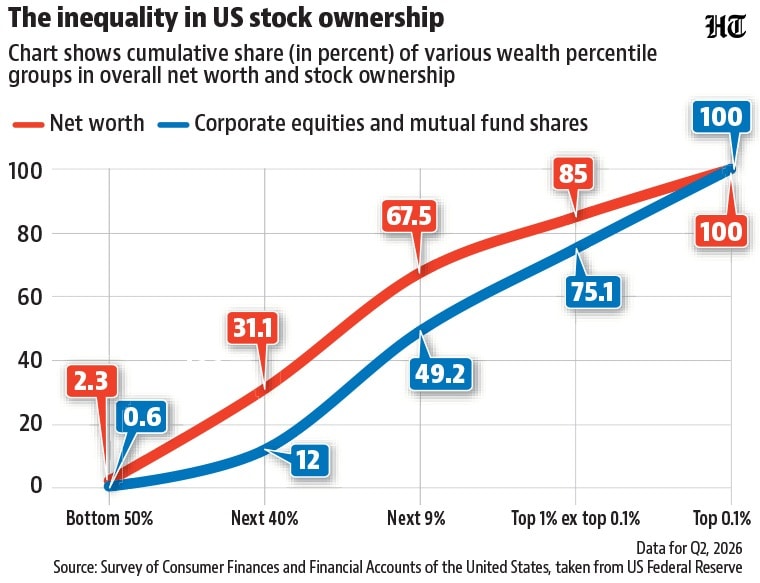
 Trump mistook a stock market boom for broad based well-beingOn July 6, Trump did one of his many firsts as the US President. He “rang the opening bells of both the New York Stock Exchange and NASDAQ from the Oval Office, marking the official launch of Trump Accounts and igniting a new era of American prosperity for millions of children” the White House website said. The politics was to promise stock market driven wealth to next generation Americans. The US stock market, thanks to the ongoing AI boom, has been enjoying a strong bull run in the recent past. Trump perhaps made the mistake of extrapolating it as a sign of broad-based economic well-being. He should have paid heed to a story Reuters did after his opening bell stunt. It cited US Federal Reserve data to show that the top 1% of earners owned 50.1% of the shares in capital markets while the bottom 50% owned just 1.1%.
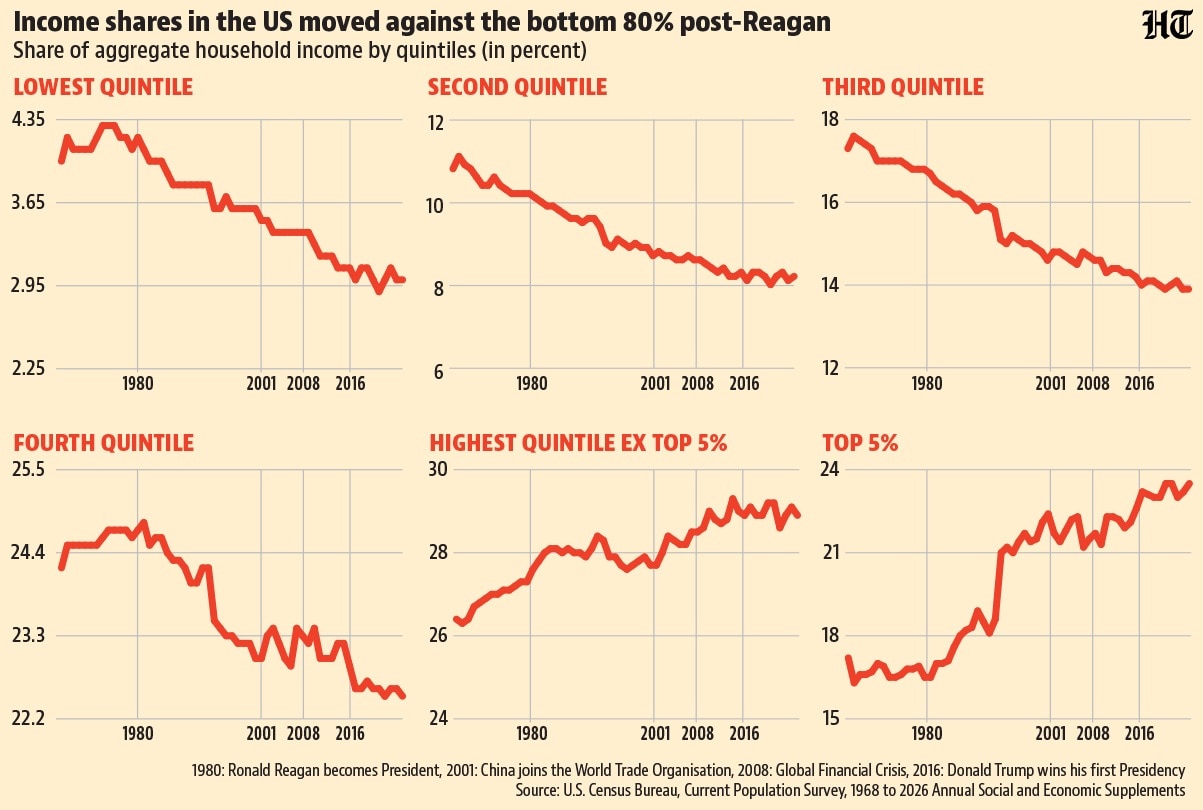
- Trump’s rise is more interesting than his current setback“I love the poorly educated”, Trump famously said while campaigning against Hillary Clinton in the 2016 elections. It would prove to be among the most successful political outreach to the underclass by an American politician in a long time. The US went through a big wave of white-collar benefitting inequality after the triumph of the neoliberal revolution in the 1970s. It busted unions, outsourced manufacturing and made America’s well-educated technocracy even more well paid. This was politically managed – especially in the aftermath of China’s rise as a manufacturing and export superpower since the 2000s – by easy money and easier credit, until the financial markets innovated a global financial crisis out of it. The costs of this crisis were borne disproportionately not just by the poor but almost 80% of the population, which saw the income distribution turn against it. This disillusionment created Trump’s politics in 2016 and sustained the momentum going until the latest results almost destroyed Trump’s rainbow coalition. This aspect of the US’s larger economic reality remains.
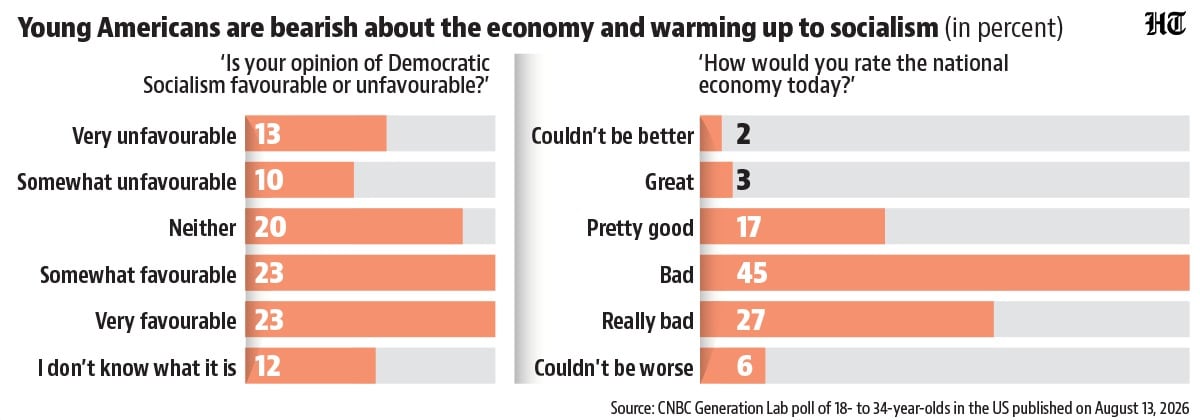
- Disillusionment with Trump has the potential to make the US pivot from right to left“Americans are tired of being told their needs are unrealistic by politicians who have been bought by the wealthiest people in the country”, New York Mayor and a rising left-leaning star of the Democratic Party Zohran Mamdani said in a post on microblogging platform X on Wednesday with a snapshot of the mid-term results. Mamdani, in away is symptomatic of the political churn in the US after Trump destroyed the Democratic Party in the 2024 elections. Mamdani first defeated the establishment Democrats in New York, the epicentre of global capitalism, to win the candidature for the mayorship and then went on to become the Mayor. His political rise is also the sign of a rising left-wing tide within the Democratic party which is now beginning to find traction in the broader electorate. Data from various surveys, even predating the midterm elections, show that younger Americans are now gravitating towards left-leaning ideas including what was once considered a complete taboo in US politics: socialism. “With fewer than 90 days remaining before the midterm elections, many younger voters are taking up the mantle for democratic socialism, according to a new CNBC poll with Generation Lab, a research firm that focuses on Americans between the ages of 18 and 34. According to the CNBC Generation Lab poll, which received responses from 1,088 people earlier this month, 46% of Americans between the ages of 18 and 34 now hold either a “favorable” or a “very favorable” view of democratic socialism.”, a CNBC report said. The left-leaning views are driven primarily by a hostile economic environment. “Nearly 80% of the cohort said they had a negative sentiment on the American economy.”, the report added. Such views are already shaping American politics, but would perhaps matter even more in the long-term. The Democratic Party would do well to brace itself for a fierce inner party debate too.


Unlock a world of Benefits with HT! From insightful newsletters to real-time news alerts and a personalized news feed – it's all here, just a click away! -Login Now!


