I have spent the last month in London, where February has been a month of scandals and has reminded of the similarities between the Indian and British democracies. The scandals reminded me that in neither country is democracy adequately protected against the corrosion of big money.
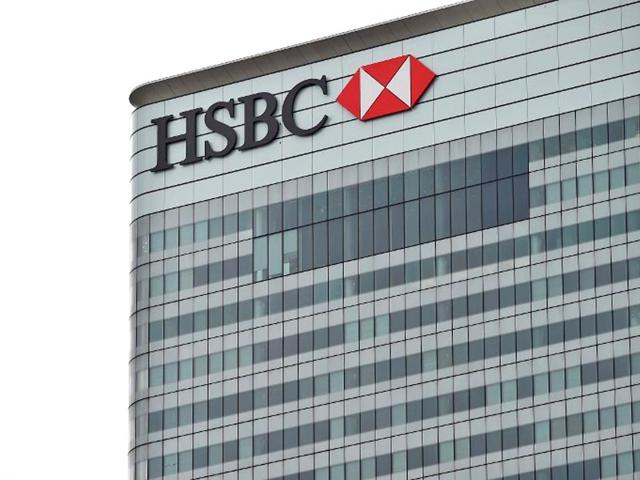
Big money corrodes democracy because of its ability to buy parliamentarians and the press. In Britain in a sting operation during February two former foreign ministers were caught offering questionable services to a fictitious Chinese company. Serious allegations of facilitating tax evasion have been made against the Swiss branch of Britain’s largest bank, HSBC. Major donors to political parties have been named in the allegations. Peter Oborne, the highly respected chief political correspondent of the Daily Telegraph, resigned in protest against what he claims is the undue influence of HSBC on his paper’s coverage of that story.
The HSBC allegations inevitably reminded me of Prime Minister Narendra Modi’s promise to bring back black money parked in Swiss bank accounts and the meagre results he has achieved so far. This is only the latest incident in the long history of Parliament’s failure to curb black money.
The woes of HSBC have drawn attention to the British tax authorities’ laxity in prosecuting tax evaders. The authorities were given the leaked data on which the HSBC allegations have been based as far back as 2010, and they have identified 1,100 people who have not paid taxes. So far only one person has been prosecuted. Commenting on this the chairperson of the Public Accounts Committee said: “I just don’t think the tax authorities have been strong enough, tough enough, in securing for the British taxpayer the monies that are due.” The revelation that only one big-time British tax-evader has been prosecuted has led to contrasts with the strict action that is taken against small-time evaders. Nevertheless Ed Balls, the Labour Shadow Chancellor of the Exchequer, has deflected attention from the big-time evaders by indicating that the problem lies with the smallest-time evaders who are paid in cash for services like house cleaning and gardening. He has called on all families to follow his example and demand a receipt from them. This led one columnist to call on Ed Balls to “tackle hedge funds, not hedge-trimmers”.
{{/usCountry}}The woes of HSBC have drawn attention to the British tax authorities’ laxity in prosecuting tax evaders. The authorities were given the leaked data on which the HSBC allegations have been based as far back as 2010, and they have identified 1,100 people who have not paid taxes. So far only one person has been prosecuted. Commenting on this the chairperson of the Public Accounts Committee said: “I just don’t think the tax authorities have been strong enough, tough enough, in securing for the British taxpayer the monies that are due.” The revelation that only one big-time British tax-evader has been prosecuted has led to contrasts with the strict action that is taken against small-time evaders. Nevertheless Ed Balls, the Labour Shadow Chancellor of the Exchequer, has deflected attention from the big-time evaders by indicating that the problem lies with the smallest-time evaders who are paid in cash for services like house cleaning and gardening. He has called on all families to follow his example and demand a receipt from them. This led one columnist to call on Ed Balls to “tackle hedge funds, not hedge-trimmers”.
{{/usCountry}}The sting that filmed former Conservative foreign minister Sir Malcolm Rifkind and former Labour foreign minister Jack Straw reminded me of the Tehelka scandal although the two British seniors only showed their willingness to accept doubtful payments, they didn’t actually take money. Rifkind, who had intended to stand for Parliament again in this year’s general election, promised the journalist disguised as the representative of a Chinese company that he would be able to get inconvenient rules swept aside. Straw, who didn’t intend to stand for Parliament again, said he would be able to help more when he was elevated to the House of Lords.
Oborne resigned because he believed the Daily Telegraph’s coverage of HSBC amounted “to a form of fraud on its readers by placing the interests of HSBC above its duty to bring them the news”. The row stirred up by Oborne has drawn attention to the Telegraph management’s recent decision to replace their editor with a content manager, who takes the interests of the people who look after the commercial concerns into account.
So how can a democracy’s defences against big money be strengthened? The Telegraph, while denying Oborne’s accusation, has pointed out with pride that it is the only national serious newspaper to make a profit on its operating costs. The onslaught of digital media makes advertising revenue all the more important for the survival of newspapers. Yet if advertising influences editorial content, newspapers will lose their unique selling point — credibility. Oborne believes the readers are the answer to this problem. The same might be said of Parliaments and their members. They belong to the voters. But events in Britain this February indicate that voters are not protesting sufficiently strongly against the role of big money in their democracy, and when it comes to the press, the old question ‘who will guard the guardians?’ has still to be answered.
(The views expressed by the author are personal.)