The recent Third Plenary session of the 18th Central Committee (CC) of the Chinese Communist Party (CCP) and the Central Economic Work Conference approved reforms aimed at boosting China’s economy and lifting the country up to the ranks of the world’s advanced nations by 2020.
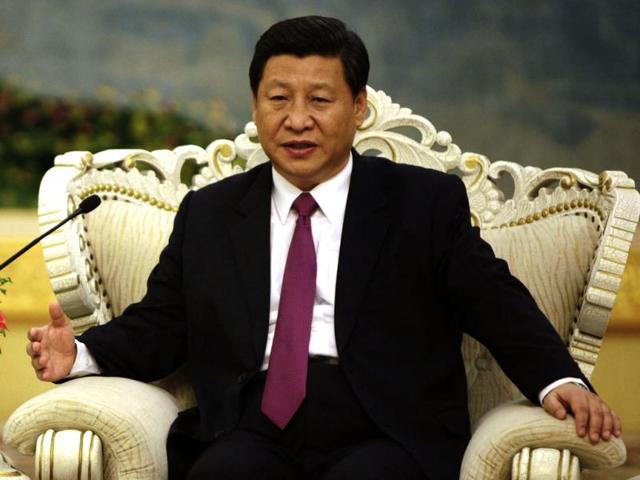
The plenum was particularly important and sent three clear messages. First, that Chinese President Xi Jinping is China’s paramount leader and personally steered the economic reforms. Second, that conscious of the widespread popular dissatisfaction and its sagging popularity the CCP agreed on the need for comprehensive economic reforms to create jobs, further improve entrepreneurial opportunities, and boost the national economy to realise the ‘China’s Dream’ and ensure that the country ranks among the world’s most advanced countries by 2020. Third, the plenum recognised the need to strengthen security coordination and accelerate military reform and modernisation. Creation of a national security committee places the security apparatus on par with the Central Military Commission (CMC) in importance.
Rapid modernisation of the People’s Liberation Army (PLA) and its technological capabilities was emphasised. The role and capabilities of the Navy, Air Force and Second Artillery — China’s strategic strike force — have been enhanced to realise the ‘China’s Dream’ by adding muscle to diplomacy. Confirming modernisation plans in the People’s Daily on November 22, Military Commission vice-chairman Xu Qiliang disclosed that non-combatant personnel will be reduced. Other reports indicate a major structural reorganisation, intended to give the PLA a pronounced outward orientation, is imminent. The measures aim to ensure that the CCP retains legitimacy and its position as the country’s unchallenged ruling party when it celebrates its centenary in 2021.
The lengthy plenum decision released on November 15, listed 300 reforms covering a range of issues, but mainly the economy. For the first time it stated that the market would play a “decisive”, instead of “basic”, role in allocating resources. Chinese analysts interpret this as clear indication that authorities will let the free market play a bigger role in the economy. Reforms include: compelling State-owned enterprises (SoEs) to pay a share of profits — rising to 30% by 2020 — to the State; moving gradually towards full convertibility of the currency; reducing the rural-urban income gap by gradually granting property rights to peasants; relaxing the restrictive ‘hukou’, or household registration system; extending health and social security benefits as admissible to urban residents to rural migrant workers, which is estimated to add 40 million workers; reducing subsidies on prices of water, oil, natural gas, electricity, telecommunications etc, and introducing individual income tax and legislation for taxes on real estate and environment protection.
{{/usCountry}}The lengthy plenum decision released on November 15, listed 300 reforms covering a range of issues, but mainly the economy. For the first time it stated that the market would play a “decisive”, instead of “basic”, role in allocating resources. Chinese analysts interpret this as clear indication that authorities will let the free market play a bigger role in the economy. Reforms include: compelling State-owned enterprises (SoEs) to pay a share of profits — rising to 30% by 2020 — to the State; moving gradually towards full convertibility of the currency; reducing the rural-urban income gap by gradually granting property rights to peasants; relaxing the restrictive ‘hukou’, or household registration system; extending health and social security benefits as admissible to urban residents to rural migrant workers, which is estimated to add 40 million workers; reducing subsidies on prices of water, oil, natural gas, electricity, telecommunications etc, and introducing individual income tax and legislation for taxes on real estate and environment protection.
{{/usCountry}}Other reforms propose abolishing ‘reform-through-labour’ camps; expanding authority of the central anti-corruption body, headed by Politburo Standing Committee (PBSC) member Wang Qishan, to include subordinate offices and the PLA; and enhancing the supervisory role of the National People’s Congress (NPC) — China’s version of a parliament — over local governments.
The annual Economic Conference approved six core tasks endorsing the plenum resolutions. It promised accelerated negotiations on investment agreements, creation of free trade zones and promotion of a ‘new maritime Silk Route’. Some ambiguity exists about next year’s growth target at 7.5%, with the possibility of a deceleration to 7%.
Plenum documents and the official media particularly highlighted Xi’s contribution in finalising the reform proposals. Xi himself presented the ‘Explanation’ of the reform proposals to the plenum. The communiqué issued at the conclusion of the plenum on November 12, confirmed Xi’s imprimatur and standing in the CCP leadership. It declared: “comrades in the entire party, must closely revolve around the party centre with Comrade Xi Jinping as general secretary to forge ahead” and “realise the Chinese Dream of the great rejuvenation of the Chinese nation!” There was no mention during the plenum or in plenum documents of Premier Li Keqiang, who manages the economic portfolio. Leaders who gained in authority at the plenum were Liu Yunshan, Zhang Gaoli, Wang Qishan and Zhang Dejian. The latter two, like Xi, are ‘princelings’.
Plenum documents stressed the importance of the party’s leadership, referring to it over 25 times. The Plenum further tightened the party’s grip on media, culture and education. It stressed the role of ideology, propaganda and culture in building “socialist core values” and exhorted promotion of “socialist core values” and “love for the motherland” among students.
Implementation of the reforms, which has already begun, will be difficult and opposed by entrenched interests and orthodox party cadre. The restiveness in Tibet and Xinjiang and widespread popular discontent accentuated by the 400 million active ‘netizens’, pose serious challenges. These are exacerbated by the political divisions that are beginning to surface. The publicised announcement in November of a ‘political’ party, with the officially discredited and ousted Politburo member Bo Xilai as its patron and which expects support from nearly 30 million Cultural Revolution-vintage party cadre, is an example. The powerful group of ‘Red Descendants’, or children of veteran CCP leaders, who influence leadership decisions are also divided on the future course that the party should take and are voicing their differences. Both conferences, nevertheless, represent the determination of Xi and the CCP to ensure that China realises its strategic foreign policy ambitions and joins the ranks of the world’s most powerful countries by the end of this decade.
Jayadeva Ranade is a member of the National Security Advisory Board and former additional secretary, Cabinet Secretariat, Government of India
The views expressed by the author are personal