
 E-Paper



New Year 2026: Food traditions from around the world
January 1 is celebrated with special foods symbolising luck and prosperity globally. Here's a look.

 Prefer HTon Google


From sweet beginnings to symbolic bites, the world welcomes January 1 with food meant to invite luck, prosperity and new beginnings. From lentils and fish to dumplings and jaggery, here are some New Year food traditions that prove that hope is often served on a plate.
India
In India, sweetness is a must! People enjoy sweets made with jaggery, sugar, or honey on January 1 to ensure life stays sweet throughout the year. In Maharashtra, a unique combo of neem and jaggery is eaten to embrace both bitter and sweet experiences of life. Rice-based dishes, such as Pongal in Tamil Nadu and Pitha in eastern India, symbolise abundance and fertility.
China
In China, food traditions are rich with meaning. Dumplings shaped like ancient gold ingots symbolise wealth, whole noodles signify long life, and fish represents surplus, and eating fish with some left over suggests plenty throughout the year.
Japan
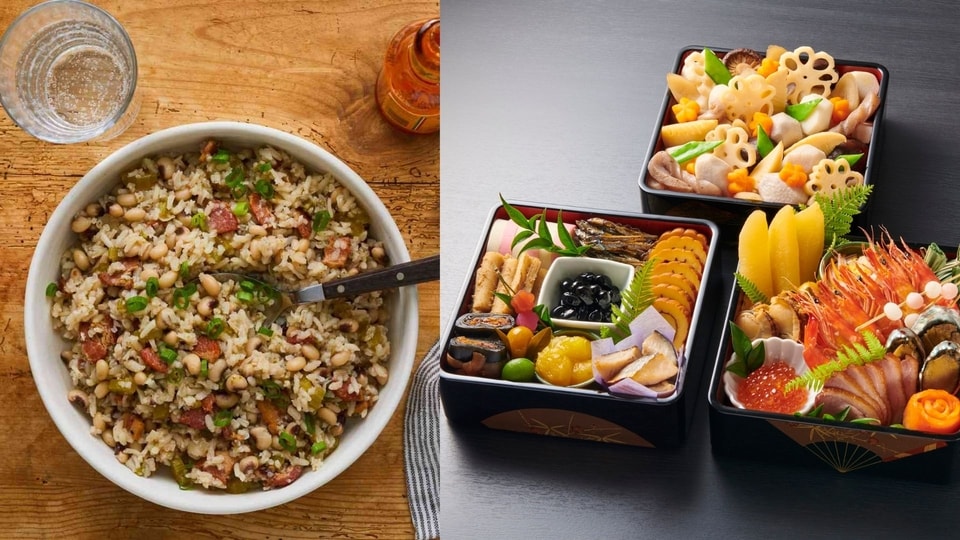
Osechi Ryori is Japan’s traditional New Year feast — an assortment of small dishes prepared in advance and enjoyed slowly. Each item has a purpose: black beans for health and hard work, herring roe for fertility, and sweet rolled omelettes for education and culture.
Italy and other parts of Europe
In Italy and parts of Europe, legumes like lentils are believed to bring wealth because they resemble coins. Italians often pair lentils with pork or sausage, where pork itself is a sign of progress and abundance because pigs move forward when foraging. Other beans and peas carry similar meanings across the region.
United States
In parts of the US, especially in the South, black-eyed peas are eaten on New Year’s Day for luck and wealth. The dish Hoppin’ John pairs the peas with leafy greens (symbolising money) and cornbread (symbolising gold) — a complete good-fortune meal.
Middle East and beyond
In various Middle Eastern countries, people enjoy dates, pomegranates, and honey to symbolise blessings, fertility and abundance. Across Europe and Asia, fish, whether herring or carp, are also popular on New Year’s Day as a sign of perseverance and plenty.


