
 E-Paper



Savouring the sip: The rise of slow bars in India
As slow bars rise across India, a new wave of cafés and cocktail spots is redefining how we drink — slow brews with intention, craft, and calm.

 Prefer HTon Google


In a speed-obsessed world, the joy of savouring food and drink is often lost. Enter the era of slow bars — where drinks are crafted with intention, ingredients respected, and conversations unhurried. These spots invite you to pause, sip, and truly taste.
Slowing down to savour
“Slow bars are like the chef’s table of the coffee world — deliberate, personal, and rooted in care. Watching coffee being brewed invites stillness, curiosity, and connection, much like mindful eating. It’s about being present, savouring each sip, and honouring where it all comes from,” says Chef Radhika Khandelwal.
Transparency in every pour
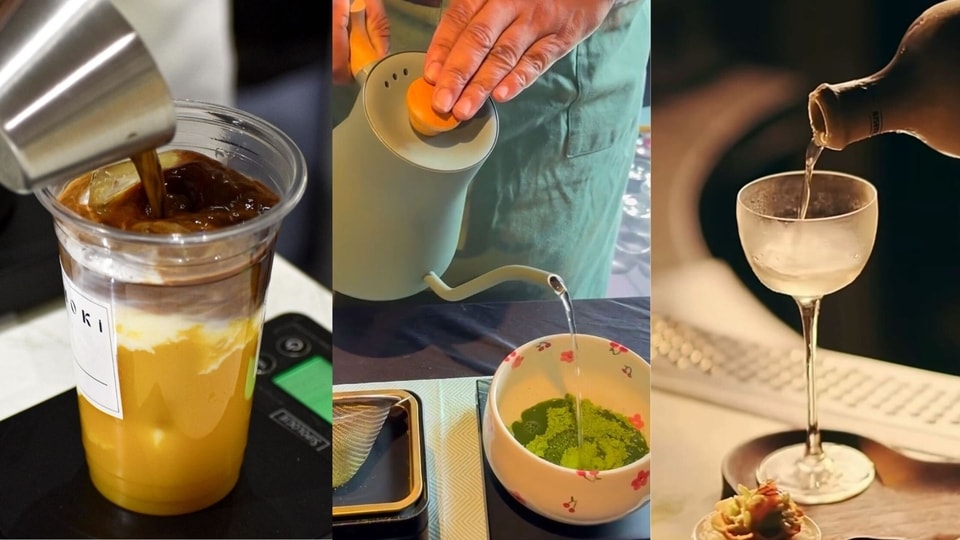
Delhi’s Hinoki, a Japanese-inspired café, was founded by college friends Urvi Singh and Deepanshu Saini. What started as a commitment to transparency — crafting every drink from scratch in front of customers — naturally evolved into a slow bar, where the process matters as much as the pour. “This put the concept of a slow bar in action for us. At first, we were sceptical, but slowly, customers were drawn to the process and appreciated it,” says Deepanshu, adding, “Even our ingredients are well thought out and researched. We use those ingredients in our matcha that do not overpower but rather complement it; hence, we decide on ingredients very precisely."
Even for the flavours of strawberry and blueberries, they make fresh jams in the morning and use them as flavouring ingredients in their drinks.
Flavour-first approach
At Blondie Mumbai, co-founder Natasha Hemani says the slow bar was born to prioritise flavour over volume. “The slow bar is our way of carving out space for better coffee, brewed without urgency. We work with beans that have undergone natural, anaerobic, or honey processing. On our end, we stick to manual brews: pour-over, AeroPress. Everything is dialled in by hand, from grind size to water temperature,” she adds.
They also talk about coffee varieties, roast development, and water ratios with the customers while brewing. “You see your coffee being brewed; you’re part of the process,” she exclaims.
Cocktails crafted with care
Cocktails deserve the same care as coffee and matcha. At Muro Bengaluru, co-founder Niharika Raval says great bars focus as much on the experience as the drink. “We wanted to create an experience that’s deliberate and thoughtful rather than rushed. And something that excites me most is that we’re not afraid to be playful. Whether it’s a highball that tastes like a Dorito or a cocktail that shifts temperature on your palate, the goal is to make people feel something, surprise, nostalgia, curiosity,” she adds.
Sahil Essani, Beverage Manager at Blondie, tells us about the whole procedure and how elaborate it is. They run a full carbonation program, where certain cocktails go through multiple force-carbonation and resting cycles before being chilled overnight in a liquid bath below -20°C. “This process gives the cocktails a precise, lasting effervescence you can actually feel on the palate. We also experiment with techniques like manipulating Brix levels in ice so the flavour evolves as it melts, and playing with contrasting temperatures, like the Mango Sticky Rice cocktail, which is a chilled base with a warm foam,” he adds.


