
 E-Paper



Made in India, worn with pride
This Republic Day, patriotic dressing is moving beyond the tricolour to honour enduring craft.

 Prefer HTon Google


For generations, fashion in India was not shaped by seasons or new drops. It was shaped by the loom, the needle and the dye vat. This Republic Day, designers say “patriotic dressing” is evolving. It is no longer just about wearing saffron, white and green, but about honouring ancestral techniques that have survived centuries. “What feels different today is not the presence of handicraft, but the way designers are choosing to foreground it,” says stylist Isha Bhansali. “Rather than treating craft as a backdrop, many are placing it at the centre, allowing technique and process to speak for themselves.”
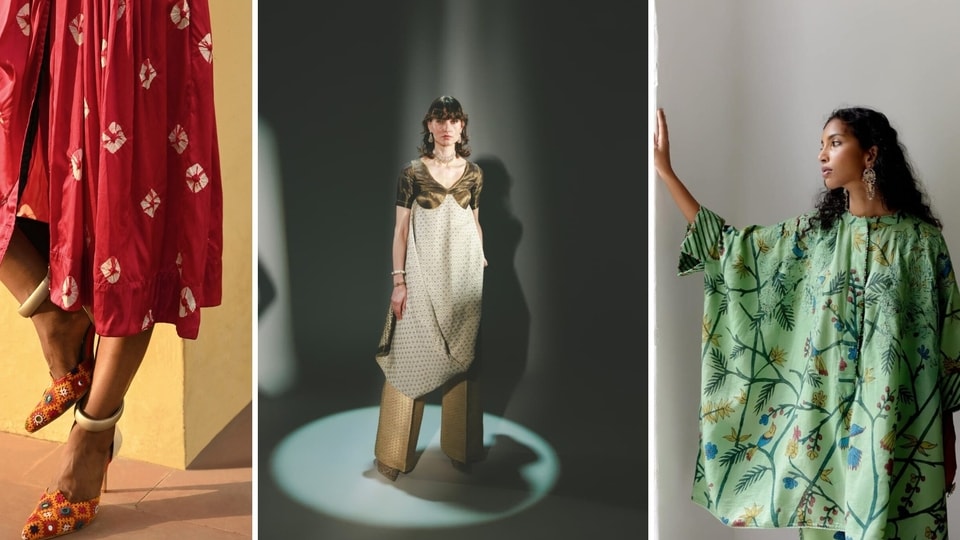
Techniques like Kalamkari, Chikankari and Jamdani are not simply decorative motifs, but cultural identities stitched into fabric. For designer Archana Jaju, they are “living stories”. “When I reinterpret them through modern silhouettes, they become a meaningful expression of national pride,” she says.
This renewed attention to craft is also tied to a deeper reckoning with values. “As part of our design practice, we celebrate India every day by going back to aesthetics and crafts that were born of this land,” says Ateev Anand of re-ceremonial. “There’s a deep sense of belonging when one realises and reconnects with their roots. This shift in values is what keeps craft practices going, and sincere patriotism lies in informed patronage, in this era driven by consumerism.”
Perhaps the biggest shift is how these pieces are worn. Hand-painted textiles, embroidery and regional weaves are moving from occasion wear to everyday wardrobes, reimagined as urban separates, breathable co-ords and lightweight dresses. The change is driven by a consumer who values longevity over fast-fashion trends. Designer Aprajita Toor sums up: “Each stitch carries memory, lineage and place; each weave speaks of heritage worn with intention.”
Global gaze
Global fashion is paying attention as well. International luxury houses have increasingly looked to Indian craftsmanship as a benchmark for artisanal excellence. This attention, however, has also sparked conversations around credit and ownership. A recent flashpoint came when Prada introduced open-toe leather sandals during its Spring Summer 2026 menswear show.
To many within the Indian fashion community, the braided pattern and T-strap design closely resembled the traditional Kolhapuri chappal, a handcrafted leather sandal with centuries-old roots in Maharashtra.
The craft glossary
Kalamkari: Hand-painted or block-printed textiles using natural dyes (Andhra Pradesh, Telangana).
Chikankari: Fine, delicate hand embroidery from Lucknow, Uttar Pradesh.
Bandhani: Traditional tie-dye made by hand-tying fabric (Gujarat, Rajasthan).
Jamdani: Handloom weave with motifs woven into the fabric (Bengal).
Ikat: Yarn-dyed resist technique that creates a blurred pattern (Odisha, Telangana, Gujarat, Andhra Pradesh).
Ajrakh: Intricate natural-dye block printing with resist work (Kutch, Rajasthan).
Zardozi: Metallic thread embroidery often with beads and sequins (North India, royal courts).


