
 E-Paper



The analog comeback: Why Gen Z is falling back in love with iPods, CDs and flip phones
The “digital detox” trend has real sales numbers behind it, and experts explain why it's happening. Written by Diya Agrawal

 Prefer HTon Google


A "going analogue" movement has been picking up pace through 2026 as a global media narrative, with young people swapping smartphones for iPods, flip phones, CD players, film cameras, etc. "Analogue" has become the shorthand the entire media narrative has settled on for anything that isn't a smartphone or a streaming platform.
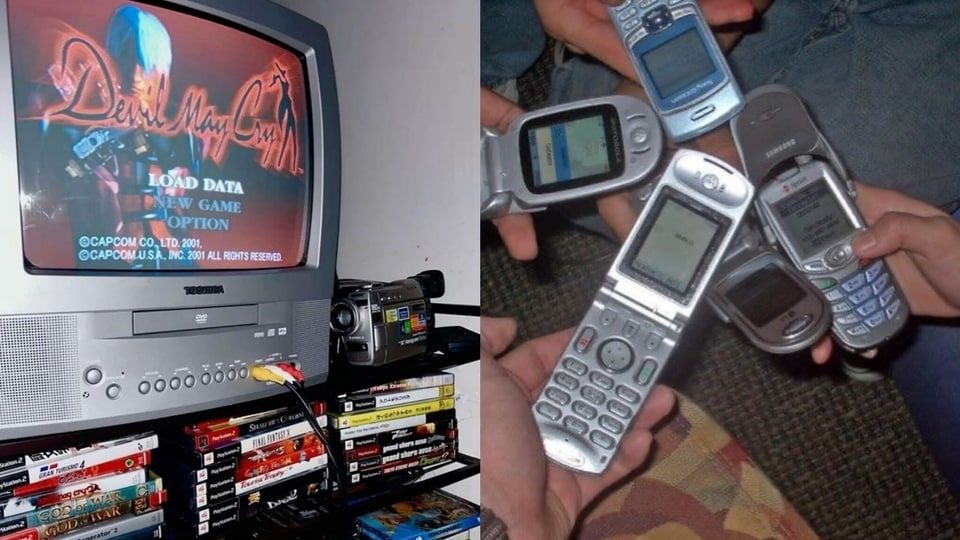
Spotify has 100 million songs on tap. So why is a growing number of Gen Zers deliberately going back to devices that hold a few hundred?
In the US/UK, the iPod is the flagship of this revival. eBay data shows the device was searched roughly 1,300 times an hour on average last year, with prices on some models climbing between 40 and 60 per cent. Refurbished-tech marketplace Back Market has started stocking iPods, Game Boys, and other retro devices after a limited run of bare-bones Nokia phones sold out faster than expected.
CDs are having a parallel moment. A UK-based CD manufacturer's survey of over 2,000 respondents found that Gen Z bought more CDs in the past year than millennials, Gen X, or baby boomers combined. Luminate's 2026 Midyear Report, released mid-July, shows US CD sales up 16 per cent to 16.3 million units in the first half of the year. Total US physical album sales – vinyl, CD, and cassette combined – rose 7.8 per cent to 38.2 million units in the first half of 2026.
According to IMARC Group’s India vinyl record market report, the market was sized at USD 66.3 million in 2025 and is forecast to reach USD 119.2 million by 2034. For digital cameras, IMARC and Deep Market Insights both model the India market at roughly USD 0.42–0.49 billion in 2025, projecting growth of about 5.1–5.2% CAGR from 2026 to 2034. ET Manufacturing and Whalesbook note the refurbished electronics market growing about 12% in 2026.
Flip phones and stripped-down "dumbphones" – some with screens barely longer than a finger – are also seeing renewed demand, largely from people who want a device that is, by design, difficult to spend hours on.
Why is this happening?
Underneath the 2000s anemoia, there's also a simpler mechanism at work: relief from choice overload. A case study of a 29-year-old who switched to an iPod described getting “paralysed” every time she tried to pick a song on Spotify, simply because of how much was available; on a device that holds only what she's manually chosen to put on it, that problem disappears.
That trade-off shows up again and again. A CD has to be bought, unwrapped, and physically played; it can't be swapped out mid-song the way a playlist can. People experimenting with this shift describe that inconvenience as the point: it forces a kind of commitment to what you're actually listening to, watching, or shooting, rather than defaulting to whatever an algorithm serves up next.
Some commentators have linked the trend to a broader pushback against AI-generated content and algorithmic feeds – a desire for things that are chosen deliberately rather than optimised for engagement, at a moment when AI-written content has, by some measures, begun to outpace human-written content online.
There's also a simpler, more practical draw underneath all of this: ownership. A vinyl record or a DVD of your favourite film doesn't vanish because a licensing deal expired or a platform decided to deprioritise it. Streaming access is really a lease, not a purchase; the show or album you love today can quietly disappear from your subscription tomorrow, re-routed to a different platform or pulled altogether. A physical copy sidesteps that entirely. For a generation that has grown up renting access to everything and constantly being monitored by algorithms, owning something outright, even something as small as a DVD case on a shelf, has become its own quiet form of security.
What Gen Z in India is actually doing
For some, it's driven by access rather than aesthetics. Siddharth Veer Sawhney, 19, an undergrad student, started buying DVDs after running into films unavailable on any streaming platform and not purchasable on YouTube either. By owning the disks, he had complete ownership of the content he wanted to watch, and the tangibility of it made it all the more meaningful.
For others, the appeal is closer to social currency. Manvy Devraj, 19, an economics and computer science student, carries a mini digital camera that shoots photos and video and doubles as a conversation starter with people she meets. Her sister has since picked up a similar Kodak mini camera after seeing hers. She calls it low-effort to carry and plans to start bringing it to college daily. Her reasoning for choosing it was heavily influenced by "the desire to have something different and unique.”
Kaisha Narula, 20, pre-law student, has incorporated three physical media habits into her routine – a digital camera, a growing vinyl collection, and a notebook she carries to write or doodle when stressed. She describes all three as making her more present: photography feels more intentional through a camera, vinyl makes listening to music "a way more enjoyable thing" than pressing play on Spotify, and writing by hand helps her decompress.
What tech expert thinks
Rohit Raj Gupta, a tech content creator and founder of Bro Its Tech, thinks that the underlying feeling for the trend is genuine, as people really are exhausted by how much of their day happens on screens. But it's also important to realise that the visibility of that feeling is a different story: once a video of someone switching to a dumbphone performs well, platforms recommend it more widely, and viewers start assuming "everyone is going analogue" when, in reality, it's a small group amplified by an algorithm rewarding novelty. That creates a secondary wave of people buying the same device not out of disconnection, but because it looked good in a 20-second reel.
In his view, the Western version of this trend – dumbphones, iPods, cassette players – hasn't gone mainstream the way it has abroad. India, he argues, has its own parallel version instead: renewed interest in physical books despite Kindles being available, instant pocket cameras and printed photographs, wired earphones making a comeback, and a pull toward retro-looking gadgets more broadly.
He also explained how screens now touch nearly every part of daily life, from work to entertainment to ordering food to exercise, and the constant stream of notifications and recommendations is exhausting on its own. Analogue objects offer a sense of control that digital defaults don't – a physical book has no pop-ups, an offline music player requires an actual choice rather than an endless scroll of recommendations. He adds a layer specific to this moment: as AI-generated images, video, and music become harder to distinguish from the real thing, physical and human-made objects gain value simply because they feel authentic.
What the psychologists say
We consulted Dr. Jaya Sukul, clinical psychologist and founder of Headspace Healing in Noida, Dr. Rashi Gupta, counselling psychologist at RxMen, and Dr. Priyanka Patnaik, senior psychologist also at RxMen, gaining a more layered read on the trend.
Sukul frames the shift as generational: Gen Z grew up permanently connected to technology, and pushing back against that is itself a familiar pattern as each generation tends to reject the norms it inherited. Gupta, who identifies as Gen Z herself, adds that the pull isn't really anti-technology so much as curiosity about a slower pace many in this generation have heard about but never lived. Patnaik reframes it slightly differently again: less about the past at all, and more about control and breathing room in a digital environment built to constantly demand attention. Older devices appeal to her clients specifically because they have natural limits – a battery that runs out, a feature set that simply stops – and because physical media feels tangible: you can hold it and use it without wondering how it's being algorithmically filtered or pushed behind the scenes.
All three psychologists believe that screen time isn't actually dropping, however. Gupta described the analogue gadget as an addition rather than a replacement for smartphones. She also flagged the irony of buying a digital camera to disconnect, but then uploading the photos to Instagram anyway, pulling the phone straight back into the loop.
Additionally, Gupta noted that social pressure comes bundled with the devices themselves – buying an iPod or camera often means learning to use it, researching it, and eventually showing it off online, which reintroduces the exact comparison-and-performance loop the purchase was meant to escape. Patnaik explains the reason for this trend as smartphone-linked stress, which comes down to "cognitive load" – the accumulated weight of small decisions like whether to check or ignore a notification, which drain focus even when each one feels trivial on its own. Removing that noise does bring real, immediate relief; she says people report feeling calmer and more present.
Is it a lasting shift, or a phase? Sukul framed it less as a phase and more as evidence of digital fatigue that needs a sustainable recovery path, built through habit replacement (swap the urge to scroll for a specific alternative activity) rather than pure avoidance. Patnaik's research-based framing explained that durability comes down to a friction-versus-reward calculation – if an analogue habit meaningfully improves someone's wellbeing, it sticks; if it's too inconvenient, people revert.


