
 E-Paper



What makes Satpura National Park one of India's most unique and immersive safari experiences
Lose yourself in the wild of Satpura National Park, where morning light falls on deer and langurs move through, as travel writer Kalpana Sunder describes.

 Prefer HTon Google


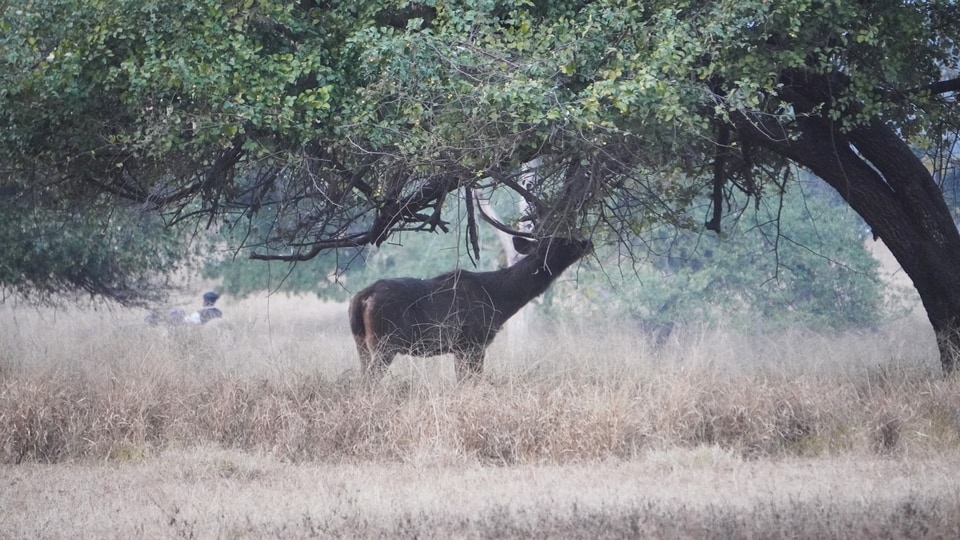
Sambar deer grazing in shafts of morning light as the mist slowly rises, langurs leaping between branches, and grey hornbills roosting high on a mahua tree… I am in Satpura National Park in Madhya Pradesh, a landscape shaped by the towering Satpura ranges, formed over 60 million years ago.
At sunrise and sunset, these dramatic formations glow, while the park’s varied soils, from sandy and red earth to nutrient-rich volcanic ground, support an incredible range of biodiversity.
My home away from home is Denwa Backwater Escape by Pugdundee Safaris, a safari lodge with rustic cottages and tree houses set right at the edge of the park. The central lodge houses a cosy library where we gather each evening for talks by naturalists, along with a boutique, dining room, and bar that open out to sweeping views of the river and forest. Life here moves at a gentle, unhurried pace.
Meals are organic and thoughtfully prepared using fresh produce from the lodge’s vegetable garden and nearby villages. Sustainability is at the heart of the experience, with recycled wood and stone used in construction, solar power in place, and most staff drawn from local communities.
Braving the winter chill, we set out by jeep to the river, cross it by boat, and then enter the park in a forest department gypsy. A distinctive feature of Satpura is its all-women team—guide, naturalist, and driver—a conscious effort to create conservation-linked livelihoods for women and uplift the local community.
Our guide, Bimla Bai Kahar, greets us with an easy smile and quiet confidence. A single parent, she shares how this job enabled her to educate her children. Though formally educated up to the 10th standard, her knowledge of the forest is instinctive and deep. She speaks Hindi and enough English to narrate its stories with warmth and pride.
As we move through the buffer zones, we see villagers gathering firewood and forest fruits. Many villages were relocated when the national park was created. Our naturalist, Neha More, points out satinwood trees. Crushing a handful of leaves, she asks us to inhale—the scent is strikingly similar to a natural insect repellent.
Every moment reminds us that we are stepping into animal territory. Tiger pugmarks on the forest floor, animal scat, and deep claw marks etched into tree bark signal their presence. We learn how tigers mark their domain by spraying urine and digging into the soil. “It’s their Aadhaar card, a marker of identity,” Neha explains.
We pass through the territory of a tiger known as Fireline, named after the fire line that divides two patches of forest. Though we hear alarm calls from monkeys, the tiger remains elusive.
With over 250 bird species, both endemic and migratory, Satpura is a paradise for birdwatchers. From pied hornbills and woodpeckers to serpent eagles, the skies and trees are alive with movement.
Another highlight of the park is its varied terrain—sandstone plateaus, rocky outcrops, deep gorges, teak forests, and grasslands woven together by rivers and backwaters. We drive up to Lagda View Point, where a sweeping panorama unfolds: dense forest, a winding river, and massive boulders stretching into the horizon.
We also visit Jhinjhini Mahal, an ancient tribal temple hidden deep within the forest, believed to date back to the 7th century. Its exact origins remain a mystery. Half reclaimed by vegetation, the site is dotted with weathered stone sculptures of gods, goddesses, and scenes of worship. Perhaps it was once a sacred grove, where nature itself was revered. Today, it feels hauntingly still, steeped in silence and quiet mystique.
Our driver, Sangeetha Solanki, expertly steers the jeep across rocky tracks and muddy stretches, while naturalist Neha More brings the forest alive with her insights. With her alongside us, every drive turns into a journey of discovery. She gently reminds us that the experience is not about chasing big cats—it is the smallest details that truly matter.
Among the most memorable moments are the safari breakfasts packed by the lodge in steel tiffin boxes. From overnight oats and baked eggs to fresh fruit and poha, these meals feel especially special when enjoyed in the heart of the forest. There is something deeply sensory about eating amid birdsong and rustling leaves.
The park’s vegetation is strikingly diverse—teak and sal forests, bamboo thickets, shrubs, climbers, and a wealth of medicinal plants long used in Ayurveda. Crocodile bark trees stand out with their fire-resistant trunks, textured like reptilian skin. Mahua trees, sacred to local tribes, dot the landscape; their flowers are fermented into traditional brews. In summer, palash trees burst into vibrant bloom, adding fiery colour to the terrain.
Wildlife sightings unfold quietly but powerfully. A lumbering sloth bear digs into a termite mound. Massive gaurs, their legs resembling white stockings, emerge from the shadows alongside their calves. “They are powerful enough to take down a tiger,” Neha notes. Herds of sambar deer graze in open clearings, constantly alert as prime prey. Marsh crocodiles bask lazily by the water’s edge, while resident and migratory birds fill the skies and treetops with life.
We also learn that the forest department has successfully reintroduced the critically endangered barasingha from Kanha National Park—a conservation effort that is now thriving.
For me, the joy lies in the details: spotting the silvery-white paradise flycatcher, its long streamers trailing elegantly; a pair of scops owls peering from a tree hollow; and a pied kingfisher hovering with precision above a pond. Migratory visitors like bar-headed geese, ruddy shelducks, and black-headed ibis add to the spectacle.
As the sun dips, the forest begins to soften. Deer move cautiously toward the river, birds return silently to their nests, and buffaloes are herded back to nearby villages. The faint scent of wood fires drifts through the evening air.
We do not spot a tiger, nor Nanhi—the park’s vibrant giant squirrel mascot, painted in shades of black, red, and purple. Yet what we take back is far richer than a single sighting: moments of stillness, learning, and quiet connection that linger long after the journey ends.
(Authored by Kalpana Sunder)


