
 E-Paper



10 Tamil Nadu bills become laws without governor's assent after Supreme Court's landmark judgement
The apex court ordered the bills to be deemed laws from the date the bills were presented to the Governor for consideration.

 Prefer HTon Google


Ten bills that were cleared twice by the Tamil Nadu assembly but were stalled and reserved by governor RN Ravi for the President's clearance since 2020 finally became laws after the Supreme Court's intervention on Saturday. The bills did not get Tamil Nadu governor RN Ravi’s approval amid his standoff with chief minister MK Stalin and the DMK government.
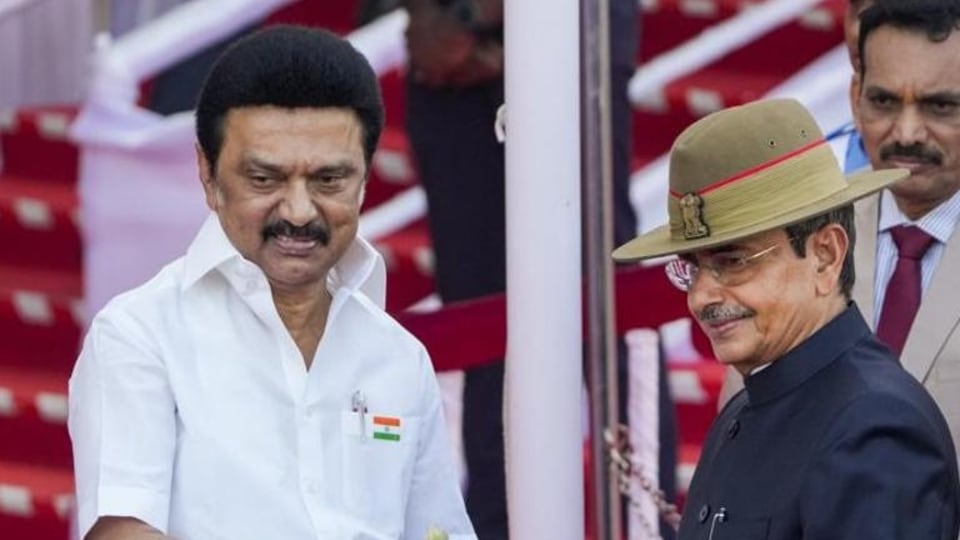
A Supreme Court judgement on Saturday put a timeline on the governor taking action on a bill within one month. It also stated that the President should take action on the bills referred for consideration by governors within three months.
A bench of Justice SB Pardiwala and Justice R Mahadevan ruled that the Governor could not reserve a bill for the President’s consideration after denying assent the first time, and the bill again clearing the assembly.
“As a general rule, it is not open for the Governor to reserve a Bill for the President after the bills have been re-presented by the Government after being passed again by the Assembly. The only exception is when the bill presented in the second round is different from the first version,” news agency PTI quoted Justice Pardiwala as saying in his judgement.
The apex court ordered the bills to be deemed laws from the date the bills were presented to the Governor for consideration. So, they became laws from November 18, 2023, post a gazette notification from the state government. The bills include amended rules for the appointment of vice chancellors of state universities, curtailing the governor’s powers to make such appointments.
Thus, the bills became laws without the assent from the Governor or the President, a historic moment in Indian democracy.
Governor RN Ravi sparked a huge standoff with the legislature and the executive, returning the bills twice. The Stalin government convened a special session of the assembly, which adopted the bills unanimously and re-sent them to him, after which he kept the bills for the President's consideration.
MK Stalin hails verdict as ‘historic
Tamil Nadu chief minister MK Stalin on Tuesday called the Supreme Court’s ruling on the role of Governors in state bills a “historic” decision and a victory for all state governments in India.
“The Constitution mandates the Governor to approve the bills once adopted for the second time, but he didn’t...he was also delaying,” Stalin said after the verdict.
“This verdict is a victory not just for Tamil Nadu but all state governments in India,” the chief minister added.


