
 E-Paper



1st woman Dalit CM, Maya stares at a tough road back
In 2007, Mayawati achieved an even more impressive feat, forging a coalition of extremes between Dalits, Muslims and Brahmins, as she swept to power with the first full majority government in almost a decade.


: On June 3, 1995, as Mayawati stepped up to take oath of office as chief minister of India’s largest state, she was making history. The young leader, just 39, was the country’s first Dalit woman chief minister, emerging from the churn of the Mandal revolution that birthed the Bahujan Samaj Party (BSP) and the painstaking coalition of Dalit and backward communities crafted by her mentor, Kanshi Ram.
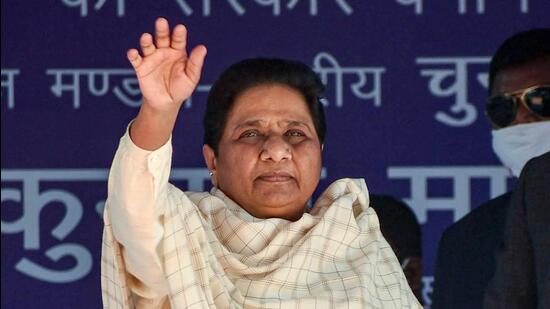
In 2007, she achieved an even more impressive feat, forging a coalition of extremes between Dalits, Muslims and Brahmins, as she swept to power with the first full majority government in almost a decade. Two years later, she made an audacious, but ultimately unsuccessful play, for prime minister. Even when she lost power in 2012, her core constituents stood strongly behind her. It was a common adage in UP that the BSP vote base was non transferable due to the fierce loyalty between Dalits and the party that had given them dignity.
Fast forward a decade, and that reputation in tatters. On Thursday, the BSP slumped to its fifth successive defeat, winning just one seat in the assembly – behind even the Congress and Raja Bhaiya’s Jansatta Dal (Loktantrik). Worse still, its vote share was a mere 12.88%-- indicating that for the first time since its establishment in 1984, its core base may be deserting the party. Only the Jatavs, Mayawati’s own community and the state’s largest Dalit community, appeared to have voted for the party. Bereft of a compelling narrative, a charismatic leader or a strong social coalition, the once-formidable party now looks listless and in real danger of evaporating.
The warning signs came early.
After a relatively unsuccessful coalition with traditional rival Samajwadi Party (SP) in the 2019 Lok Sabha polls, Mayawati decided to go it alone in 2022 despite both her rivals, BJP and SP, crafting coalitions with smaller caste-based parties. She also chose to repeat her old social engineering formula from 2007, entrusting Rajya Sabha MP Satish Chandra Mishra to hold Brahmin sammelans – ignoring the changed ground realities in light of the BJP’s historic victories in 2017 and 2019.
A BSP leader on the condition of anonymity said, after desertion by the members who had laid the foundation of the party with Kanshi Ram and defection of the senior leaders to the SP and BJP, there was communication gap between the grass root workers and the party leadership. The missionary party workers were cut off from the party office, the rivals BJP and SP got opportunity to win the support of the Dalit voters, he said.
But quietly, the party kept atrophying leaders. At least 11 of its 19 lawmakers elected in 2017 left the party – including Lalji Verma, Ramachal Rajbhar, Shah Alam alias Guddu Jamali, Vinay Shankar Tiwari, Chaudhary Aslam Ali, Hakim Lal Bind, Mohammad Mujtaba Siddiqui, Aslam Raini, Sushma Patel, Hargovind Bhargava and Bandana Singh. The desertion of senior leaders belonging to other backward classes (OBC) and Dalit communities – Lalji Verma, Ramachal Rajbhar, RS Kushwaha, Tribhuvan Dutt and Veer Singh – meant that the party had no known faces campaigning on the ground.
Mayawati also chose to give a large chunk of tickets to Brahmins, Muslims and OBC candidates – while appearing to take for granted her core base, Dalits, and not paying heed to reports that the party was far losing ground among smaller Dalit groups, such as Pasis, Khatiks and Balmikis, who had moved to the BJP. As a result, the party’s strongholds of Ambedkar Nagar, Azamgarh, Agra, Bijnor and Saharanpur were swept away. Particularly damaging is the result in Agra, often called the cradle of Dalit politics in UP and where the BJP won all nine seats in 2017 and 2022.
BSP national spokesperson Seema Samriddhi Kushwaha in a tweet said, “..the BSP supporters should not loose nerve after the assembly election results, one day we will again regain the lost ground and win the electoral battle.
Insiders say that the morale in the party is low and even dedicated cadre – who were associated with the BSP for ideological reasons, not transactional politics – are finding it difficult to believe that Mayawati, once known for her mammoth rallies and ground connect, is unable to fathom a response to the BJP’s welfarism-driven Hindutva model. Even in this campaign, she repeatedly faced questions on whether the BSP was siding with the BJP, an allegation she rejected. But with her traditional rival SP doing 130 times better, it will be difficult to mount a comeback.
“Mayawati betrayed Kanshi Ram’s ideology by sidelining backward caste leaders and promoting the upper castes in her party. She paid the price for this,” said ex-BSP leader Daddu Prasad, a close aide of Kanshi Ram.
Some party leaders point out that age might be catching up with the 66-year-old leader, and another five years out of power might be too long a period for a comeback. Moreover, BSP has not groomed any young leader, and there are no new faces on the ground connecting young people to the party.
Mayawati’s response has been tepid. On Tuesday, she announced a new party executive committee – herself as national president, her nephew Akash Anand national coordinator, and brother Anand Kumar as national vice-president. There will be six national general secretaries in the party -- SC Mishra, Ashok Siddharth, RA Mittal, Mewalal Gauta, RA Sirdhar and Munkad Ali. All are either family members, loyalists or little-known names.
“If Mayawati wishes for a comeback, she will have to go to the basics – regroup the Dalit-backward communities and promote ‘missionary soldiers’ in ticket distribution as an insurance against desertion,” Dalit ideologue AR Akela said.
But it will be a tough road back. Politics in the state is getting bipolar and the BSP is getting squeezed out. Many Dalit communities are no longer tied by ideology, and the BJP has been proactive in winning them over with welfare promises and grassroots party positions. Old leaders are discouraged by turncoats getting tickets. The party is battling the perception that it is out of sync with 21st century campaigns, and its narrative of giving dignity to Dalits appears to be losing steam.
Time is running out for the four-time chief minister to fulfil her mentor’s mission.


