
 E-Paper



2 new Raorchestes frog species found in Meghalaya, named after Khasi culture
The frogs belong to Raorchestes genus—small, tree-dwelling frogs known for their direct development, skipping tadpole stage — is native to Indo-Burma biodiversity hotspot

 Prefer HTon Google


Shillong: Two new species of bush frogs — Raorchestes jadoh and Raorchestes jakoid — were discovered by a team of researchers in Meghalaya.
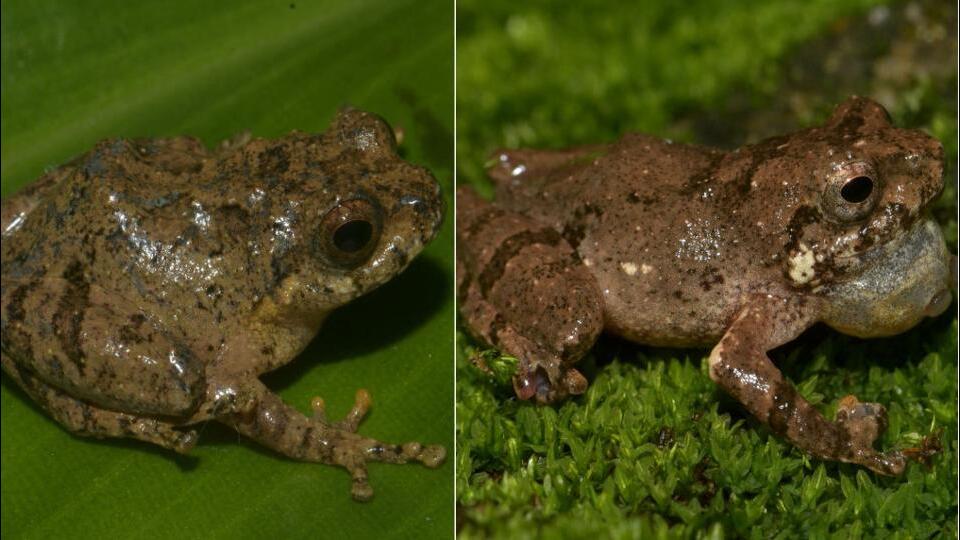
The researchers from Assam Don Bosco University, Help Earth, and Mizoram University found the frogs throwing a spotlight on Meghalaya’s rich but still largely untapped amphibian diversity.
Holiness Warjri, a researcher from Assam Don Bosco University, discovered Raorchestes jadoh at an elevation of 1,655 metres in his village, Langtor, in the Eastern West Khasi Hills.
“Discovering a new species in my own village is both humbling and inspiring. Naming it jadoh—a dish that brings our Khasi families together—was my way of honouring the deep bond between our culture, land, and nature. I hope this frog becomes a symbol of pride for our people,” Warjri said.
Also read: Schistura Densiclav: New species of cave-dwelling fish found in Meghalaya
Raorchestes jakoid was discovered in Lawbah, East Khasi Hills district, at an elevation of 815 metres. Jakoid derives from the Khasi word for frog.
“This nomenclature honours the Khasi community’s rich linguistic and culinary traditions and reinforces the role of indigenous knowledge in conservation,” said the researchers.
Also Read: Scientists discover new species of cricket frog in Western Ghats
Both frogs belong to the Raorchestes genus—small, tree-dwelling frogs known for their direct development, skipping the tadpole stage entirely—native to the Indo-Burma biodiversity hotspot. They are part of the Raorchestes parvulus species complex.
With these two, seven species of frogs have been documented in the state.
Also Read: Pune scientist central to discovery of four new species of parasitic wasps
Both frogs were found in disturbed or secondary habitats—close to human settlements—suggesting a degree of ecological tolerance. But researchers cautioned that this does not ensure long-term survival, especially in a region facing rapid habitat loss due to fragmentation and land-use change.


