

 E-Paper



2 of 3 prisoners in Indian jails are undertrials
A majority (1,192), who either gave birth inside jail or had a small child at the time of commission of the crime, are undertrials. Undertrial female prisoners are caring for 1,409 children inside the jail, suggesting that some women have to take care of more than one child in already overcrowded and poorly kept Indian jails.

 Prefer HTon Google


Undertrials, as people held in prison during or awaiting trial are referred to, account for two out of every three people in prisons in India, and 1,942 children, whose mothers are undertrials or convicts, continue to languish in jails.
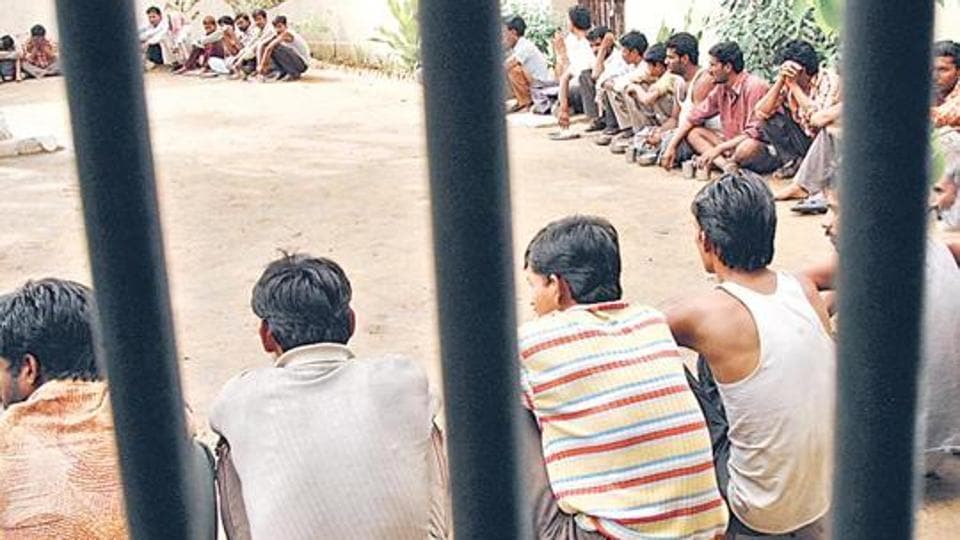
The numbers, both of which, analysts say, reflect poorly on the Indian judicial system, are from the latest data released by the National Crime Records Bureau (NCRB). The data is, however, at least two years old; this is the report for 2016.
According to the report titled “Prison Statistics India 2016”, 11,834 undertrial prisoners (4% of total 293,058 undertrial prisoners) have been confined inside the prisons across the country for three to five years while 3,927 undertrial prisoners have spent more than five years.
The overall number of prisons is 433,003.
As for the children, there are 1,649 women prisoners with children in jails across India, according to the report.
A majority (1,192), who either gave birth inside jail or had a small child at the time of commission of the crime, are undertrials. Undertrial female prisoners are caring for 1,409 children inside the jail, suggesting that some women have to take care of more than one child in already overcrowded and poorly kept Indian jails.
After its 2015 report created a controversy, NCRB has chosen not to mention the data of prisoners on the basis of their religion and caste. In its 2015 report, NCRB mentioned that over 55% of undertrials across the country were Muslims, Dalits or tribals. Civil society groups claimed at that time that the higher number of undertrials from these three communities did not mean people from these communities were more likely to commit crimes, but simply that they were in jail because of not being able to pay bail or fight their cases due to their economic conditions.
Asmita Basu, programmes director at Amnesty India, said: “Nearly two-thirds of the prison population is constituted by undertrial detainees, of which a disproportionate number belong to Muslim, Dalit and Adivasi communities. This is a serious violation of fair trial norms. Prolonged detention, overcrowding of prisons and inadequate access to legal aid add to the woes of these already marginalised detainees. It is essential for the government to take measures to address this situation by implementing guidelines issued by the Union home ministry and by holding officials accountable for failing to uphold basic human standards.”
The NCRB report, released earlier this week, two years after the last report was released, added that around 75.4% undertrial prisoners (221,062) were confined inside the jails for less than one year. Of these 62,480 undertrial prisoners were confined for three to six months, 50,705 for six to 12 months, and 107,877 for up to three months.
According to the report, the number of undertrials in Indian jails increased by 3.6% in 2016


