
 E-Paper



26/11 accused continue to enjoy Pakistan patronage
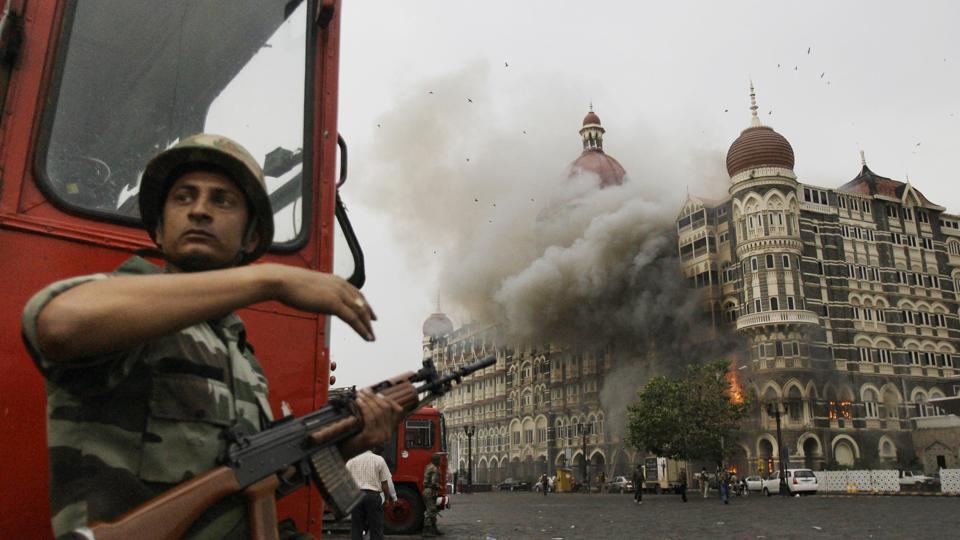
A decade after the 26/11 terror attack that killed 174 Indians, Americans, Britons, and Israelis, there’s little to show that Pakistan has acted against the masterminds

 Prefer HTon Google


On October 5, the Narendra Modi government strongly protested the sharing of stage by Pakistan federal religious affairs minister Noor-ul-Qadri with Lashkar-e-Taiba chief Hafiz Saeed in Islamabad.
“Such endorsement of a UN designated and internationally proscribed terrorist, who is the mastermind of the Mumbai terror attack of 26 November, 2008, is in blatant violation of provisions of sanctions regime under UN Security Council Resolution 1267; a further step in its continued breach of its obligations under the sanctions regime; and also breach of Pakistan’s bilateral commitment not to support terrorism against India in any form. Government of India once again calls upon Pakistan to fulfill by its international obligations and abide by its bilateral commitment to not allow any territory under its control to be used for terrorism.”
Still, a decade after the terror attack that killed 174 Indians, Americans, Britons, and Israelis, there’s little to show that Pakistan has acted against the masterminds; the actual attack was carried out by 10 terrorists from Karachi. Nine of them were killed in the hostilities; the sole surviving one, Ajmal Kasab, was captured, and executed after due trial on November 21, 2012.
Saeed remains the most visible among the perpetrators (as evident from his September 30 appearance with the minister) but he isn’t the only one who is active. His chief operation planner Zaki-ur-Rehman Lakhvi met Lashkar cadres on military training centres in Gujranwala on June 2 while on bail and his external operations commander Sajjid Mir continues to operate under the identity of Arshad Awan from Faisalabad after facial surgery post 26/11. While Saeed, who has a $10 million bounty on his head since April 2012, conceptualized and planned the 26/11 attack with the help of Pakistan’s spy agency Inter-Services Intelligence, Lakhvi and Mir brutally executed the massacre by directing the gunmen on mobile phones, whose Indian SIM cards were arranged by Omani national Ali Abdul Aziz Al-Hooti. It was Hooti who procured the five SIM cards through his two Kashmiri contacts while he was in Mumbai from November 9-16, 2008.
It is a matter of record that the then external affairs minister Pranab Mukherjee informed then (and current) Pakistan foreign minister Shah Mehmood Qureshi over the phone about LeT’s involvement in the 26/11 attack on November 28 that year itself when the latter was in Delhi for a bilateral visit. India issued a note verbale to Pakistan on November 29, 2008 and all material including transcripts of terrorist Ajmal Kasab’s interrogation, details of communication links of the gunmen with their Karachi control room handlers and GPS data were sent to Pakistan on January 5, 2009. To date, South Block officials say, only four minor Lashkar operatives have been arrested by Pakistan for the Mumbai attack. Both the military trainers, ex-commandos Abdur Rehman Syed and Haroon, as well as the ISI trainers, Major Sameer Ali and Major Iqbal from Lahore Cantonment, of the 10 gunmen, have gone scot-free.


