
 E-Paper



30k grab seats in 4 hrs as DU 1st cutoff list out
The Delhi University (DU) offered seats to 80,164 of the over 150,000 applicants for its undergraduate courses on Wednesday evening, launching the first round of a drastically new admissions process that saw close to 30,000 having accepted the allocations in less than four hours.


The Delhi University (DU) offered seats to 80,164 of the over 150,000 applicants for its undergraduate courses on Wednesday evening, launching the first round of a drastically new admissions process that saw close to 30,000 having accepted the allocations in less than four hours.
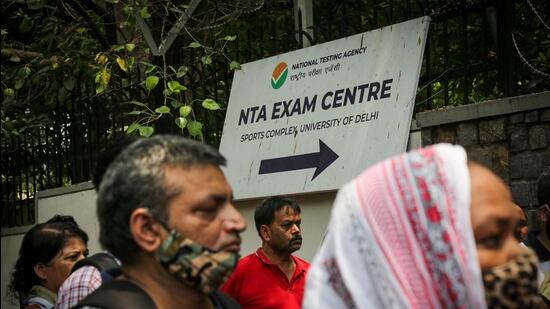
Implemented to comply with the new Common University Entrance Test (CUET) process, DU’s new Common Seat Allocation System (CSAS) began with allotting students admission slots based on their CUET performance and the admission preference they indicated when they signed up.
“The University allocated 80,164 seats across various categories. By 8:30pm, at least 29,232 candidates had accepted the seats allocated to them,” DU registrar Vikas Gupta said.

While students said the new system was unfamiliar, some educationists said it would eventually lead to a smoother process.
Anju Srivastava, principal of Hindu College, said there will be more clarity over the number of candidates taking admission in the colleges by Thursday. “It’s taking us some time to understand how the admission system is working this time. We are getting really great response across the courses,” she said.
“DU is carrying out the counselling and we will get a list of say 90 or 100 students against 70 seats. Earlier, the numbers were almost 400. We were doing the admissions, and also cancelling them in case students withdrew. This time, the numbers are lower and there will be less cancellations,” Manoj Khanna, principal of Ramjas College, told news agency ANI.
Until last year, the university enrolled students only on the basis of their Class 12 board exam results – a process that was abandoned after the Union government implemented the CUET process. In the old process, colleges released their own cut-off scores for courses based on board exam result trends.
Under the new system, the candidates are directly provided details about their allocated college and courses on their dashboard based on how they performed in CUET, which is now the yardstick for admission to government-run universities offering arts, sciences and commerce courses. Medical and engineering courses follow a different entrance process.
Those who have been allocated seats in DU’s CSAS have till 5pm on October 21 to accept the allocation or be excluded from the admissions process. Students will have the option to freeze their seat, or opt for an upgrade in subsequent rounds of the allocation. Should they choose to wait for an upgrade, they will also be allowed to reorder their preference.
While the University did not provide details about highest and lowest CUET scores of students who were allocated seats on Wednesday, officials at some popular DU colleges said students allocated seats in the first round were those in “high CUET score bracket”.
“Despite scoring 767.4 out of 800 in CUET, I have been allocated a seat in my 13th preferred college,” said a candidate, who asked not to be named.
According to candidates, the CSAS dashboard displayed the names of the course, college and reference number allotted to them. After logging in, a candidate has to click on “accept allocation” under the user action tab.
Gupta said candidates must ensure that they have secured their admission to the seat allocated to them. “Only candidates who are admitted to a programme in a college will be able to opt for upgradation in subsequent rounds,” he said.
“If the candidate is not satisfied with the course or college allocated to them, they can select the ‘upgrade’ option. They will automatically be upgraded based on the allocation policy. Their current admitted seat will be automatically cancelled if new preference is allocated,” the registrar added.
The upgrade option will not be available for a candidate who was allocated the first preference of their college and course.
“In case the candidates are satisfied with their allocated seat, and do not want to be considered for subsequent allocations, they should submit a ‘freeze’ request through their dashboard,” Gupta said.
Till late evening, officials at colleges were struggling to understand the new system. “Even though system is user-friendly, it is new for our officials. It is taking some time our admission in-charge to access the information of students who are accepting the seats allocated in our college. All we can say at this moment is that we are getting acceptance in large numbers,” said a senior official at Hindu College.
Some students complained that they were not allocated a seat in the first list. “I have not been allocated a seat in the first round. I didn’t know if there’s a possibility for me to make it to the second list but in the CSAS document, it’s mentioned that there’s a chance,” said Tanishka Goel, a candidate from Delhi.
DU has 90 colleges that together have the 80,164 seats. Hitherto, the process to secure a seat in some of the best colleges typically led to staggeringly high cut-off scores that were based on the performance of students in the Class 12 school examinations.
It was not immediately clear if similar trends were to hold under CUET, which too saw a large number of students in high percentiles and having secured top scores.
After two years disrupted by the pandemic, the incoming batch of graduates have had to navigate these new processes, leaving many feeling that they were subjected to needless complications. “With CUET, we have to study the same course thrice. First for pre-boards, second for boards and the same material for CUET. We have been sitting at home for months and the process has been delayed a lot. Finally, we’ll be able to go to college next month,” said a Delhi-based student who asked not to be named.
The CUET process itself was marred by technical glitches and cancellations.


