Months after the deadly Air India plane crash claimed 260 lives, the families of four victims have filed a lawsuit naming Boeing and Honeywell, responsible for making fuel switches.
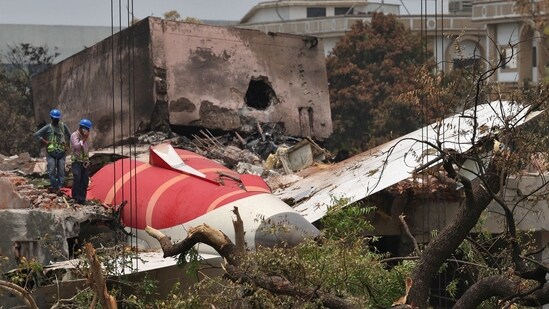
According to news agency Reuters, the lawsuit filed in a Delaware court points to a 2018 US Federal Aviation Administration (FAA) advisory and alleges that the crash resulted from "faulty" fuel switches. The suit comes months after India's Aircraft Accident Investigation Bureau filed a preliminary report on the crash, stating that the fuel cut off switches on the 787 Dreamliner shifted from the 'RUN' to the 'CUTOFF' position almost simultaneously.
Headed for London, AI 171, a Boeing 787-8 Dreamliner, had crashed on June 12, just moments after take-off from Ahmedabad. The deadly crash killed 260 people, including 241 onboard.
Also Read: Air India crash: Probe bureau chief to meet aviation secy after pilot's father slams inquiry
What does the lawsuit allege?
The lawsuit, filed in a Delaware court, is said to be the first in the US related to the crash. It seeks unspecified compensation for the deaths of Kantaben Dhirubhai Paghadal, Naavya Chirag Paghadal, Kuberbhai Patel, and Babiben Patel, who were among the passengers killed in the crash.
The suit argues that the placement of the plane’s fuel switches makes them prone to be mistakenly pushed. This "effectively guaranteed that normal cockpit activity could result in inadvertent fuel cutoff", the suit reportedly states.
{{/usCountry}}The suit argues that the placement of the plane’s fuel switches makes them prone to be mistakenly pushed. This "effectively guaranteed that normal cockpit activity could result in inadvertent fuel cutoff", the suit reportedly states.
{{/usCountry}}The AAIB report from July had revealed a brief exchange between the two pilots, Sumeet Sabharwal and Clive Kunder, in the cockpit before the plane crashed. “Why did you cut off fuel?” asked one pilot, to which the other replied, “I did not do so.” The report didn't specify who said what.
Inside the 2018 FAA advisory
The 2018 advisory by US aviation regulator FAA, cited by the families of the four passengers who filed the lawsuit, reportedly flagged fuel switches as a potential issue.
In its bulletin, the regulator had flagged potential problems with fuel control switch locking mechanisms, provided to prevent the inadvertent movement of the switches. However, the inspections were only recommended in the bulletin and there was no mandatory directive.
Even after the AAIB report on the Air India crash was released, both Boeing and the FAA had privately issued notifications saying the fuel switch locks on Boeing planes are safe, Reuters had reported.