E-Paper



60% chance of El Niño conditions developing in second half of 2026
El Niño years typically bring weak monsoons and harsh summers to India.

 Prefer HTon Google


Weather models show growing confidence that El Niño conditions will develop in the second half of 2026.
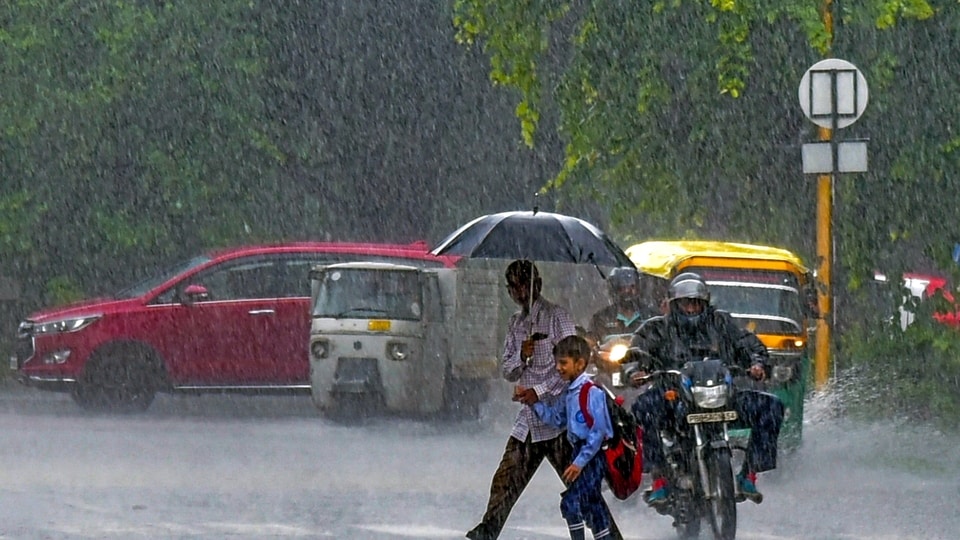
There is a 60% chance of El Niño during August–October and September–November. In January, the probability stood at 50% for El Niño developing during or after the monsoon, according to the latest forecast from the National Oceanic and Atmospheric Administration (NOAA). El Niño years typically bring weak monsoons and harsh summers to India.
The Center for Climate Systems Research (CCSR), part of Columbia University’s Earth Institute and partnered with NASA GISS, reports that as of mid-February 2026, equatorial Pacific La Niña conditions are declining.
The CCSR/IRI ENSO (El Niño-Southern Oscillation) plume forecast places the probability of La Niña at just 4% for February–April 2026 and shifts the odds in favour of ENSO-neutral conditions (about 96%) for the same period. ENSO-neutral remains the dominant category through Mar-May (90%) and Apr-Jun (65%), while El Niño probabilities increase rapidly during the same period, the International Research Institute for Climate and Society, Columbia Climate School said on February 19.
ALSO READ | Temperatures to rise in Northwest India ahead of pre-monsoon season: IMD
Starting in May-July, El Niño probabilities become higher than ENSO-neutral and remain in the range of 58% to 61%, with ENSO-neutral the second most likely outcome, it has said.
As per NOAA, a transition from La Niña to ENSO-neutral is expected in February-April 2026 (60% chance), with ENSO-neutral likely persisting through the Northern Hemisphere summer.
Further, the World Meteorological Organisation said in its Global Seasonal Update issued on February 20 that for the March–May (MAM) 2026 season, forecasts for SST patterns indicate a period of transition across the equatorial Pacific. Below-average SST anomalies in the central and eastern equatorial Pacific are forecast to weaken, signaling a move toward ENSO-neutral conditions as the current weak La Niña dissipates.