E-Paper



63% of Covid-19 deaths in India among elderly, says govt
People between 40 and 60 years account for 30% of the deaths, and below 40 years account for 7%, Lav Agarwal, the joint secretary of the health ministry, said.

 Prefer HTon Google


People above 60 years of age account for 63% of the 109 deaths that have occurred due to the coronavirus disease (Covid-19) in India, the government said on Monday, while cautioning that comorbid conditions such as diabetes make the infection deadlier — a finding that is in line with global trends.
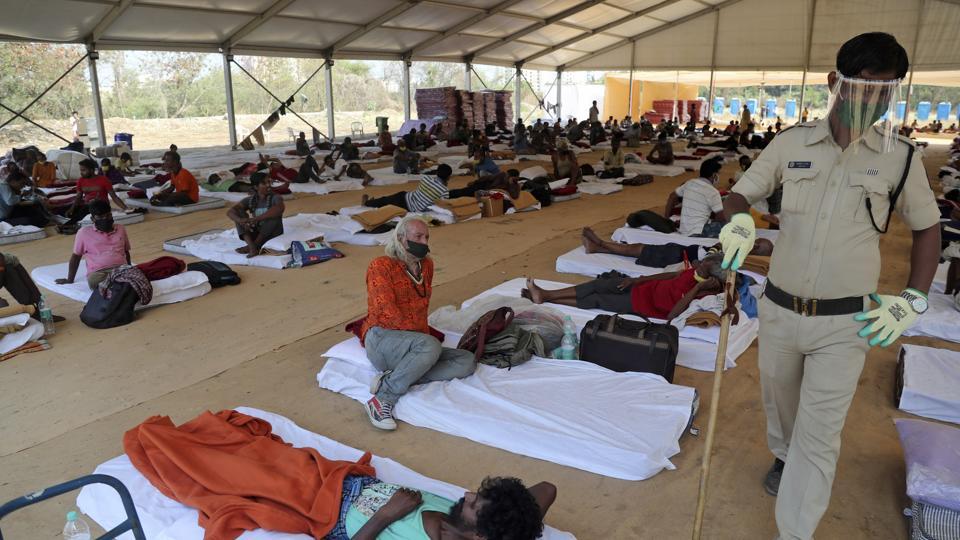
People between 40 and 60 years account for 30% of the deaths, and below 40 years account for 7%, Lav Agarwal, the joint secretary of the health ministry, said. He added that 73% of the deaths occurred in men and 27% in women, indicating that men face a significantly higher risk due to the infection in India.
Agarwal said 86% of the patients who died had conditions such as diabetes, chronic kidney disease, hypertension and heart-related problems. “...we must realise those with comorbid health conditions are at a higher risk of developing a severe form of illness, and need to be extra cautious,” he said.
Agarwal put the total number of cases at 4,067. According to the data compiled by the Union health ministry, men account for 76% of the total Covid-19 positive cases in India in comparison with the 24% infection rate in women, he said. Forty-seven per cent of the cases involved people who are aged below 40 years, 34% of the patients are between 40 and 60 years, and 19% of cases pertain to those above 60 years.
Agarwal added that of the total cases in India, 1,445 (or about 35%) are linked to a Tablighi Jamaat congregation in the national capital. According to the home ministry, at least 25,500 Jamaat members or people who came in contact with them have been quarantined across India.
The six-storey headquarters in Delhi, where the mid-March gatherings of the Islamic missionary group took place, has emerged as India’s biggest hot spot of the fast-spreading infection.
“In Haryana, five villages have been sealed as it was found some foreign nationals of the Jamaat had stayed in those villages,” said Punya Salila Srivastava, joint secretary of the home ministry.
She also stressed that the government was trying its best to ensure smooth transportation of essential items such as medical supplies and food grains during the three-week, nationwide lockdown, which began on March 25.
“It has been directed...that medical oxygen is an essential item and its manufacturing and transport is exempted from lockdown measures,” said Srivastava.
The railways has also transported 1,340 wagons of sugar, 950 wagons of salt and 360 wagons/tanks of edible oil so far. In all, 16.94 lakh (1.69 million) metric tonnes of food grains have been transported, she said.
At the same briefing, the Indian Council of Medical Research (ICMR) said it is also gearing up to test more samples, and has increased its testing capacity to 25,000 tests in a day in two shifts.
“We have order about 500,000 rapid testing kits that we should get by April 8 or 9, and will be deployed in states as per the requirement,” said Raman R Gangakhedkar, chief, epidemiology and communicable disease, ICMR.
According to an ICMR advisory, rapid testing kits (for antibody tests or blood tests) need to be deployed in areas where mass testing is required, such as evacuation camps, large cluster areas, and migrant workers camps.
“Our containment strategy is largely divided in two parts: one for areas where large number of cases are reported, and areas where large-scale local outbreaks are being reported. All states have been asked to form a district-specific containment plan even for districts that have not reported any cases so far. Our strategy is to remain proactive and over-prepared to deal with any eventuality,” said Agarwal.
He, however, denied any widespread community transmission, the phase of the disease when the source of an individual’s infection cannot be traced and isolated.