
 E-Paper



A month after clearing it, Maharashtra seeks answers on seawall project
The proposed seawalls are meant to protect the coast and prevent erosion.

 Prefer HTon Google


The Maharashtra Coastal Zone Management Authority has sought clarification from the Jawaharlal Nehru Port Trust (JNPT) on the need to construct seawalls along coastal areas at Panje village in Uran and Elephanta Island (Gharapuri), home to tourist destination Elephanta caves, in the Mumbai harbour after environmentalists alleged it was an impractical venture. The proposed seawalls are meant to protect the coast and prevent erosion.
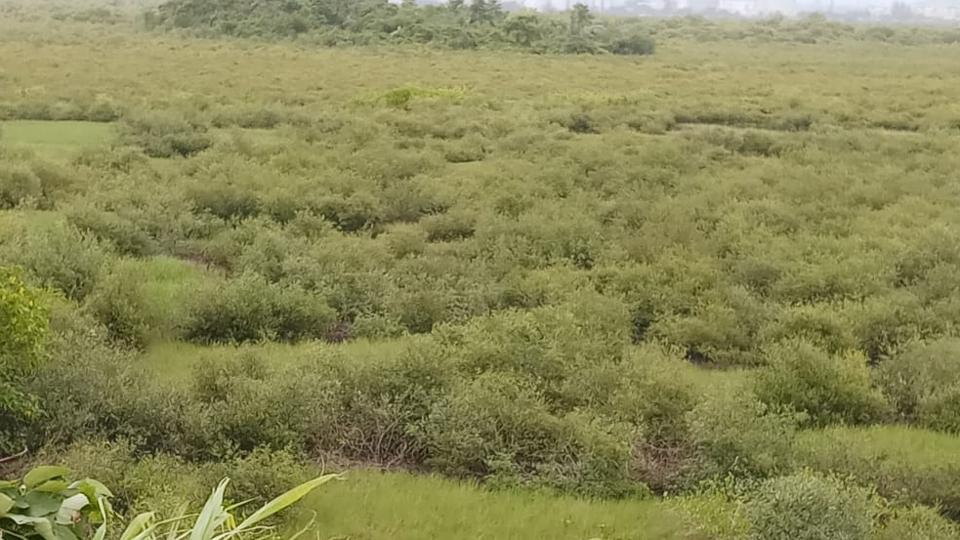
The move comes almost a month after the authority had cleared the proposal on July 7 and recommended it to the State Environment Impact Assessment Authority (SEIAA), while listing six conditions to be complied with before commencing construction.
The JNPT had proposed a 3.2-km wall from Shetbunder to Rajbunder jetty at Elephanta island and a 270-metre wall, less than 300 m from Panje village, along the shoreline.
Additionally, a 45-m boat landing jetty and 20-m approach trestle has been planned at Nhava (Uran). The construction of the walls was proposed to protect the coast from rising seas and prevent erosion, said JNPT. But four complaints by environmental groups - Vanashakti, Shree Ekvira Aai Pratishthan (SEAP), NatConnect Foundation, and a consortium of Uran fishermen - over the past week alleged it was being done to make land available for reclamation and future construction.
“The JNPT’s plan is to obstruct free flow of natural tidal water to mangrove areas, leading to flooding and impacting traditional fishing activities,” said Dilip Koli, Uran fisherman.
The MCZMA issued a letter to JNPT’s chairman (port, planning and development) on Wednesday to provide a detailed report on points raised by complainants. HT has reviewed the letter sent to the JNPT.
“Complainants have asked us to revoke permissions issued by us. We have asked the JNPT to file a compliance report on conditions laid out, and verify whether these allegations are true,” said a senior MCZMA official.
On March 3, 2017, the Union environment ministry had granted the JNPT environmental clearance (EC) for deepening and widening of Mumbai’s existing harbour channel and JNPT’s port channel (Phase II) project. One of the conditions under the EC was to hold a public hearing.
“The request for seawalls was made during the public hearing conducted by Maharashtra Pollution Control Board in presence of the Raigad district collector for the EC based on requests from concerned gram panchayats. There is no mangroves destruction and diversion due to proposed construction. The seawalls are essential to protect the coast and prevent erosion. These projects were proposed under Corporate Environmental Responsibility (CER),” said the JNPT in a statement to HT.
The JNPT also has no-objection certificates from Panje, Gharapuri and Nhava gram panchayats.
The CER does not mean funding an environment violation, said Stalin D, Director, Vanashakti.
“There are vested interests who want to engage in landfilling of all wetlands and coastal regulation zone (CRZ) areas. This reclamation mafia is pushing destructive agendas and the JNPT is providing cover for them directly or indirectly. The MCZMA has completely washed off its hands from CRZ conservation,” he said.
Panje village has close to 450 homes with 1,684 residents. It is situated atop a hill overlooking the sea to the north, mangroves to the west and south, and open flat land where cricket is played towards the east.
Karishma Haresh Bhoir, sarpanch of the Panje gram panchayat, said they had requested the seawall construction. “Excess tide water during heavy rain is making its way to our village. Homes are being flooded, especially at the bottom of the hill. We need this wall to protect us,” she said.
However, Panje resident Manish Bhoir denied the sarpanch’s claim. “They are lying. Our village cannot flood because it is elevated on a hill,” he said, adding, “this is a ploy to conveniently block water channels and dry out surrounding areas where industrial and housing projects have been planned.”
Other complainants had similar views.
“Panje has already been divided into sectors 16 to 28 as a part of the Dronagiri development plan. The seawall will facilitate this plan and gobble up the wetland. It is a sponge to absorb rainwater but their burial is the reason why the Mumbai region witnesses annual floods,” said BN Kumar, director, NatConnect Foundation.
SEAP’s complaint alleged that the Mumbai harbour had already lost 875 hectares of mangroves, wetlands and small water bodies through land reclamation on JNPT areas. “We request the state to study the extent of ecological damage and loss of livelihood across this region, and then consider project approvals,” said Nandkumar Pawar, head, SEAP.
WHAT’S AT STAKE: MANGROVE FORESTS
In November 2019, the MCZMA had instructed the state mangrove cell to inspect whether mangroves were being destroyed for these projects. After site inspection, the cell had said no mangrove destruction was involved but all three projects fell within the 50-m buffer zone of mangrove forests. The seawall at Panje is being constructed across 270m in CRZ 1A (requires highest protection) and at Elephanta island across 185 m at CRZ1A.
The HC in September 2018 had ordered, “Regardless of the ownership of the land having mangroves and the area of the land, all constructions within 50 m of all sides of the mangroves shall be forthwith stopped. The area of 50m shall be kept free from construction except compound wall/fencing for its protection.” While environmentalists alleged that the wall, which did not have any culverts proposed, would block all high tide water even as tide water regulation (holding pond and barrages) was already being undertaken by the City Industrial Development Corporation Ltd, JNPT said no there was no mangrove destruction proposed at the site.
COASTAL AUTHORITY’S 6 CONDITIONS THAT JNPT MUST COMPLY WITH
- JNPT to ensure no construction allowed in mangroves
- JNPT to obtain permission from Bombay high court since part of the walls within 50-m mangrove buffer area
- Natural course of creek areas should not be hampered
- No reclamation of coastal water bodies is allowed
- All other permissions from different statutory authorities be obtained
- Proposed construction to be done strictly as per Coastal Regulation Zone 2011 norms, guidelines and clarifications issued by the Union environment ministry from time to time
(Source: MCZMA)


