Sign in

A temple in Gwalior where admirers chant Vajpayee’s poems

Thirteen years before Atal Bihari Vajpayee passed away, a group of impatient admirers got a temple constructed in his name in his hometown, Gwalior.

Updated on: Aug 18, 2018, 06:35:09 IST
Hindustan Times, Bhopal | By
Share
Share via
  • facebook
  • twitter
  • linkedin
  • whatsapp
Copy link
  • copy link

Call it placing the temple before the former prime minister.

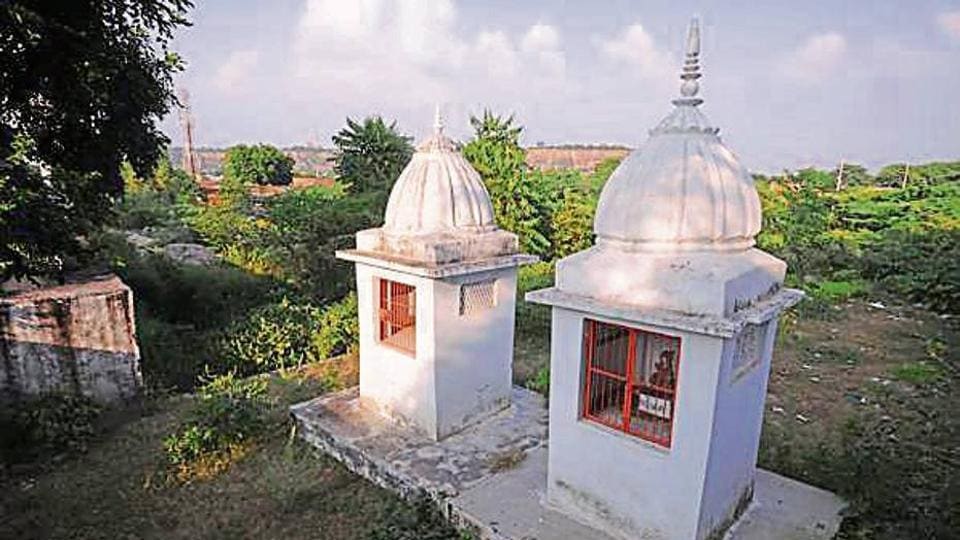
The former PM agreed to the construction of the temple on the condition that it would have to be a small one and no idol of him could be installed in it. (HT Photo)

Thirteen years before Atal Bihari Vajpayee passed away, a group of impatient admirers got a temple constructed in his name in his hometown, Gwalior.

The idea was to promote Hindi but Vajapyee was not willing. He repeatedly shot down their requests but they kept badgering him till he agreed with two conditions — the temple would have to be a small one and no idol of him could be installed in it.

Accordingly, in 2005, a small temple came up at Satyanarayan ki Tekari where Vajpayee used to spend time since he was a schoolboy. Among the group of admirers were a few lawyers, including Vijay Singh Chouhan.

Chouhan recalled that Vajpayee had barred the spending of too much money on the temple or installation of an idol in his likeness. So, they decided to place a picture of Vajpayee’s in the temple to mark that it had been built in his honour. “Atal ji is an inspiration for poets. We wanted to construct a temple to promote Hindi. Atal ji won the hearts of millions across the globe by delivering his speech at the UN in Hindi,” Chouhan said.

For poets and Hindi lovers, the temple has become a place to congregate. “ Many young poets get inspiration from the temple but we want the government to build a memorial to him. We worship him daily and chant his poems,” said Naseem Rafat, a veteran poet from Gwalior.
  • Shruti Tomar
    ABOUT THE AUTHOR
    Shruti Tomar

    I have spent over a decade chronicling Madhya Pradesh’s political and social landscape, covering politics, investigative journalism, crime, human interest, and government policy, blending sharp insight with ground‑level depth. I have closely tracked three assembly elections, three Lok Sabha elections, leadership transitions in MP while exposing governance lapses, tender irregularities, and flawed policy rollouts. My reports have revealed gaps in the Cheetah project, irregularities in medical education, rigging in recruitment exams, and loopholes in policy implementation. In crime reporting, I have moved beyond FIRs to map systemic patterns — from organised crime networks and gender‑based violence to custodial accountability — balancing urgency with sensitivity. My journalism is defined by a commitment to human interest. I have profiled the marginalised Bancchda community, documented atrocities against tribal groups, and highlighted efforts to preserve their culture through heritage liquor and revival of spiritual practices. I have reported on farmers struggling with failed MSP promises, giving voice to those often reduced to statistics in policy files. Passionate about field reporting, I have reported on rampant sand mining in Chambal and Narmada, pharmaceutical companies supplying medicines under altered names, the dire condition of schools and colleges, the plight of commercial sex workers, and skewed sex ratios in specific districts. Beyond deadlines, and as HT’s state correspondent and assistant editor in Madhya Pradesh, I engage with ministers, farmers, students, and activists, believing the best policy stories begin with a single human voice. A postgraduate in Journalism and Mass Communication, I also hold a diploma in sports journalism.Read More

Get the latest India News, breaking headlines and real-time updates from across the country. Stay informed about politics, government policies, crime, weather and major national developments.