
 E-Paper



Action on old vehicles, traffic congestion in Delhi's plan against air pollution
It was strongly reiterated that overaged petrol/diesel vehicles more than 15/10 years of age must not be allowed to ply in NCR.

 Prefer HTon Google


The task of curbing air pollution in Delhi will now require even state governments of Uttar Pradesh, Rajasthan and Haryana to report action taken against polluting diesel and petrol vehicles that are over 10/15 years old once in every two months to the Commission on Air Quality Management, the body set up by the Central government to curb pollution in Delhi and adjoining areas.
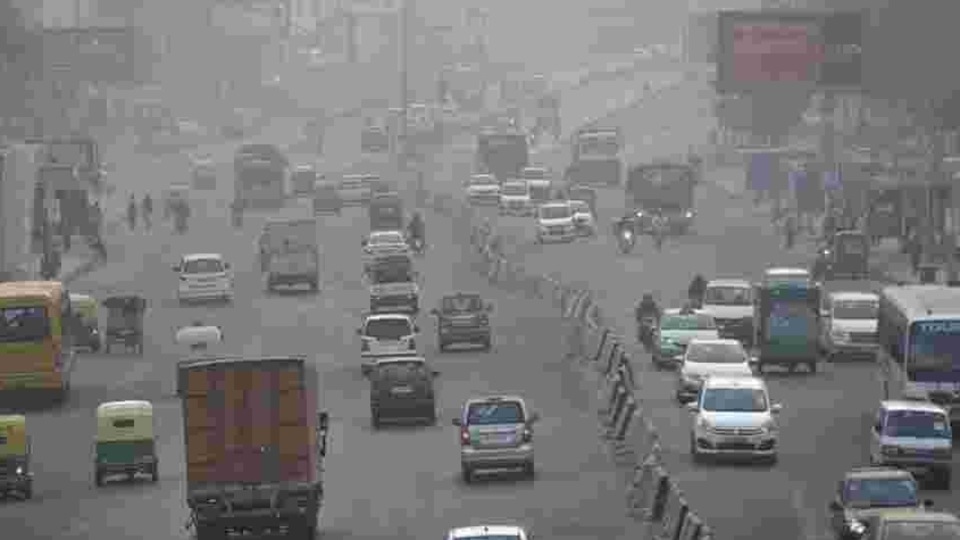
This was stated by the Ministry of Environment, Forests and Climate Change (MoEFCC) in an affidavit submitted before the top court during the hearing of a set of petitions dealing with air pollution in Delhi.
The affidavit highlighted the steps taken by the broad-based Commission having representatives from states adjoining Delhi along with representatives from Central ministries and representatives of Central Pollution Control Board (CPCB) and state pollution control authorities.
The Commission, appointed in November 2020, identified five focus areas while tackling the issue of pollution in Delhi-NCR. These included industrial pollution, agricultural stubble burning, municipal solid waste management and biomass burning, construction and demolition activities and vehicular pollution.
During the interactions with representatives from Delhi and neighbouring states, the Commission noticed lack of enforcement against polluting, over-aged vehicles not just in Delhi but in neighbouring districts of the national capital. The neighbouring states also did not have a traffic management plan in place to tackle vehicular pollution.
Also read: CAA rules are under preparation - Govt tells Lok Sabha
The affidavit said, “It was strongly reiterated that such overaged petrol/diesel vehicles more than 15/10 years of age, must not be allowed to ply in NCR at any cost and if found doing so, shall be taken off the roads immediately.”
Accordingly, the Sub-Committee on “Safeguarding and Enforcement” working under the Commission on January 8 this year, prepared a reporting format to be submitted by Delhi and adjoining states every two months. This format has details about over-aged vehicles impounded, traffic congestion spots identified and resolved, new pollution under control (PUC) centres added, existing and proposed car parking facilities, and additional CNG fuelling stations.
On industrial polluting units, the Commission examined nearly 6,642 units operating in Delhi-NCR, of which 3,138 were found to be using clean fuel (CNG/PNG). The Commission set a deadline of January 31 for remaining 2,904 units (Haryana -2220, UP- 420, Rajasthan-151) to convert to clean fuel.
On stubble burning, the affidavit said that the Commission’s focus was on crop residue management by which the paddy straw, that is usually burnt, could be cut using farm machinery and used by other industries as the source of fuel. The affidavit said, “Stubble burning and pollution arising therefrom is a major area of concern, particularly during the months of October-November… The Commission identified Crop Residue Management as one of the priority areas.”
To facilitate this, the Department of Agriculture Cooperation and Farmer Welfare, under the Central government, has developed an app-based aggregator platform for hiring and renting of farm machinery required for stubble cutting. The app called FARMS (Farm Machinery Solutions) has nearly 1.47 lakh individual farmers and over 22,000 custom hiring centres (CHC) across Punjab, Haryana, Uttar Pradesh. Nearly 1.58 lakh machines have been supplied to individual farmers and CHCs through the app and other financial incentive schemes, the affidavit stated.
Though the issue of stubble burning affects the quality of air in Delhi during the winter months, the Commission is focusing on crop residue management as a technique to curb stubble burning incidents. The top court has expressed concerns over stubble burning after a public interest litigation (PIL) filed before the Court pointed out that pollution caused by stubble burning can impact mortality rate due to the coronavirus disease.
In 2020, Haryana and Uttar Pradesh reported a decline in stubble burning incidents but Punjab reported a 15 per cent increase. In Haryana last year, 5,000 farm fires were reported as compared to 6,652 in 2019. Punjab reported 76,590 farm fires as against 52,991 in 2019.
On Tuesday, the apex court took up the PILs on stubble burning and air pollution in Delhi but adjourned the matter after two weeks. The Centre’s affidavit will be examined by the Court on the next date of hearing.


