A Kashmiri entrepreneur and a member of a nomadic community from Maharashtra were among the seven women achievers who wrote about their “life journeys” from Prime Minister Narendra Modi’s social media accounts on International Women’s Day on Sunday.
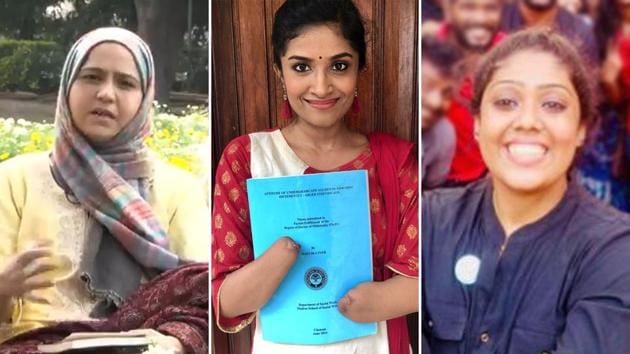
Prime Minister Narendra Modi signed off from his accounts on Twitter, Facebook, Instagram and YouTube and handed over the reins to these seven women. He had tweeted about giving up his social media accounts last Monday.
“Greetings on International Women’s Day! We salute the spirit and accomplishments of our Nari Shakti. As I’d said a few days ago, I’m signing off. Through the day, seven women achievers will share their life journeys and perhaps interact with you through my social media accounts,” Modi tweeted on Sunday.
“India has outstanding women achievers in all parts of the nation. These women have done great work in a wide range of sectors. Their struggles and aspirations motivate millions. Let us keep celebrating the achievements of such women and learning from them,” he said.
All their posts also popped up on Facebook, Instagram and YouTube accounts of the Prime Minister.
{{/usCountry}}All their posts also popped up on Facebook, Instagram and YouTube accounts of the Prime Minister.
{{/usCountry}}Here are those women achievers:
The founder of Food Bank India, Sneha Mohandoss, talked about her crusade to end hunger in the country. She also posted a video to elaborate on her work.
“You heard of food for thought. Now, it is time for action and a better future for our poor. Hello, I am @snehamohandoss. Inspired by my mother, who instilled the habit of feeding the homeless, I started this initiative called Foodbank India. #SheInspiresUs,” Mohandoss wrote.
“I work with volunteers, many of whom are outside India, to work towards eradicating hunger. We have over 20 chapters and have impacted several people with our work. We also initiated activities like mass cooking, cooking marathons, breast feeding awareness drives,” she added.
Mohandoss called for others to join her in her project to remove hunger. “It’s simple. Feed the needy, ensure no food goes waste,” she tweeted.
Next was Malvika Iyer, for whom “giving up is never an option” after she lost both her hands and severely damaged her legs in a bomb blast when she was 13 years old.
“I believe that education is indispensable for change. We need to sensitize young minds about discriminatory attitudes. We need to show people with disabilities as role models instead of showing them as weak and dependent,” the disability activist tweeted from Modi’s account.
“Acceptance is the greatest reward we can give to ourselves. We can’t control our lives but we surely can control our attitude towards life. At the end of the day, it is how we survive our challenges that matters most. Know more about me and my work,” Iyer added.
An entrepreneur from Kashmir who is working to revive the Union territory’s traditional felted craft Namda, was another woman who told her story on these social media platforms.
“I always dreamt of reviving the traditional crafts of Kashmir because this is a means to empower local women. I saw the condition of women artisans and so I began working to revise Namda craft. I am Arifa from Kashmir and here is my life journey,” Arifa tweeted.
“This gesture by PM @narendramodi has boosted my morale and it’ll help me to work harder for the betterment of craft as well as the artisans all over Kashmir. I feel it is important for more women to focus on becoming self-reliant and help other women,” Arifa said.
Water warrior Kalpana Ramesh said “small efforts can make a big impact” as she posted about what she does to help her community save water.
“…Water is a valuable inheritance we got. Lets not deprive our next generations. Contribute by using water responsibly, harvesting rainwater, saving lakes, recycling used water and creating awareness (sic),” she urged.
“I never imagined I could bring back birds to a lake or tweet from our PMs handle. With a firm resolve, the impossible can emerge. We can bring a change in the communities with collective action on how we manage water resources. Let us be become problem solvers (sic),” she said.
Next came Vijaya Pawar, a member of the Banjara community from Maharashtra’s Beed district who tapped her family and then her village and beyond to promote the languishing Gormati art.
“I have been working on this for the last 2 decades and have been assisted by a thousand more women,” Vijaya Pawar tweeted.
“Prime Minister Narendra Modi has not only encouraged us but also helped us financially to promote Gormati art. It is a matter of pride for us. I am fully dedicated to the preservation of this art and feel proud on the occasion of Women’s Day,” Pawar said in Hindi.
Kalavati Devi from a slum in Uttar Pradesh’s Kanpur had a message that if people want to be healthy they need cleanliness. Devi shared her story of how she built thousands of toilets in her locality by begging and borrowing.
“My message to the country’s sister, daughter and daughter-in-law is that sincere efforts to take society forward never fail. So get out. If someone speaks bitterly, let them. If you want to achieve your goal, then do not look back,” Kalavati Devi tweeted in Hindi.
“The place where I lived was absolutely filthy. But I strongly believed that we can change this situation through cleanliness. I decided to convince people. I collected money to make toilets. Eventually, I got success,” she added.
Veena Devi from Bihar’s Munger had a simple message as the mushroom farmer said where there is a will there is a way. She said her job has made her not only independent but also given her a new life.
“Today the women of Munger are presenting an example to the whole country. From farming at home to selling the produce at the haat, they carry all responsibilities on their own shoulders. That’s why I will tell all the women of the country - get out, work yourself and then see how good it feels,” she said.
“Today, women are not far behind in any field. If the Nara Shakti of the country is determined, then they can start their journey from a room in their home. It was because of this farming, I got respect. I became a sarpanch. It is a pleasure for me that many women like myself are getting the opportunity to train.”