E-Paper



COP28: Adaptation draft misses key issue of climate finance
Developing countries have maintained that the financial support from developed nations on adaptation has been paltry.

 Prefer HTon Google


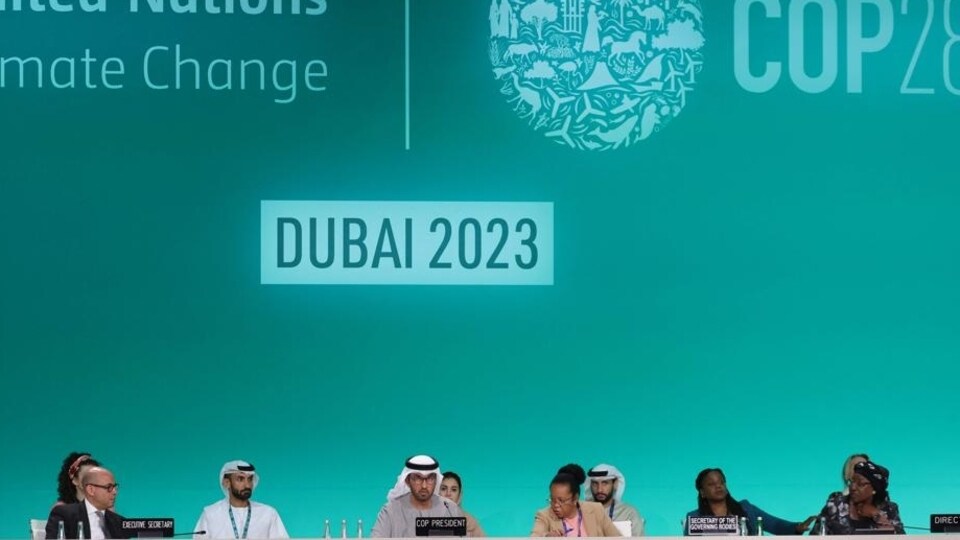
A new text on the Global Goal on Adaptation (GGA) released on Wednesday at the UN Climate Change Conference (COP28) in Dubai lists seven targets, including significantly reducing climate-induced water scarcity, for implementation by and beyond 2030, but it doesn’t provide for adequate climate finance to put these adaptation measures in place.
The GGA has been much debated. Developing countries have maintained that the financial support from developed nations on adaptation has been paltry. The text urges parties to take on seven adaptation measures including enhancing climate resilience to water-related hazards and seeks a climate-resilient water supply, sanitation, and access to safe and affordable potable water for all. It underlines the need for attaining climate-resilient food and agricultural production and supply and distribution of food, as well as increasing sustainable and regenerative production and equitable access to adequate food and nutrition for all.
The Global Goal on Adaptation is an important issue for India as it is highly vulnerable to climate impacts. India submitted its third national communication to the United Nations Framework Convention on Climate Change (UNFCCC) on Saturday. In India, public finance covers most of the adaptation-based activities through flagship programmes. Around 40 ministries have adaptation relevant budgetary provisions. The total adaptation relevant expenditure was 5.6% of the GDP in 2021-2022, growing from 3.7% in 2015-16, the communication said. India also said in its national communication that the large gap to fulfil adaptation needs cannot be met only through government resources.
Read Here: Global deal at COP28 as Dubai keeps Paris alive
The text seeks resilience against climate change-related health impacts, promoting climate-resilient health services, and significantly reducing climate-related morbidity and mortality, particularly in the most vulnerable communities.
It calls for reducing climate impacts on ecosystems and biodiversity and accelerating the use of ecosystem-based adaptation and nature-based solutions, including through their management, enhancement, restoration, and conservation and the protection of terrestrial, inland water, mountain, marine, and coastal ecosystems.

The text backs increasing the resilience of infrastructure and human settlements to climate change impacts to ensure basic and continuous essential services for all and minimising climate-related impacts on infrastructure and human settlements. It underlines the need for substantially reducing the adverse effects of climate change on poverty eradication and livelihoods particularly by promoting adaptive social protection measures for all. It also calls for protecting cultural heritage from the impacts of climate-related risks by developing adaptive strategies for preserving cultural practices and heritage sites and designing climate-resilient infrastructure, guided by traditional knowledge, Indigenous Peoples’ knowledge, and local knowledge systems.
But when it comes to finance, the text only notes with concern the widening gap in adaptation finance and reiterates the call for developed countries to at least double their collective provision of climate finance for adaptation to developing nations from 2019 levels by 2025 to achieve a balance between mitigation and adaptation in the provision of scaled-up financial resources.
Read Here: In a first, delegates at UN climate talks agree to transition away from fossil fuels
The text urges developed countries and invites other parties to provide resources voluntarily.
“The new Global Goal on Adaptation text uses stronger language (”urges”) for thematic targets than before, even though the dimensional targets for aspects of the adaptation planning cycle remains stronger (”decides”). We were hoping to see thematic targets around food, land, and water on an equal footing to dimensional targets. The thematic targets are also not time-bound unlike the adaptation planning cycle targets,” said Aditi Mukherji, water scientist and IPCC author.
“The means of implementation, particularly around funding, remains weak with no decisive terms and instead the current draft either “urges” (at best) or “requests” developed countries to provide funding and does not provide any particular target around target around financing,” added Mukherji.
“Today’s decision is a cause of celebration for the oil and gas sector. It gives a long rope to fossil energy use by only advocating for a transition and not phase-out. The invisible hand of oil and gas powers has prevailed. Self-interest of the developed world has taken over the global interests. The developing world must now be prepared for more climate impacts and adaptation interventions through its own resources, as funding support for that is going to be inadequate at best,” said Vaibhav Chaturvedi, Fellow, Council on Energy, Environment and Water (CEEW).