
 E-Paper



Adopt liberal yardstick in awarding accident claims to poor: SC
Hearing a a petition filed by one Mohammad Sabeer who became 70% disabled and had his right lower limb amputated besides other injuries, a bench of justices Krishna Murari and S Ravindra Bhat said, “Persons from marginalized sections of the society already face severe discrimination due to a lack of social capital and a new disability more often than not compounds to such discrimination


Be liberal while awarding compensation in motor accident claims to persons belonging to economically weaker section of the society, the Supreme Court held in a recent judgment while doubling the compensation awarded to a scrap dealer from Delhi who suffered permanent disability in a road accident in 2009.
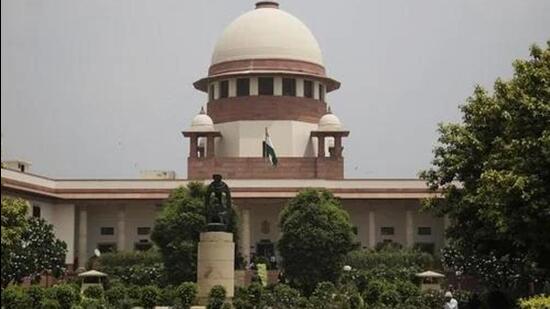
Hearing a a petition filed by one Mohammad Sabeer who became 70% disabled and had his right lower limb amputated besides other injuries, a bench of justices Krishna Murari and S Ravindra Bhat said, “Persons from marginalized sections of the society already face severe discrimination due to a lack of social capital and a new disability more often than not compounds to such discrimination.”
The petitioner was awarded a compensation of ₹16.7 lakh with annual interest of 9% by the Delhi high court that was hardly enough to meet his medical needs and future prospects.
He was 37 years at the time of accident and submitted to the court that being a scrap dealer, he was unable to drive a vehicle or move around freely, thus harming his future income prospects. Further, he had to buy a prosthetic limb that costed ₹2.6 lakh and required maintenance every 6 months to the tune of ₹20,000 till the life of the limb, estimated to be 5 to 6 years.
Enhancing the total compensation to over ₹38.7 lakh, the top court said, “It is almost universally seen that persons from marginalized backgrounds often face an additional layer of discrimination due to bodily disabilities.”
Directing courts to consider the socio-economic backgrounds of claimants while dealing with cases involving permanent disability, the SC in its December 9 judgement said, “To preserve the essence of justice, it becomes the duty of court to restore the claimant as best as possible to the position he was in before the occurrence of the disability, and to do so must award compensation in a liberal manner.”
For this, the top court directed the tribunals and high courts to look at the case in totality by considering the socio-economic background of persons seeking compensation in cases of permanent disability.
“While no material compensation can completely negate the trauma and suffering that the injured and his family faces, the law only knows the language of monetary compensation in such cases. It then becomes to duty of the court to translate the provisions of monetary compensation into a fabrication that helps the injured and his family in coping with their loss,” the bench noted.
The accident took place in June 2009 when the appeallant was travelling to his home in Delhi in a Uttar Pradesh state road transport corporation bus. The driver of the bus hit a tempo and was found to be at fault for driving the bus rashly. As a result of the accident, many occupants of the bus suffered grave injuries.
The motor accidents claim tribunal, after considering the plea of the petitioner awarded a compensation of ₹15.76 lakh. He appealed against this order before the high court which marginally enhanced the amount in September 2018 following which he filed a review plea before the HC seeking at least ₹20 lakh as compensation. The same was refused in October 2018 against which he approached the top court.
The UP road transport corporation that was liable to pay the compensation opposed the plea for enhanced compensation as it argued that petitioner was a scrap dealer who worked out of a shop and the disability would not affect his earning capacity.
However, the bench reasoned that being a self-employed person, Sabeer would be required to move around to augment his income. Further, his movement was further restricted as he could not drive on his own. “This proves that the functional disability of the appellant will severely impact his earning capacity....in our view the loss of future earning capacity must be calculated at 60%.”
Further, on the use of the prosthetic limb, the bench said that a person can reasonably be assumed to live till the age of 70.
“The appellant must be compensated so that he is able to purchase three prosthetic limbs in his lifetime and is able to maintain the same at least till he has reached 70 years of age.”


