
 E-Paper



After Indian man admits to Pannun murder plot, FBI says Khalistani was ‘target of transnational repression’
US Attorney said: “[Nikhil Gupta] thought… he could kill someone in [the US] without consequence, simply for exercising their American right to free speech."

 Prefer HTon Google


Gurpatwant Singh Pannun, an American citizen and Khalistani separatist who is designated a terrorist by India, has been described by the US Federal Bureau of Investigation (FBI) as “a target of transnational repression”. The FBI said this as it posted on X about an Indian national, Nikhil Gupta, having pleaded guilty of an assassination plot against Pannun.
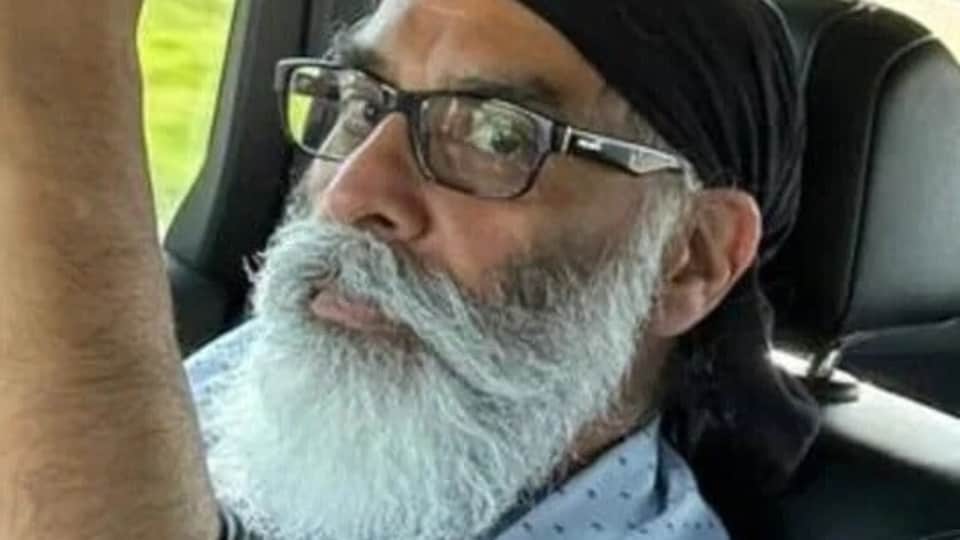
“Nikhil Gupta was a key participant in a murder-for-hire plot against a U.S. citizen, a murder that was prevented thanks to the actions of U.S. law enforcement,” the FBI said, referring apparently to Pannun.
“The U.S. citizen became a target of transnational repression solely for exercising their freedom of speech,” it further claimed.
“The message from the FBI should be clear – no matter where you are located if you try to harm our citizens we will not stop until you are brought to justice,” the agency said in a message posted on behalf of Roman Rozhavsky, assistant director of the FBI's counterintelligence and espionage division.
This came as Nikhil Gupta, an Indian citzen who was extradited by the US from the Czech Republic, pleaded guilty on Friday to plotting the assassination of Gurpatwant Singh Pannun. The US Attorney’s office for the Southern District of New York confirmed this.
Gupta, 54, appeared in the Manhattan federal court and admitted to paying $15,000 to a person he believed was a hitman to kill Pannun, a lawyer who leads the India-proscribed group Sikhs for Justice, based in New York City, in mid-2023. He had initially pleaded not guilty to the allegations.
He is likely to get 20-24 years in prison with this plea, as against 40 years otherwise, reported news agency Reuters.
The FBI also shared a link to the statement by US Attorney's Office, Southern District of New York, on the Department of Justice website.
It quoted US Attorney Jay Clayton as saying: “[Nikhil Gupta] thought that from outside this country he could kill someone in it without consequence, simply for exercising their American right to free speech. But he was wrong, and he will face justice. Our message to all nefarious foreign actors should be clear: steer clear of the United States and our people.”
The Indian government has denied any involvement.
How Gupta was caught, who is ‘CC-1’
According to the US indictment, an individual designated “CC-1” — described as a “Senior Field Officer” with responsibilities in “security management” and “intelligence” — contacted Gupta in May 2023 and recruited him to carry out the assassination.
The US government later identified CC-1 as Vikash Yadav, who previously served in the Central Reserve Police Force and was allegedly working in India’s cabinet secretariat, which houses the Research and Analysis Wing (RAW), at the time of the conspiracy, according to the US indictment.
The US Justice Department formally indicted Yadav in October 2024. He remains at large in India but has been booked in an unrelated extortion case by the Delhi Police.
After Yadav was formally indicted in October 2024, MEA spokesperson Randhir Jaiswal said: “The US State Department informed us that the individual in the Justice Department indictment is no longer employed by India. I confirm that he is no longer an employee of the Government of India.”
Prosecutors said Yadav recruited Gupta, who described himself in communications with Yadav as an international narcotics and weapons trafficker, to kill a “vocal critic of the Indian government” who “leads a US-based organisation that advocates for the secession of Punjab”.
The intended target was later identified by media reports as Pannun, a dual US-Canadian citizen who heads the India-proscribed group Sikhs for Justice.
Citing intercepted communications between Gupta and Yadav, authorities alleged that Gupta approached a person he believed to be a criminal associate to find a hitman. The associate was in fact a confidential source for US authorities, who directed Gupta to an undercover law enforcement officer posing as a contract killer. Gupta, on Yadav’s instructions, agreed to pay $100,000 for the murder and handed over $15,000 as an advance in June 2023, prosecutors said.
(with inputs by Shashank Mattoo)


