
 E-Paper



After six months, SC permits CERC to resume work
A bench, headed by Justice Sanjay K Kaul, also lifted its prohibitory order against the two non-judicial members of the Commission, permitting them to deliver judgments and perform administrative works


The Supreme Court has allowed the Central Electricity Regulatory Commission (CERC) to resume its functioning, six months after the restraining order was issued against the regulatory body.
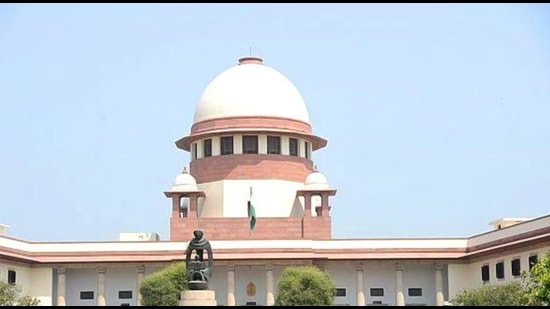
A bench, headed by Justice Sanjay K Kaul, also lifted its prohibitory order against the two non-judicial members of the Commission, permitting them to deliver judgments and perform administrative works.
The order on Wednesday will enable delivery of 177 judgments and orders that have remained pending disposal before the CERC since August when the bench suspended the Commission’s functioning for not being able to appoint a judicial member.
The CERC is a regulatory body to determine power tariffs as well as for all interstate generation, transmission and supply of power.
On Wednesday, Attorney General KK Venugopal informed the bench, which also had justices Dinesh Maheshwari and Hrishikesh Roy, that the appointment of judicial members has now come through.
“The appointment committee of the Cabinet has cleared the appointment of the Member-Law on December 16. He is currently a member of the state electricity commission in Jharkhand. He will join very soon,” Venugopal submitted.
The law officer added that there is now a compliance with the court’s 2018 judgment, directing the CERC and all state commissions to make certain they appoint a Member-Law, who must be either a sitting or a retired judge, or a person with substantial knowledge and practice of the law whenever the next vacancy arises.
The bench took on record the AG’s submissions, and requested him to use his good offices so that the Member-Law can join as soon as possible.
Also read | Executive not following court orders will lead to anarchy: SC
At the same time, the court accepted senior advocate Maninder Singh’s plea that the other two members should be allowed to deliver judgments and orders in cases already heard by them.
The court, in its order, said that the CERC could begin its adjudicatory functions after the judicial member joins it and till such time, the other two members can pronounce judgments and carry out other administrative work.
With this order, the bench also wrapped up the contempt proceedings against the CERC.
Anguished at the “prima facie contempt” of its judgment, the court had, in August, ordered two CERC members to go on leave till the time a Member-Law is appointed. This left the regulator non-functional with just the chairperson, PK Pujari, whereas the quorum for a hearing is two members in addition to the chair.
After the last hearing in December, the bench had come down heavily on the Central government, stating the court cannot help consumers when the “government does not seem to be interested in coming to the aid of the consumers or making the Commission functional.”
“The Executive cannot be expected to act nor permitted to act in breach of the judgment of this court. This would be an invitation to anarchy! The mutual respect of the three pillars of democracy requires each of them to respect the role and functioning of the other,” the court said in its last order.


