
 E-Paper



Ahead of meet, debate on ideological shift rages in Kerala CPI(M)
The state’s notorious trade union practice like nokku coolie (gawking charges), which thrived on party blessing, is also losing its sheen fast.

 Prefer HTon Google


Ideological shift seems to be the order of day for Communists who initially were visibly reluctant to private capital and big-ticket project but have turned into ambassadors now. Even critics say the party which once opposed computerisation and modernisation, citing loss of jobs, realises everything late.
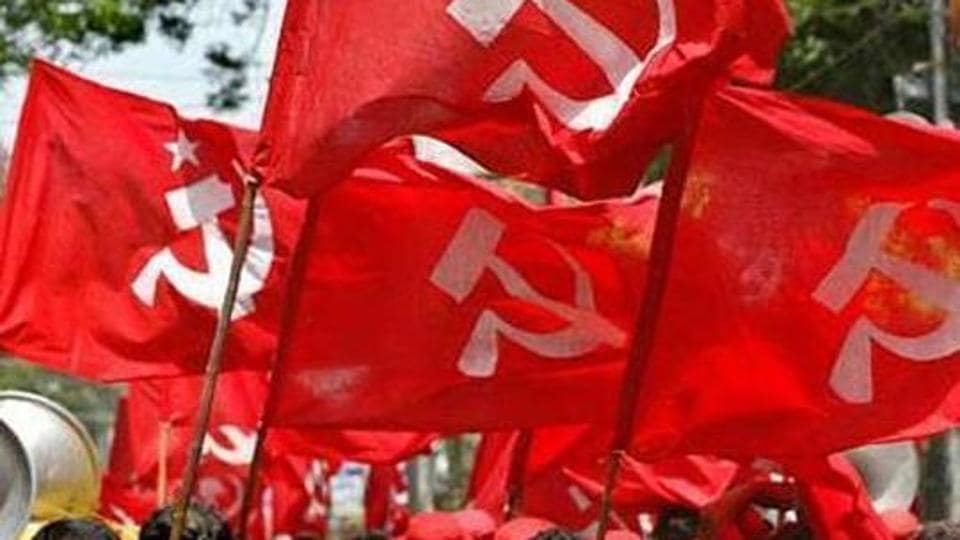
The evident shift can also be witnessed in the oppositions turning into invitations for private universities, with the party now inviting private-public participation in higher education sector. The state’s notorious trade union practice like nokku coolie (gawking charges), which thrived on party blessing, is also losing its sheen fast.
The unmissable paperless budget presentation by finance minister K N Balagopal who read out the details from his i-Pad was a sharp contrast to the party’s stance, which has resisted modernisation, holding tight to traditional sectors. Undoubtedly, there were trolls galore, reminding the leaders of their own speeches.
Cut to present, the traditional sectors (coir, cashew and handloom) remains in doldrums.
New Kerala: Vision vs changing times
In Kerala, the lone state where the party is in power, CPI(M) formulated a new vision document for “Nava Keralam” (new Kerala), dealing with new development mantras and perspectives. The proposed high-speed project K-Rail, criss-crossing the state, is one of them. The party has come out with the project at a time when it is fiercely opposing Mumbai-Ahmedabad bullet train.
Critics say it is avowed ideological shift but the party insists these are changes with the time. As the 23rd party congress is round the corner (April 6-9) in Kannur, a debate is intense in the state. “The vision document is meant for next 25 years. We are here to stay. Ears to the ground, the party is eying uninterrupted power in the state. Projects like K-Rail are part of it,” said party state secretary Kodiyeri Balakrishnan, adding, these are part of the Left Democratic Front manifesto.
Though the government is facing fierce resistance to project, the party jogs the Opposition’s memory of Nandigram — a small town in West Bengal which witnessed violence in 2007-08 over a car project eventually leading to the fall of three-decade long Communist government — brushing the opposition aside .
“It seems the party completely missed its ideology when it got the second term. It is almost acting like a corporate house. It is sad even mass struggle of people is turning into an eyesore for the party,” said a party watcher and poet Umesh Babu.
Balancing Act: Democracy vs ideology
The vision document which focuses mainly on infrastructure, knowledge, technology, education and livelihood, also stresses on the need for trade unions to dump obsolete practices to attract much-needed capital.
The document attracted enough criticism primarily for its lack of focus on social justice and ecological issues. But party insiders said it was only a blue print and will be fine-tuned after a debate at all party levels.
“The system of taking decision at leadership level and later passing it to lower ranks will continue, however, the party members’ doubts and queries will also be redressed properly,” said a senior leader, adding, besides proletariat (working class), upwardly mobile middle class and minorities remain backbone of the party.
Political discussion on the new document had started at lower levels of the party.
“It seems the party is finding difficult to merge democracy with its ideology. With no revolution around, it has to imbibe some of the practices around. Its balancing act between ideology and pragmatism is costing it dear,” said K Venu, political observer and former Naxalite leader.
But politburo member M A Baby said people who are ignorant of Communist ideology are spreading such canards. “In Russia after revolution, Lenin invited private capital to build the new country. Communist countries like Vietnam and China have such investments are there. In India, we have exploitative economic system prevailing in states so we have to turn to private investment in key sectors,” said Baby.
“Look, some people have been trained to suspect and criticise us always. We also take these criticisms in that way only,” he said.
Tale of two states
A close look at two West Bengal and Kerala shows the marked difference. After 30 years of uninterrupted power in Bengal, party followers switched their loyalty without any qualm. But in Kerala, the party steadily built an empire employing workers and symapthizers, said party watchers. Thanks to its wealth it managed to keep an iron grip on well-oiled cadres as stakes are high. In Kerala its fingers are in every pie: tourism, infrastructure, IT , healthcare , banking, furniture-making and apparel units to name a few.
Ask any Marxist about this ever-accumulating wealth, he will disown the notion instantly with a stock reply. “Most of them are in co-operative sectors and managed by different entities and board of directors.”
But a closer look at most of these institutions reveals how the party is subtly yet inclusively holding the reins in its hands.
Wedded to dialectical materialism, the party may dub itself as a proletarian outfit but its six-decade of existence in the southern state has made it rich and powerful. Its wealth mounted during the reign of Pinarayi Vijayan, who was party secretary for long 17 years (1998-2015). He painstakingly built a CPI(M) empire, showing how wealth creation and ideology can go hand in hand. With Vijayan at helm, the party can water down its rigid ideology for existence, said party insiders. It seems once described derisively as “neo liberal” policies they are no longer untouchable to the party.
“It is not ideological shift, but sheer opportunism. It seems the second term has gone to the head of the party. It is not ideology it is one-man show (Pinarayi Vijayan) in the party. Even the party terms popular uprising as hooliganism,” said political theorist J Reghu. There are reports that some central leaders are unhappy with popular unrest over K- Rail but since Vijayan turned powerful after his succession, they are keeping a stiff upper lip for now.


