E-Paper



AICTE to finalise draft of Professional Engineers Bill, 2025 ahead of Parliament session
The Bill is likely to be presented in the upcoming winter session of Parliament to be held from December 1 to 19: Senior AICTE official

 Prefer HTon Google


New Delhi: The All India Council for Technical Education (AICTE) will soon convene a meeting to finalise the draft of the Professional Engineers Bill, 2025, which aims to regulate the engineering profession by mandating registration of engineers with a statutory body, officials aware of the matter said on Thursday.
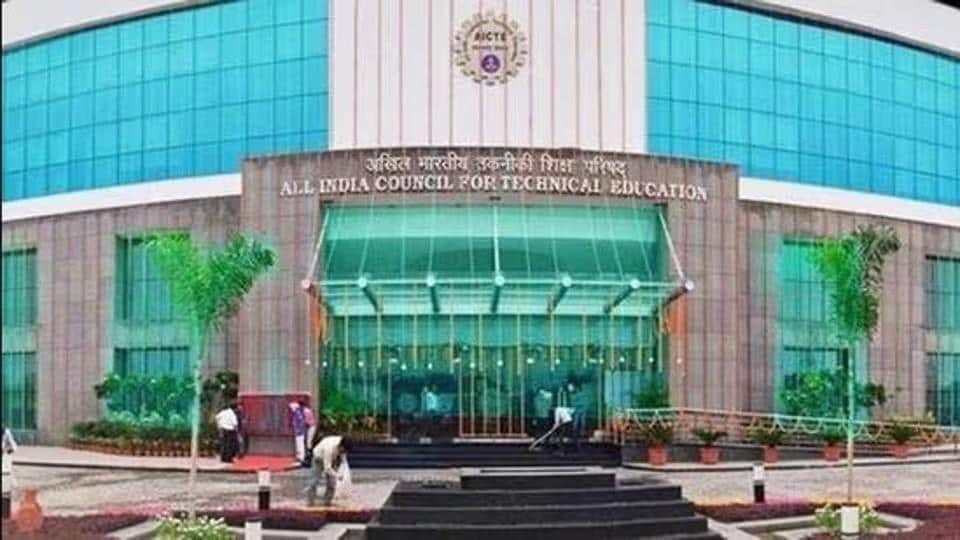
The Bill is likely to be presented in the upcoming winter session of Parliament to be held from December 1 to 19. “We have received lots of suggestions from various stakeholders. A meeting will be held next week to discuss the suggestions that we have received and finalise the draft. After finalisation, the Bill will be sent to the education ministry and may be presented in the upcoming session of Parliament,” a senior AICTE official said.
The draft legislation, prepared by an AICTE expert committee chaired by M.S. Ananth, former director of the Indian Institute of Technology (IIT) Madras, was opened for stakeholder feedback between March 19 and April 10.
The Bill proposes the establishment of a 27-member Indian Professional Engineers’ Council (IPEC) to register qualified engineers, similar to existing regulatory councils for lawyers, doctors, and pharmacists. Once enacted, it will introduce a national licensing system to enhance professional accountability and ensure uniform standards across the engineering sector.
Former AICTE member secretary Rajive Kumar, who served on the expert committee that drafted the first version of the Bill, said deliberations began in the council about six to seven years ago after it was realised that engineering was the only major profession in India without a licensing or registration system, unlike medicine, law, or architecture.
The proposed law, Kumar added, aims to establish a framework to identify, certify, and regulate practising engineers, ensuring accountability and higher professional standards.
Kumar clarified that those entering teaching or academic roles in engineering will not be required to register under the proposed law. “If someone is coming into teaching — for example, a civil engineer joining as a faculty member — they would not need registration. But if the same civil engineer wants to work on a construction project, then registration under the Professional Engineers Bill will be required once it becomes law,” he said.
Kumar explained that a statutory body — IPEC — will be created to oversee registration, continuous training, and certification in emerging technologies. “Those already in engineering practice will be given adequate time — five to ten years — for registration. It will not be implemented abruptly,” he added.
The proposed IPEC will have 27 members for its first three-year term — 16 nominated by the Board and 11 representatives from professional engineering organisations. The nominated members will include officials from the ministry of education, major engineering-related ministries, academic institutions such as IITs and National Institutes of Technology (NITs), state governments, and industry bodies like the Confederation of Indian Industry (CII) and the Federation of Indian Chambers of Commerce and Industry (FICCI). The affiliate members will represent leading professional associations, including the Institution of Engineers (India), the Indian National Academy of Engineering, and others by rotation.
In April, the Indian Society of Structural Engineers (ISSE), a professional body with over 3,000 civil engineers across India, wrote to AICTE demanding at least two permanent seats for ISSE in IPEC.
According to the draft of the Bill, a 12-member board of governors will oversee the IPEC, comprising senior government officials, heads of premier institutions, and eminent practitioners from civil and other engineering fields. The board will be chaired by a distinguished professional with at least 25 years of experience, selected by a five-member search-cum-selection committee.
AICTE has over 5,800 affiliated engineering and diploma colleges with more than 30 lakh students studying in them.